



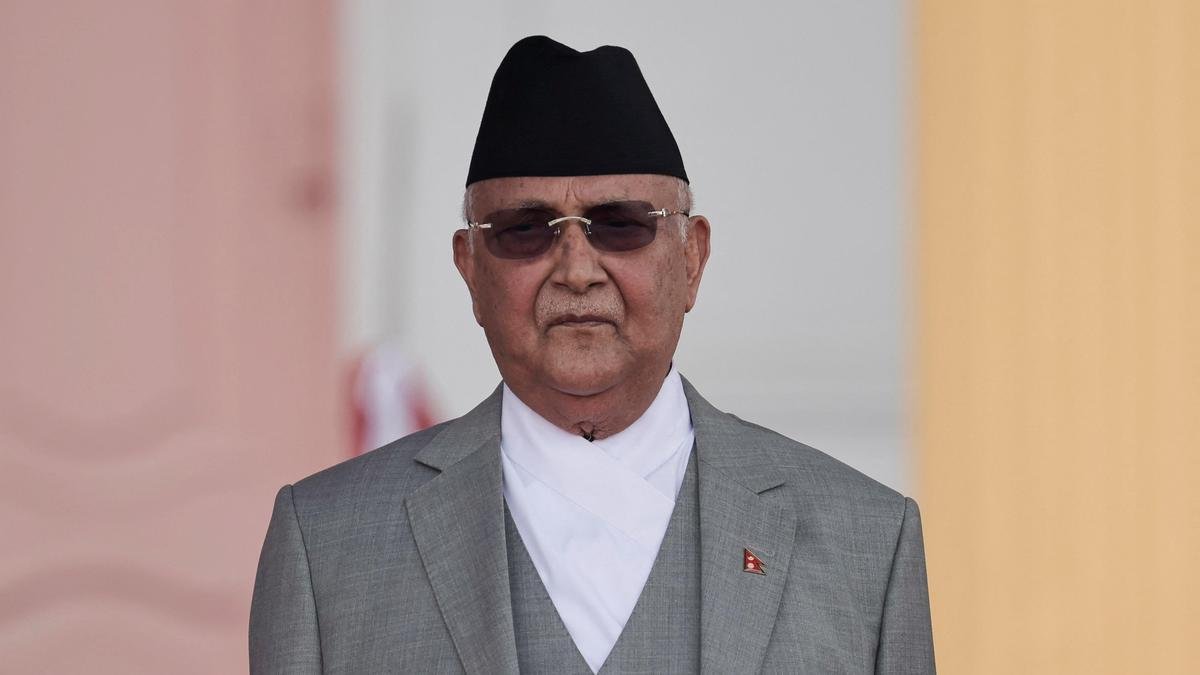
Former Prime Minister K.P. Sharma Oli. File
| Photo Credit: Reuters
A commission set up to investigate Nepal’s Gen Z protests in September last year — and the subsequent violence — has recommended action against then-Prime Minister K.P. Sharma Oli and other senior officials.
The report of the commission, led by former Judge Gauri Bahadur Karki, has yet to be officially released. But the leaked report, seen by The Hindu, recommends that Mr. Oli be investigated and prosecuted for “reckless” and “negligent killings” for failing to stop lethal firing on September 8.
At least 19 youth were killed in police firing on September 8, the first day of protests called by Nepali youth demanding an end to corruption and the establishment of clean governance and accountability.
The protests led to the fall of the Oli government.
At least 76 people were killed and 2,522 injured during the two-day Gen Z protests, the commission report says, though the government had earlier put the death toll at 77.
Editorial | Generational rage: On the upheaval in Nepal
On Mr. Oli’s role, the commission’s 907-page report, which is in Nepali, says, “It is a major weakness on the part of the Prime Minister, who bears the responsibility of being the guardian of all citizens of the state, to fail to make efforts to prevent further loss of life even as gunfire continued for nearly four hours outside the Parliament building, despite some deaths and hundreds of injuries.”
The commission has also recommended that then-Home Minister Ramesh Lekhak be prosecuted for administrative negligence and failure to prevent casualties.
It has further recommended that then-Nepal Police chief Chandra Kuber Khapung be prosecuted for ordering the use of force without waiting for specific authorisation.
The report’s sudden leak, just two days before Balendra Shah’s oath as Prime Minister, has baffled many. There had been growing calls for the government to make the report public. Some youth had been protesting at Maitighar — where the Gen Z protests began on September 8 — to pressure the government to release it.
The commission submitted the report to the government on March 8.
If prosecuted as per the commission’s recommendations and found guilty by a court, all three — Mr. Oli, Mr. Lekhak and Mr. Khapung — could face up to 10 years in jail.
Legal experts, however, say the commission’s recommendations are not enough.
“It’s just recommendations… and the government must first initiate criminal investigations based on them before formal charges can be filed in court,” said Bipin Adhikari, professor of law at the Kathmandu University School of Law. “Recommendations do not necessarily mean established facts; they need to be thoroughly investigated first.”
Mr. Adhikari also expressed concern about the possible fallout of the sudden leak of the report, at a time when the government had made it clear it was studying it.
“The timing of the leak raises many questions, as the current interim government is about to hand over power to a newly elected government,” he said. “Despite a strong political mandate, the incoming government will now face the challenge of how to proceed.”
Following the fall of the Oli government, an interim government led by former Chief Justice Sushila Karki was formed on September 12. It dissolved Parliament and announced elections for March 5.
Mr. Oli, 74, chairman of the Communist Party of Nepal (Unified Marxist–Leninist), suffered defeat at the hands of Mr. Shah of the Rastriya Swatantra Party (RSP), which swept the elections with close to a two-thirds majority.
Thirty-five-year-old Shah, a rapper-turned-politician, is set to take the oath as Nepal’s new Prime Minister on Friday (March 27, 2026).
Published – March 26, 2026 12:30 pm IST


