






It is unusual for filmmakers in India to complete two films in quick succession and P Sheshadri has surprised many in the Kannada film industry by doing just that. While his Ruby Cube was completed in October 2025, Panchayati was finished in October 2026.
“Ruby Cube was screened at the 17th edition of the Bengaluru International Film Festival (BIFFES) in 2026, Panchayati is likely to hit the screens in December 2026,” says Sheshadri, a prominent figure in contemporary Kannada parallel cinema.
Sheshadri has another reason to celebrate. Ruby Cube has been selected for screening at the Indian Film Festival in Kazan, Russia’s Republic of Tatarstan. Organised in the context of India–Russia relations, the festival is emerging as an important cultural platform to introduce Indian cinema to Russian audiences.
Filmmaker P Sheshadri.
| Photo Credit:
SPECIAL ARRANGEMENT
“Ruby Cube is a reflection on memory, love and dignity, and on how families continue to reshape themselves, even when time begins to erase parts of the past,” Sheshadri told The Hindu before leaving for Kazan.
Five years after making Mohanadas (2021), a film based on Bolwar Mahammad Kunhi’s Papu Gandhi, Bapu Gandhi Aada Kathe and Mahatma Gandhi’s The Story of My Experiments with Truth, Sheshadri returned with Ruby Cube. Credited with nine National Film Awards for eight of his works, he has consistently explored socially relevant themes through his cinema.
Ruby Cube, his thirteenth film in a career spanning 25 years, examines the strain on human relationships amid rising instances of divorce and the challenges faced by LGBTQ+ individuals. The film is based on a short story written by his son, Pratham Sheshadri, an artist, writer and digital content creator.
“Ruby Cube addresses the complexities of relationships, broken bonds and the gradual journey towards acceptance. The Rubik’s Cube serves as a metaphor in the film; as in life, it often seems impossible to put all the pieces in their proper places. However, with patience, empathy and persistent effort, its faces can be aligned.”
“I am also participating in a discussion titled ‘Filming the Future: Opportunities in Indian and Russian Films’. The Indian Film Festival will be held in Kazan on October 15 and 16 as part of the Time: Tatarstan Initiative for Mutual Efficiency, an India–Russia business forum. The inclusion of Ruby Cube is significant for the Kannada film industry in this cultural exchange.”
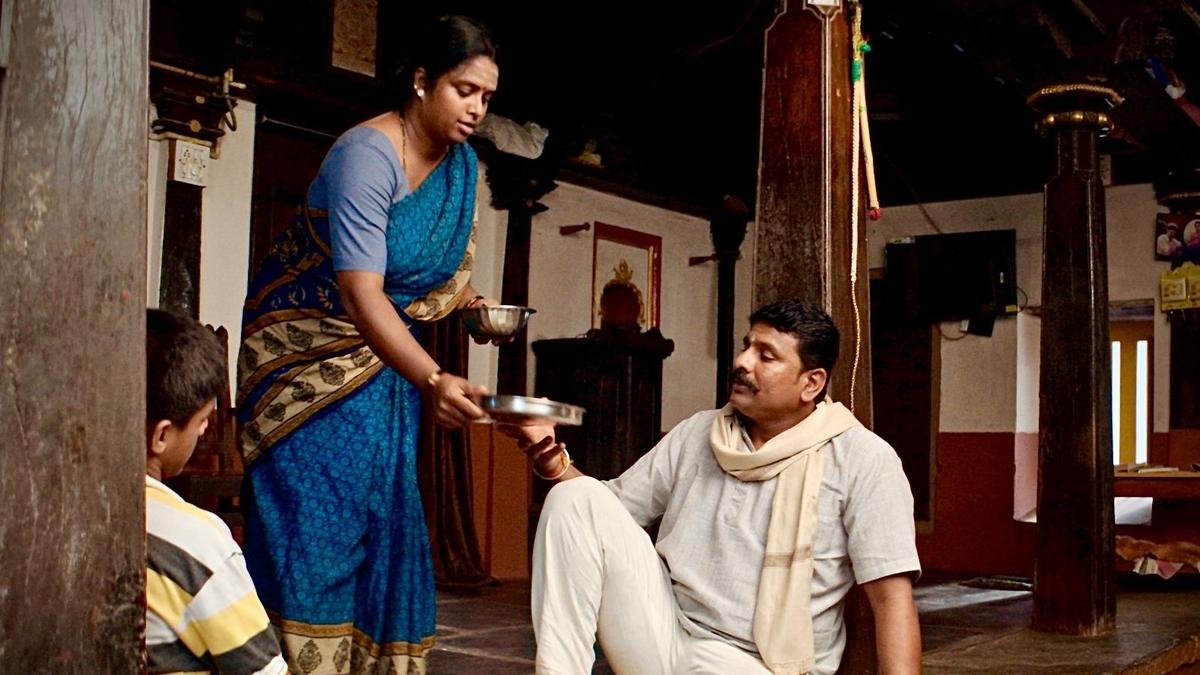
Panchayati examines social issues through grassroots narratives situated within the institutional and interpersonal world of a village panchayat. Clarifying that it is quite different from the popular Hindi web series Panchayat, Sheshadri points to the complex relationship between the formal non-partisan character of gram panchayat elections in Karnataka and the political realities that surround them.
“Although gram panchayat elections in Karnataka are legally conducted on a non-party basis, the non-partisan nature of these polls is largely theoretical. Major political parties unofficially support candidates, form local panels and treat these elections as indicators of rural public sentiment.”
“In rural Karnataka, it is common for members of the same household or extended family to identify with and campaign for different political parties. Families may deliberately distribute their political affiliations among different members. This is often a calculated survival strategy rather than the result of a deep ideological divide. By maintaining connections with multiple political camps, a family seeks to ensure that, regardless of which party captures panchayat leadership, it retains access to local power, government contracts and bureaucratic machinery,” Sheshadri explains.
A still from ‘Panchayati’.
| Photo Credit:
SPECIAL ARRANGEMENT
He also draws attention to the role of women’s reservation in shaping local electoral contests.
Sheshadri further observes that political affiliations have increasingly complicated traditional caste-based alignments, adding another dimension to the nature of rural political polarisation.
The film’s engagement with local governance comes at a time when Karnataka is preparing for overdue panchayat elections.
Asked whether the political timing of Panchayati was deliberate in view of these developments, Sheshadri says the film originated in an idea that had been incubating for several years.
“For a while now, I have been contemplating how to translate a short story by Aravinda Mitra for the visual medium. My intention was to mirror the larger political reality of India where money, electoral arithmetic, caste, the pursuit of power and social divisions shape electoral outcomes. Beyond the struggle for power, I wanted to ask a fundamental question about the moral conscience of the common man,” he says.
With Panchayati, Sheshadri continues his engagement with the social and political realities of contemporary India, turning his attention to the village panchayat as a space where democratic institutions, family relationships, social identities and the pursuit of power intersect.
Published – October 18, 2026 09:19 pm IST


