


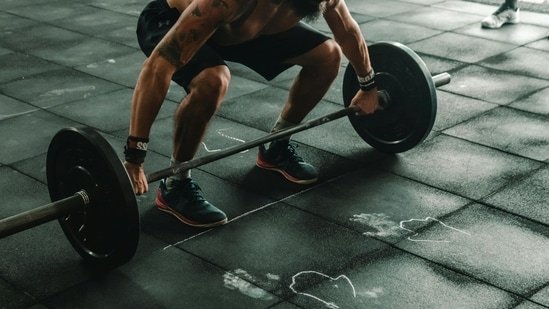
Strength training is a vital part of a regular workout that provides various health benefits, including helping us lose fat and build muscle. However, doing it the right way has a major role to play in its effectiveness, as well as in keeping us safe.
Also Read | Doctor shares 5 nutrition tips for maintaining thyroid health ahead of World Thyroid Day 2026
Since weights are involved in strength training, be it external or simply our bodyweight, the risk of injury is always present. Taking to Instagram on May 23, Dr Kiran Shete, an orthopaedic surgeon and integrative medicine specialist with over 25 years of experience, listed five exercises that we should avoid in the gym to lower the risk.
“Not every popular exercise is safe for your joints. Poor form, forced positions, and chasing heavy weights often do more harm than good,” he noted in the caption. “Focus on control, alignment, and gradual load. Training smart protects your body long term.”
The list of exercises he suggested avoiding is as follows.
1. Behind-the-neck shoulder press
The behind-the-neck shoulder press is an overhead strength exercise that involves resting a barbell on the upper traps behind the neck, lifting it straight overhead and then bringing it down again.
According to Dr Shete, this workout increases the risk of rotator cuff impingement and cervical spine strain. The safer approach is to perform a press in front of the body and keep the bars slightly forward with the neck in a neutral position and a stable core.
2. Deadlifts with poor form
One of the more popular weight training exercises, weight lifting itself is not the problem, noted Dr Shete. The issue is with the execution.
“Rounded back, poor bracing, or ego lifting shifts the load to your spine instead of your hips,” noted the surgeon. “That’s how disc injuries happen.”
The safer approach is learning proper hip hinging first, keeping the spine neutral, and increasing weight only after control is solid.
3. Upright rows
The upright row involves gripping weights (kettlebell/dumbbells) with both hands with an overhand grip and pulling them upward till they reach chest height.
According to Dr Shete, the workout can lead to shoulder impingement due to internal rotation while elevating the shoulder. The safer approach is to lift only up to the chest with a wider grip and maintain a controlled grip.
4. Sit-ups with feet anchored
One of the more basic workouts, sit-ups also present the risk of injury if not done properly. In such cases, the load shifts from abdominal muscles to hip flexors. The safer approach, according to Dr Shete, is performing controlled abdominal curling and engaging the core.
5. Kipping pull-ups
A kipping pull-up is when one generates momentum with the hips while swinging from the bar, and uses it to propel themselves upward and perform a pull-up. In such cases, momentum replaces control, cautioned Dr Shete. Shoulders absorb sudden force again and again, increasing injury risk. The safer approach is to perform controlled pull-ups with core engagement and minimal swing.
Note to readers: This article is for informational purposes only and not a substitute for professional medical advice. This report is based on user-generated content from social media. HT.com has not independently verified the claims and does not endorse them.
