






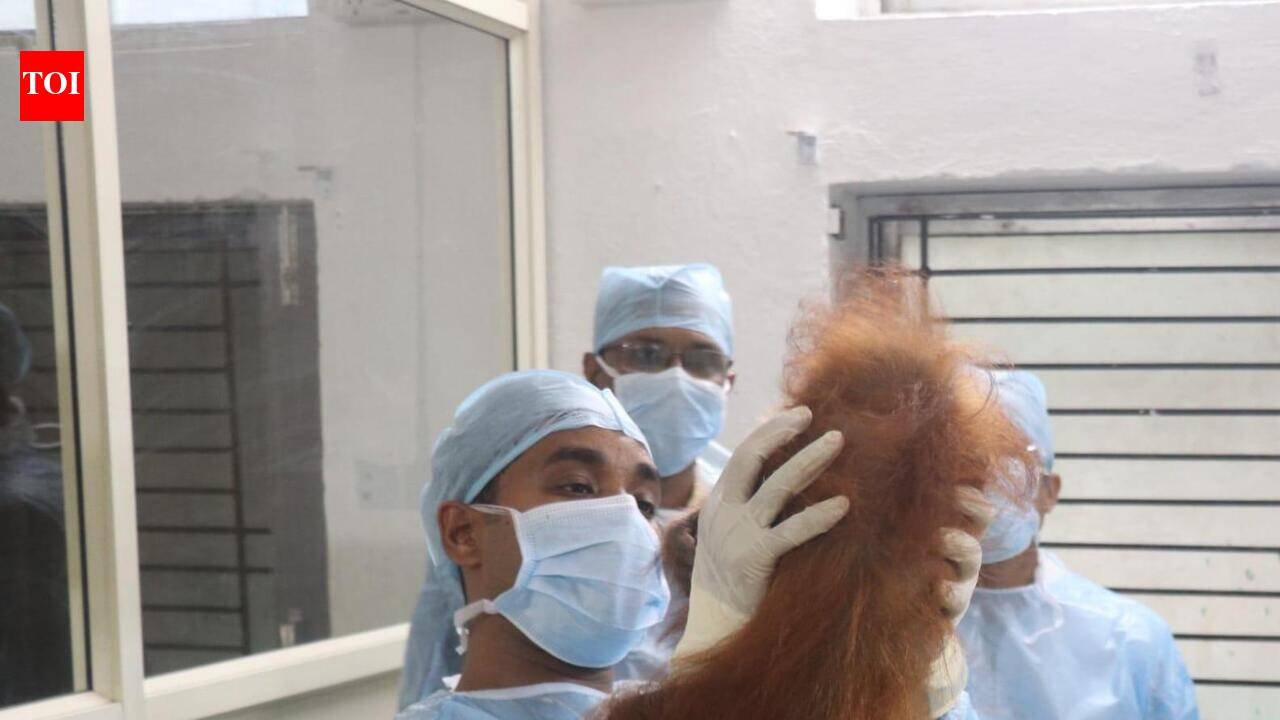
Bhubaneswar: Wildlife crime experts investigating the mysterious appearance of five infant orangutans in Odisha have said the animals were most likely part of a carefully planned trafficking operation aimed at establishing a future breeding population.Officials associated with the Wildlife Crime Control Bureau believe the composition of the rescued group, comprising three males and two females, is too balanced to be a coincidence. According to experts, such a mix suggests that those behind the operation had long-term breeding prospects in mind rather than merely transporting the critically endangered apes from one location to another.“The carriers moving the animals may not have known the larger objective, but those who sent them and those waiting to receive them were likely aware of the importance of maintaining a balanced sex ratio,” a wildlife crime expert said.The five rescued orangutans are currently being cared for at Nandankanan Zoological Park, where veterinarians and wildlife specialists are closely monitoring their health and behaviour.Experts point to the experience of Binny, once the only orangutan in captivity in India, to underline the significance of the sex composition in the latest case. Binny spent 16 years at Nandankanan, but zoo authorities struggled to find a compatible conspecific (mate) to facilitate breeding.“In Binny’s case, the zoo had difficulty getting a compatible conspecific for breeding. Had a suitable male been available, breeding could have been possible. In the latest trafficking case, the very composition of the group indicates a breeding plan,” a wildlife expert said.As the investigation enters its second week without any major breakthrough, conservationists are increasingly sceptical about whether the probe will ultimately identify the masterminds behind the operation. Some observers believe the focus may now shift from tracing traffickers to address the far more complex question of what should be done with the rescued animals.Environmentalist J K Panigrahi said authorities may already be realising challenges involved in repatriating the orangutans to their native habitat. “It is easier said than done. Repatriation is not going to be easy and by now the govt and forest department must have realised this. If the sudden appearance of the orangutans is considered a prized catch, the probe is not going to benefit much,” he said.Wildlife experts note that returning the infants to the wild may be virtually impossible. Orangutan young remain dependent on their mothers for up to eight years. The fact that the rescued animals were separated at such a young age has raised fears that their mothers may have been killed by poachers before the infants entered the illegal wildlife trade.


