






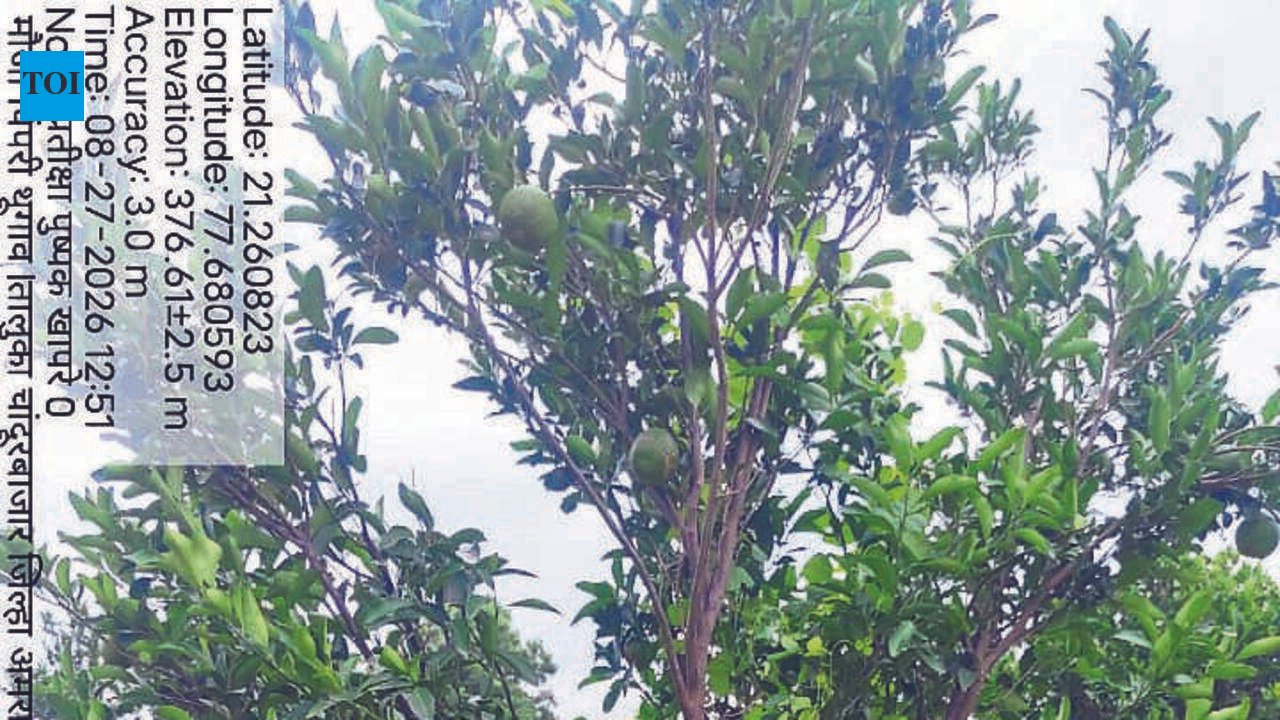
Nagpur: Drought, acute water shortage and October heat have emerged as the biggest challenges for orange growers in Amravati district, threatening tree growth, flowering, fruit development and fruit size, and raising serious questions over the viability of orchards.With Amravati receiving 43% less monsoon rain this year and temperatures soaring this month, growers say ensuring adequate water throughout the season has become increasingly difficult and expensive, while a host of other problems — rising input costs, uncertain market prices, crop insurance delays and wildlife damage — continue to deepen the crisis.The impact is already visible in the region’s famed Nagpur mandarin belt, where farmers claim orange trees have been removed from around 5,000 hectares as growers increasingly consider shifting to alternative crops requiring less water. The belt, spread across Chandur Bazar and adjoining areas, has around 35,000 hectares under orange orchards. The region is known for its relatively small-sized, tangy oranges.Water stress is particularly critical during flowering and fruit development. Prolonged dry conditions can weaken trees, increase fruit drop, reduce fruit size and affect overall productivity, growers said.“Because there’s no moisture in the soil, fruit drop has risen. The high temperatures are also increasing the incidence of disease in orange trees and other crops,” said farmer Sopan Mohod of Madhan.Pushpak Khapre, an orange grower and member of the Amravati district fruit crop insurance committee, said farmers were increasingly removing orange trees because the economics of maintaining orchards had become difficult. “Farmers are now shifting to alternative crops which may consume less water. There is no profit in growing oranges now,” Khapre said.He said the current distress was the result of several years of economic and natural challenges, including low and uncertain market prices, rising costs of fertilisers, pesticides, labour, electricity, drip irrigation and orchard management, besides pest and disease attacks and weather fluctuations.This year’s water crisis has, however, become the immediate concern. With inadequate rainfall and limited irrigation sources, farmers are struggling to plan irrigation for their orchards.“Because of the lack of rainfall this year, orange growers are unable to plan how to irrigate their orchards. Even power supply from transformers is unreliable. There is a strong possibility the next season may also be lost,” said farmer Shekhar Vighe of Dapori in Morshi taluka.Growers are also worried about crop insurance, with delays in assessment and compensation adding to financial uncertainty. Khapre said insurance should also cover damage caused by wild animals, warning water scarcity in forests could increase human-wildlife conflict as animals move towards farms in search of water. He has sought 100% govt subsidy for iron fencing around farms to protect crops.For growers in the Nagpur mandarin belt, the question is increasingly stark — with water becoming scarce and cost of keeping an orchard rising, how long can farmers afford to keep their orange trees alive?


