



By Dinesh Pratap Singh, Chief Spokesperson, BJP, Uttar Pradesh

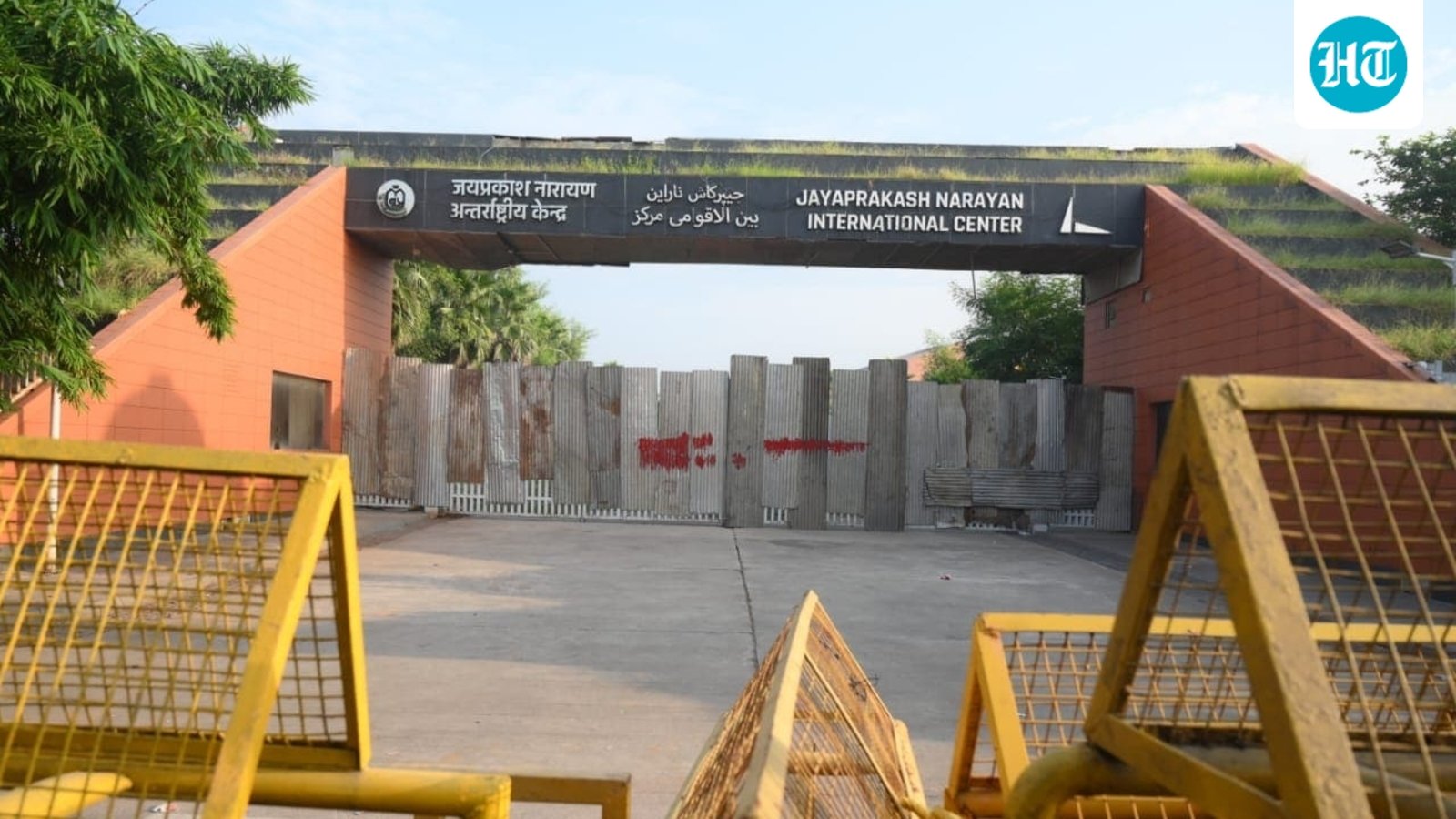
There has been a peculiar tradition in Indian politics: whenever the name of a great personality is associated with an institution, road, or major building, political parties rush to link it with their ideology or attempt to stamp their ideological imprint on it. This approach is fundamentally wrong. Mahatma Gandhi, Sardar Patel, Dr. B.R. Ambedkar, Pandit Deendayal Upadhyaya and Jayaprakash Narayan are shared national icons and a source of pride for the entire nation. Therefore, if the process of making the Lok Nayak Jayaprakash Narayan International Centre (JPNIC) in Lucknow operational has now begun, it should be viewed as a national duty rather than turned into a political issue. The true tribute to Lok Nayak will be paid when the building comes alive when conferences are held there, people come and go, and national discourse and cultural activities are visible at the centre. His legacy is not honoured by flying the flag of any political party there. Jayaprakash Narayan’s name cannot be held hostage to politics. Any such attempt is itself an affront to his legacy.
What Was the Samajwadi Party’s Intent?
It is only natural to raise certain questions about the intentions of the Samajwadi Party, which is making a hue and cry over the prospect of JPNIC being handed over to private hands. How did a project originally estimated at ₹200 crore end up costing ₹850 crore? Why did it nevertheless remain incomplete? Where did the money go? How would the SP government have operated the centre had it been completed? SP chief Akhilesh Yadav, who is questioning the Yogi government, should place answers to these questions in the public domain. He should also explain why a committee was constituted to operate JPNIC, on which he himself served alongside his wife Dimple Yadav and cousin Dharmendra Yadav. Was this not akin to handing over a government asset to one family?
JPNIC Is Not the Property of Any Political Party
The true capital of any nation or state is something that touches people’s lives, generates employment, boosts tourism and becomes part of the identity of a city. When a building remains shut for years, gathers dust and gradually deteriorates due to lack of maintenance, it becomes a permanent liability. JPNIC is a test of precisely this approach. The question is no longer whether it is worth ₹831 crore or some other amount. The important question is whether it should be allowed to remain shut for another ten or twenty years, or whether it should be put to public use. The personality whose name this centre bears does not belong to any one ideology or political party in the history of Indian politics and social reform. Lok Nayak Jayaprakash Narayan demonstrated the courage to stand with the people against those in power. During the darkness of the Emergency, he kept the torch of democracy burning. It is ironic that the very personality who rose above partisan politics and placed national interest above everything else is now being used by the Samajwadi Party to pull a centre named after him into the arena of partisan politics. Can this really be considered appropriate?
Public Money, Public Expectations
JPNIC was not built with the private wealth of any individual or political party. It was built with public money. Every brick of the centre represents money paid by ordinary citizens to the government in the form of taxes. When a government spends hundreds of crores of rupees on a project and still leaves it incomplete, it is not merely an administrative failure; it amounts to a betrayal of public trust. Leaving resources locked away and unused is not a policy. It is a form of financial negligence that cannot be ignored. The extent of this negligence can be understood from the history of JPNIC. Its construction began during the Samajwadi Party’s tenure between 2003 and 2007. In 2013, during Akhilesh Yadav’s tenure as Chief Minister, ₹200 crore was allocated for the project. Under his government, the project cost kept rising, eventually reaching around ₹850 crore, while only about 60 per cent of the work was completed. Nevertheless, the Yogi government, prioritising public welfare, decided to give the project a new lease of life. The government’s effort and its approach to bringing the building constructed in honour of Lok Nayak to its logical conclusion deserve appreciation.
Inaction Is the Greatest Failure
The Samajwadi Party is now spreading the impression that making JPNIC operational amounts to ‘selling it off.’ This argument is hollow and self-defeating. A building that remains shut, has no activity, continuously requires expenditure from the government budget for maintenance, and gradually becomes weaker with the passage of time serves no purpose. Inaction is not a moral position; it is an administrative failure. When an option is available under which ownership of the building remains secure with the government, the private sector undertakes its renovation and makes it operational, while the government also receives a permanent source of revenue, rejecting such an option reflects nothing but hollow thinking. SP leaders argue that JPNIC is a ‘heritage’ asset and should not be handed over to private hands. In reality, they misunderstand the very meaning of heritage. Heritage remains alive only when it is put to use. A closed, deserted and incomplete building is not anyone’s living heritage; it is merely a monument to a failed dream.
Economic Pragmatism vs Political Symbolism
It is neither possible nor necessary for every government asset to always be operated directly by the government. Governments around the world use public-private partnerships (PPP) to operate infrastructure, convention centres, stadiums and cultural centres. Does that mean they have sold their assets? Certainly not. It is a way of leveraging the efficiency, management expertise and capital of the private sector to achieve public-interest objectives more quickly and effectively. Government ownership can remain intact while operations are entrusted to capable hands. This is a practical model of modern governance. Those who call this a ‘sale’ are merely trying to preserve their own outdated and inefficient way of thinking. In politics, it is easy to question the intentions behind any decision. Words such as ‘commission,’ ‘scam’ and ‘selling off’ are often used to inflame emotions. But people now want results, not speculation about intentions. The result is that a building lying unused for more than a decade will now become operational. The result is that money which was earlier being spent on maintenance will instead become a source of revenue for the government. The result is that new employment opportunities will be created, tourism will receive a boost, and Lucknow will get a functioning international centre.
Disclaimer: The views and opinions expressed by the author are solely their own and do not reflect the official position or views of Hindustan Times.


