



Pakistan’s experience during its military confrontation with India in May 2025 has exposed the limitations of nuclear deterrence, with the country increasingly shifting its focus towards conventional military power, according to a report by the US-based Bulletin of the Atomic Scientists.The military confrontation between the two nuclear-armed neighbours came after India launched Operation Sindoor, a strong retaliatory counterterror action following the Pakistan-backed terrorist attack in South Kashmir’s Pahalgam.The report unveiled that Pakistan’s strategic establishment appears to have confronted a “difficult reality” following the conflict: nuclear weapons “have limits”. They did not prevent the crisis from unfolding, deter India from carrying out strikes deep inside Pakistan or provide Islamabad with a decisive way out once hostilities began.The assessment by US-based body comes at a time when several countries are showing renewed interest in nuclear weapons amid concerns over security guarantees and changing global strategic dynamics.
Nuclear weapons take a back seat
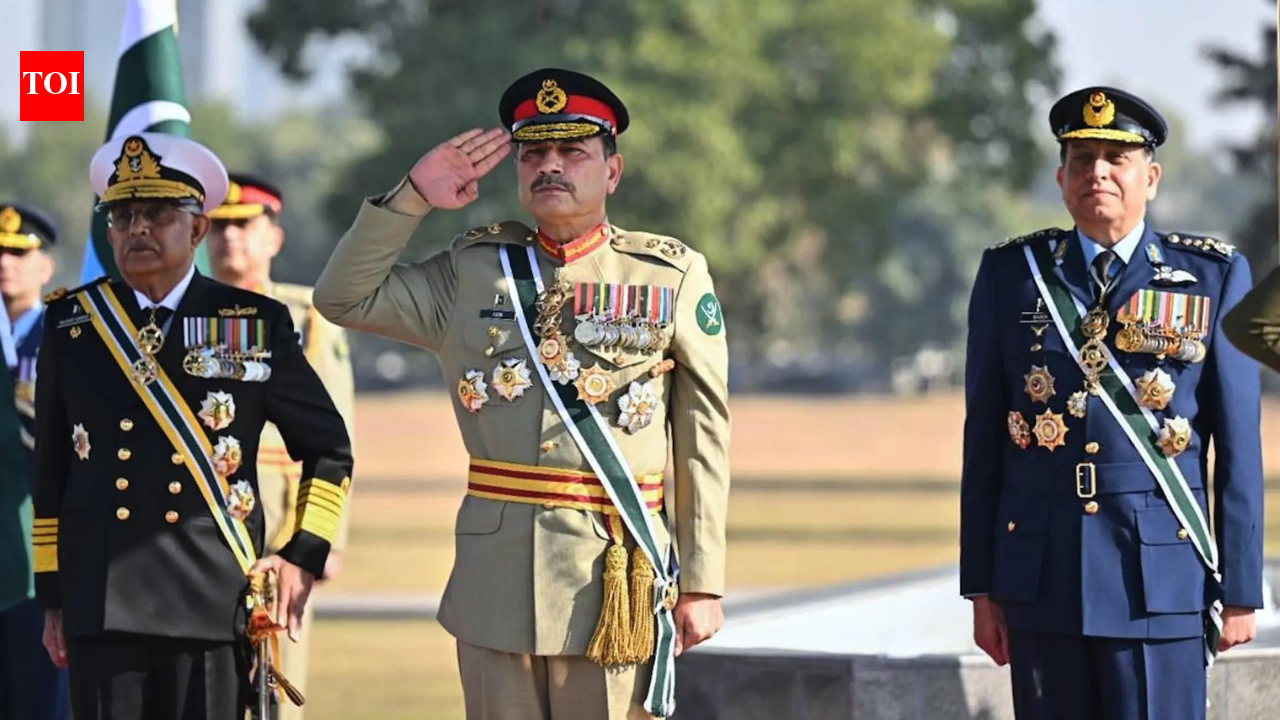
According to the report, Pakistan’s commemorations of the first anniversary of the May 2025 conflict, known as Marka-e-Haq, and the anniversary of its 1998 nuclear tests, Youm-e-Takbeer, offered clues about the changing role of nuclear weapons in the country’s security narrative.While Marka-e-Haq was elevated into a prominent state narrative, Youm-e-Takbeer received comparatively little attention in May 2026.“There were no large-scale celebrations, and no sustained media attention,” the report said, mentioning that senior civilian and military officials issued only brief statements on social media.The contrast was particularly notable because Pakistan’s ruling party Sharif brothers-led Pakistan Muslim League has historically highlighted the decision to conduct the country’s nuclear tests in May 1998.The report also pointed to the visual messaging across Islamabad, where public displays focused heavily on conventional military achievements, military leaders and battlefield successes.“Nuclear weapons and nuclear-capable missiles were conspicuously absent from these images of militarization,” it said, arguing that this reflected a deliberate shift in the state’s messaging.
Conventional military power gains prominence
The Bulletin of the Atomic Scientists linked the shift to the Pakistani military’s political interests, arguing that conventional military achievements offer a more visible way of demonstrating power and strengthening the armed forces’ public image.“The political interests of the military and its institutions are better served by conventional military success than nuclear weapons,” the report said.It argued that nuclear weapons have helped Pakistan’s military reinforce its position as the country’s principal guardian of national security, but their ability to generate popular support is more limited.“For a military establishment emerging from one of the most serious legitimacy crises in Pakistan’s history, highlighting conventional military achievements therefore has much more political value than celebrating the bomb,” the report said.The assessment pointed to Pakistan’s increased defence spending and the establishment of a new Army Rocket Force Command as signs of the growing emphasis on conventional military capability.
‘Full-spectrum deterrence’ exposed
The report also questioned Pakistan’s long-standing doctrine of “full-spectrum deterrence”, under which nuclear weapons were presented as a means of preventing aggression across the conflict spectrum.“The promise, which goes by the name full-spectrum deterrence, was huge but false,” it said.The May 2025 conflict, according to the report, demonstrated the gap between the claims surrounding nuclear deterrence and what nuclear weapons could actually accomplish during a military crisis.“Nuclear deterrence did not prevent the May 2025 crisis,” it said. “The fear of escalation did not keep India from striking deep in Pakistan’s heartland.”Under Operation Sindoor, India targeted nine major terror facilities across Pakistan and Pakistan-occupied Kashmir, and later struck 11 Pakistani airbases in response to Islamabad’s military escalation.The report said the limitations of nuclear deterrence had become increasingly difficult for Pakistan’s strategic establishment to conceal.
Nuclear weapons became part of the problem
The report argued that Pakistan’s nuclear arsenal not only failed to provide a solution during the confrontation but also introduced additional risks.“Nuclear weapons did not deter the crisis from unfolding, nor did they offer policymakers a way out once hostilities escalated,” it said.Instead, the presence of nuclear weapons constrained Pakistan’s response options because of the possibility of miscalculation and inadvertent escalation.The report cited the challenge Pakistan faced in responding to India’s missile strikes under Operation Sindoor. Any conventionally armed missile launch could potentially be misinterpreted by India as the beginning of a nuclear attack, creating a risk of rapid escalation.“The challenge was not simply how to respond, but how to respond without triggering catastrophic miscalculation,” it said.
Nuclear command and control entered the crisis
The report also referred to reports that Pakistan had convened, or was preparing to convene, its national command authority during the final stages of the confrontation, shortly before the United States announced a ceasefire.It said the significance lay less in whether the meeting actually took place and more in what the possibility revealed about the trajectory of the crisis.“The crisis had reached a point when nuclear command and control entered the public discourse, narrowing the margin for error and increasing the urgency of de-escalation,” the report said.International diplomatic intervention helped bring about a ceasefire before the risks escalated further, it added.
Warning for countries seeking nuclear weapons
The report said Pakistan’s experience does not necessarily disprove the theory of nuclear deterrence, but demonstrates the dangers of treating nuclear weapons as a universal answer to security challenges.“If anything, this experience reveals that the utility of nuclear weapons is narrower than many of their advocates claim,” it said.For countries considering acquiring nuclear weapons, Pakistan’s experience offers a different question, according to the report.Instead of asking only what nuclear weapons can provide in terms of security, countries should also consider “what military constraints and risks the bomb introduces.”


