



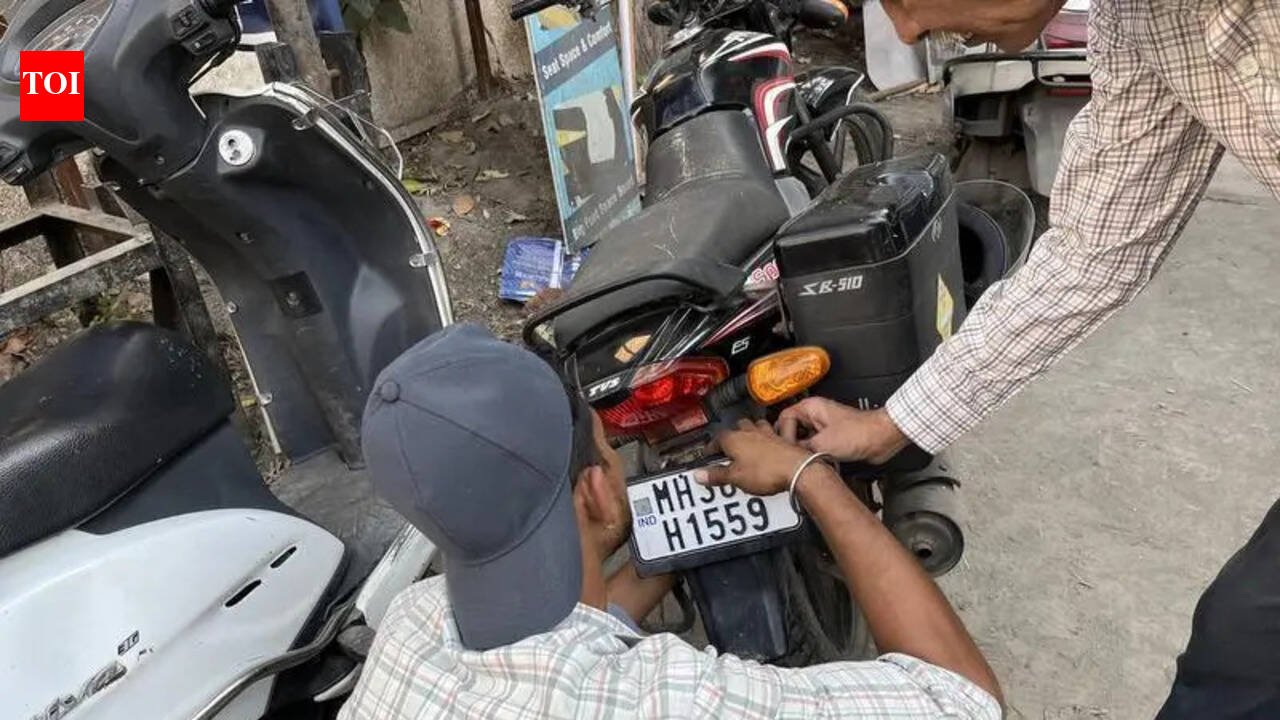
Pune: Nearly 18 months after the Maharashtra govt mandated high security registration plates (HSRPs) for vehicles registered before April 2019, compliance remains dismal. Currently, only 49% of eligible vehicles across the state have been fitted with the mandatory plates.State transport minister Pratap Sarnaik admitted that progress has been “very disappointing” and announced that a high-level meeting has been called for next week to review the bottleneck and decide on future steps.“We assigned the work to three agencies and expected the process to be completed by December last year. Unfortunately, they have failed to meet the target, and the numbers are unsatisfactory. For now, we are allowing them to continue and have not terminated their agreements,” Sarnaik told TOI.The scale of the task is massive: nearly two crore vehicles registered before April 2019 require HSRPs in Maharashtra. However, only around 98 lakh vehicles have completed the fitment process so far.The situation in Pune is equally sluggish. Of the approximately 25 lakh vehicles under the Pune RTO’s jurisdiction that require HSRPs, only 9.26 lakh have installed them to date. Transport officials noted that while 11.29 lakh owners in Pune have booked appointments, a vast majority have yet to even initiate the process.“The figures clearly show a lack of interest among vehicle owners. However, until the transport department issues specific directions to penalize violators, we cannot take action,” a Pune RTO official said.The initial notification regarding mandatory HSRPs for older vehicles was issued in late 2023, followed by several deadlines. The most recent deadline expired on December 31 last year. Despite earlier warnings of strict enforcement and heavy fines, the department is currently reluctant to crack down on defaulters.Minister Sarnaik explained that penal action could trigger public resentment. “Taking strict action at this stage may lead to unrest and anger among citizens, so we do not intend to fine them at present,” he said.Instead of enforcement, the government plans to increase the number of authorized fitment agencies to speed up the process. Fresh tenders have already been floated. “With more agencies involved, the process will become more accessible. In next week’s meeting, we will discuss measures to improve appointment rates and review the functioning of existing fitment centers,” the minister added.Vehicle owners, however, remain indifferent. A resident of Camp who owns a four-wheeler told TOI that the process is both cumbersome and expensive. “The authorities need to simplify the appointment system. The cost of the plates is also quite high. Furthermore, since there is no fear of a fine, people don’t feel compelled to get them installed,” he said.Fitment centre operators also blamed a lack of seriousness among the public. A representative from a center in Kondhwa said many customers who book appointments simply do not turn up. “We have stopped ordering fresh plates because people aren’t coming to collect them. We have piles of unclaimed plates lying in our office. Meanwhile, dealers are still handing over new vehicles without registration numbers, and the authorities don’t seem to have control over the situation,” he added.


