



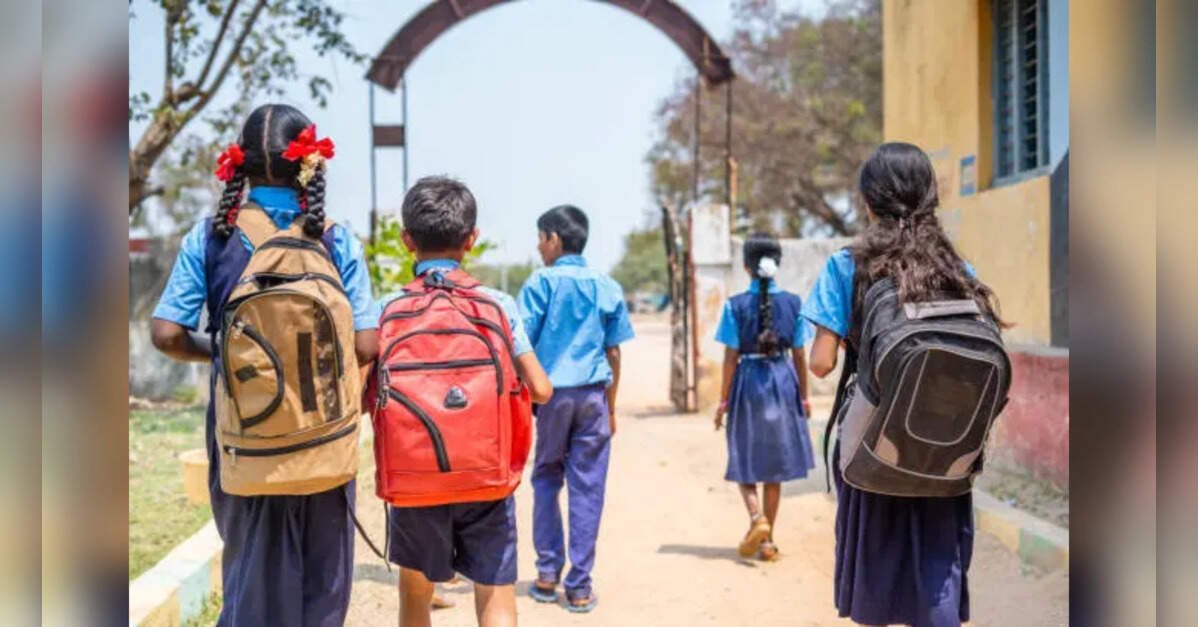
Mumbai: Just one in three Indian schoolchildren has adequate stamina, with only 34% meeting aerobic fitness benchmarks – the weakest among all indicators – according to a report evaluating over 1.4 lakh children across 333 schools in 112 cities.
The findings highlight poor cardiovascular endurance, weak muscle strength, and disparities across school types, even as overall fitness levels recover steadily after the Covid-19 slump. The report presents a mixed picture: while flexibility and core strength show relatively strong outcomes, the overall fitness profile remains uneven.
Aerobic capacity is the most alarming weakness, with just 34% meeting healthy standards. This reflects low cardiovascular fitness and limited ability to sustain physical activity.
“The main reason children are underperforming in aerobic abilities is rising obesity, which is becoming more common every day,” said bariatric surgeon Dr Sanjay Borude. Beyond endurance, upper and lower body strength remain consistently poor across age groups and regions. Lower body strength is a particular concern, indicating issues with balance, mobility, and overall conditioning.
Dr Aashish Contractor, director of rehabilitation and sports medicine at Sir HN Reliance Foundation Hospital, linked these trends to environmental and behavioural factors. “During childhood, the capacity for physical activity is the highest, but one of the biggest barriers today is the lack of open spaces and access to sporting facilities,” he said. “At both a family and institutional level, physical exercise cannot be treated as an afterthought — it must be an integral part of a child’s daily routine.”
In contrast, flexibility (70%) and core strength (87%) show better outcomes, suggesting some aspects of fitness are being maintained. The findings are part of the 14th Annual Health Survey released by Sportz Village. Public school students outperform private school students in five of seven fitness parameters. The gap is most visible in endurance metrics like aerobic and anaerobic capacity, suggesting higher daily physical activity among public school children. This may be linked to more opportunities for free play and movement.
However, lower body strength remains weak across both systems, indicating structural gaps. Diet may also play a role. “Another reason for lack of strength is inadequate protein intake. Diets, especially vegetarian ones, may not always provide the necessary protein required for muscle development,” Dr Borude said. Gender differences are also evident. Boys perform better in aerobic capacity and lower body strength, indicating stronger endurance. Girls show healthier BMI levels and better flexibility, suggesting better body composition and joint mobility. Despite these differences, poor aerobic fitness is common across both groups.
Regionally, western India performs best across most indicators, ahead of the North, East, and South.
However, no region reports a majority of children meeting endurance benchmarks, underscoring the nationwide scale of the problem. The report tracks a sharp pandemic-related decline in fitness. Levels dropped from 70.5% in 2020 to 56.2% in 2022 due to school closures, reduced activity, and increased screen time. Recovery has since been strong, with levels rising to around 85% by 2025 after schools reopened. “Since the pandemic, I have observed in my patients that they have become more conscious of their health and have a better understanding of how to preserve it,” Dr Borude said.
Children with more than 80 physical education sessions annually perform better across all parameters. “From a preventive healthcare perspective, structured physical education and sports are critical,” said Dr Ranjani Harish, senior scientist at the Madras Diabetes Research Foundation.
“Regular physical activity improves cardiovascular health, controls body weight, enhances insulin sensitivity, strengthens bones and supports mental well-being.”
She added that these benefits reduce long-term risks of diseases like diabetes, heart disease, hypertension, and obesity. “Schools play a central role in shaping lifelong health behaviours. Children who are physically active early in life are far more likely to remain active as adults,” she said.
Emphasising urgent lifestyle changes, Dr Contractor recommends a “steep reduction in ultra-processed foods and controlled and regulated screen time.”


