



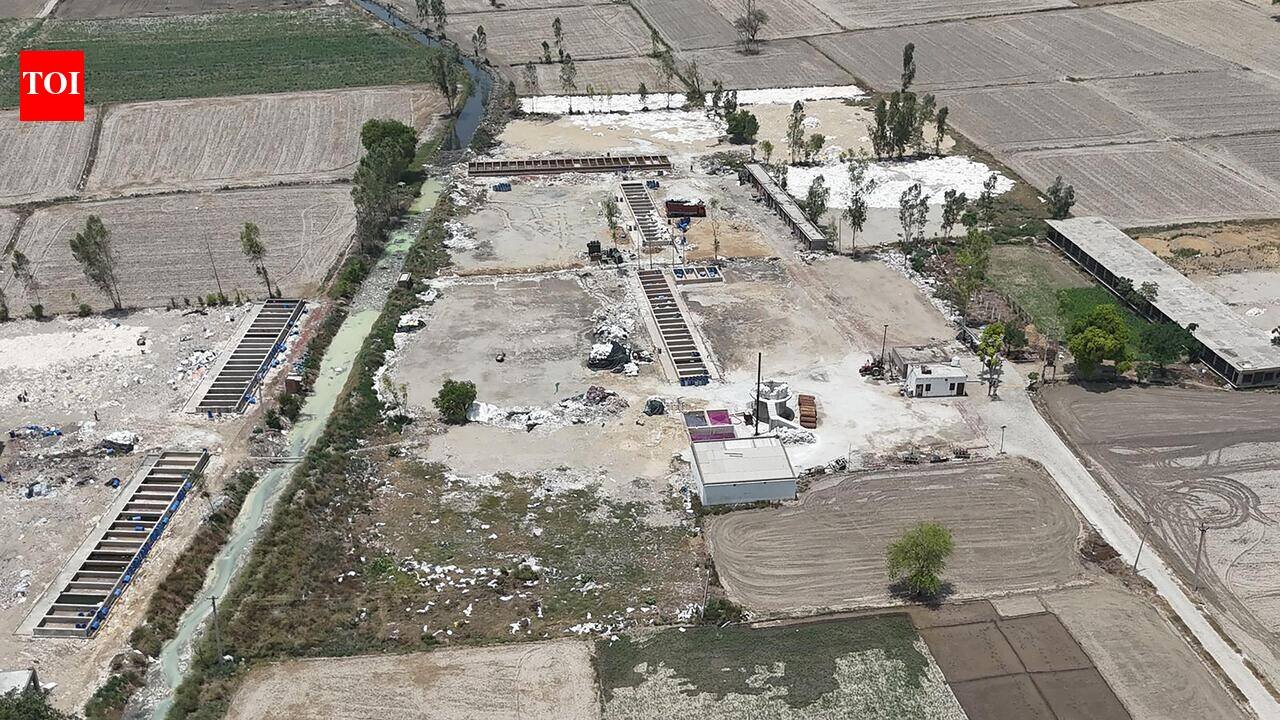
Gurgaon: A list of bleach houses and bleaching units in Panipat — against which the state pollution board took closure action between 2016 and 2025 — has highlighted the gap between enforcement and recovery of damages.During these nine years, Haryana State Pollution Control Board (HSPCB) ordered the closure of 132 bleach houses and bleaching units, but environmental compensation (EC) has been recovered in only three cases so far, according to an RTI reply. An HSPCB official told TOI he would check the matter.The RTI reply, obtained by activist Varun Gulati, includes a unit-wise list of bleach houses and bleaching units. The annexure shows that the status in most other cases was marked as “order awaited”.In its reply, HSPCB said EC has been recommended in all these 32 cases but has not been finalised due to observations received from the higher authority. The board also said that prosecution against these units is under process.HSPCB member secretary Yogesh Kumar told TOI, “There is some issue. We are currently gathering details regarding the illegal units and their ownership.”The three cases in which compensation has been recovered include Rs 3.5 lakh from Unique Enterprises, Karhans — in 2024; Rs 2.12 lakh (bleach house owned by Ramesh Kumar, Jatal village); and Rs 1.75 lakh (bleach house owned by Naresh Kumar, Jatal village) — the other two in 2019.The records show that closure action has been taken against bleaching units across Balana, Binjhol, Samalkha, Nimbri, Kurar, Naultha, Chandoli and other villages over nine years, indicating that illegal bleaching operations have remained a recurring enforcement challenge in the district.To avoid confusion, Gulati said a second RTI was filed because the first reply did not explain why compensation had not been recovered in most cases. The second RTI was not about all 132 units, but specifically sought the status of 32 bleaching units that are part of proceedings before National Green Tribunal (NGT).“The first RTI gives the larger picture of enforcement since 2016 and shows that closure action has been taken against 132 units. Since most cases still mentioned ‘order awaited’ for EC, I sought a separate clarification regarding the 32 units referred to in the NGT proceedings. The second reply explains the present status of those cases,” Gulati said.Environmental compensation is based on the ‘polluter pays’ principle, under which industries found violating environmental norms can be directed to compensate for the damage caused. While HSPCB’s records indicate continued enforcement against bleaching units, the RTIs show that the process of finalising and recovering compensation remains incomplete in a large number of cases, with the board attributing the delay in the 32 NGT-linked cases to pending observations from the higher authority.Bleaching units are textile processing facilities where fabrics, primarily cotton and blended textiles, undergo chemical treatment to remove natural colour, stains and impurities before dyeing or printing. The process typically involves chemicals such as hydrogen peroxide, caustic soda and other bleaching agents, and generates wastewater with high chemical load, alkalinity and dissolved solids.Panipat’s textile industry has a large concentration of bleaching units that prepare fabrics for dyeing and finishing. If untreated, the wastewater can contaminate drains and groundwater, making such units subject to stringent pollution control norms, including the requirement to treat effluent before discharge.


