






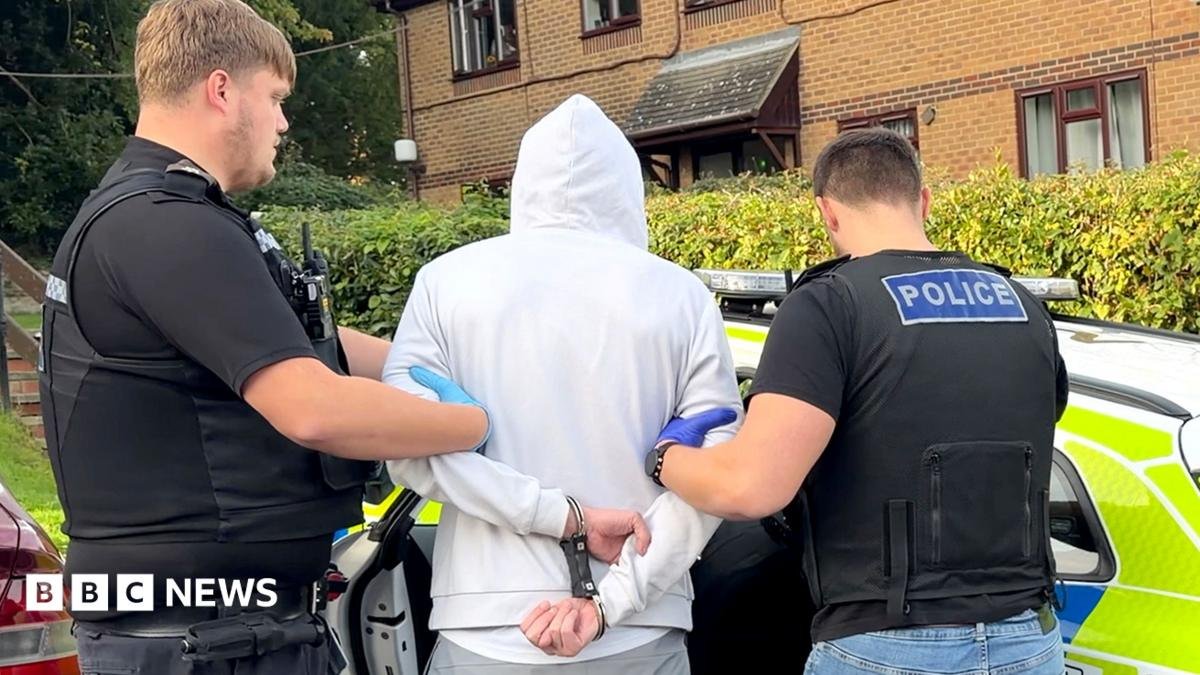
It is 01:00 on a Thursday and we are in the back of an unmarked police car on the hunt for vehicle thieves in east London.
A call comes in over the radio about a stolen Ford Transit van. Within 25 minutes officers have found it, chased it down and arrested a suspect.
Officers tell us the night has been successful, with further arrests made, yet across the UK a car is stolen every four minutes.
Despite a recent drop, vehicle thefts are up almost 50% in England and Wales compared with a decade ago, according to Home Office data. Last year, just 3% of vehicle theft offences resulted in a charge or summons.
As well as spending time on the front line in London and Sussex, we have privately spoken to 20 police officers from six forces.
They told us while they have the skills and experience to tackle vehicle crime, they are overstretched, under-resourced and struggling to keep pace with increasingly sophisticated criminal networks.
Thieves are becoming more confident. A man who claims he receives stolen vehicles and breaks them into parts at a so-called “chop shop” told the BBC he does not fear the authorities, because they “couldn’t catch a cold”.
Once the preserve of joyriders and opportunists, vehicle theft is now a lucrative global criminal business. Cars are stolen to order, and moved across the country or dismantled within hours, say police, making them difficult to recover and suspects hard to track. Many vehicles are sent overseas to places like the United Arab Emirates, The Democratic Republic of Congo and Jamaica.
Victims of car theft have told us they feel frustrated and helpless. One woman said it took car thieves just 35 seconds to steal her BMW, yet police only began investigating a day later. Another man said he feared for his life when masked thieves broke into his home demanding his car keys.
The success criminals are having is also hitting motorists more widely, with insurance quotes having risen by 82% since 2021, according to security think tank the Royal United Services Institute (Rusi).


