


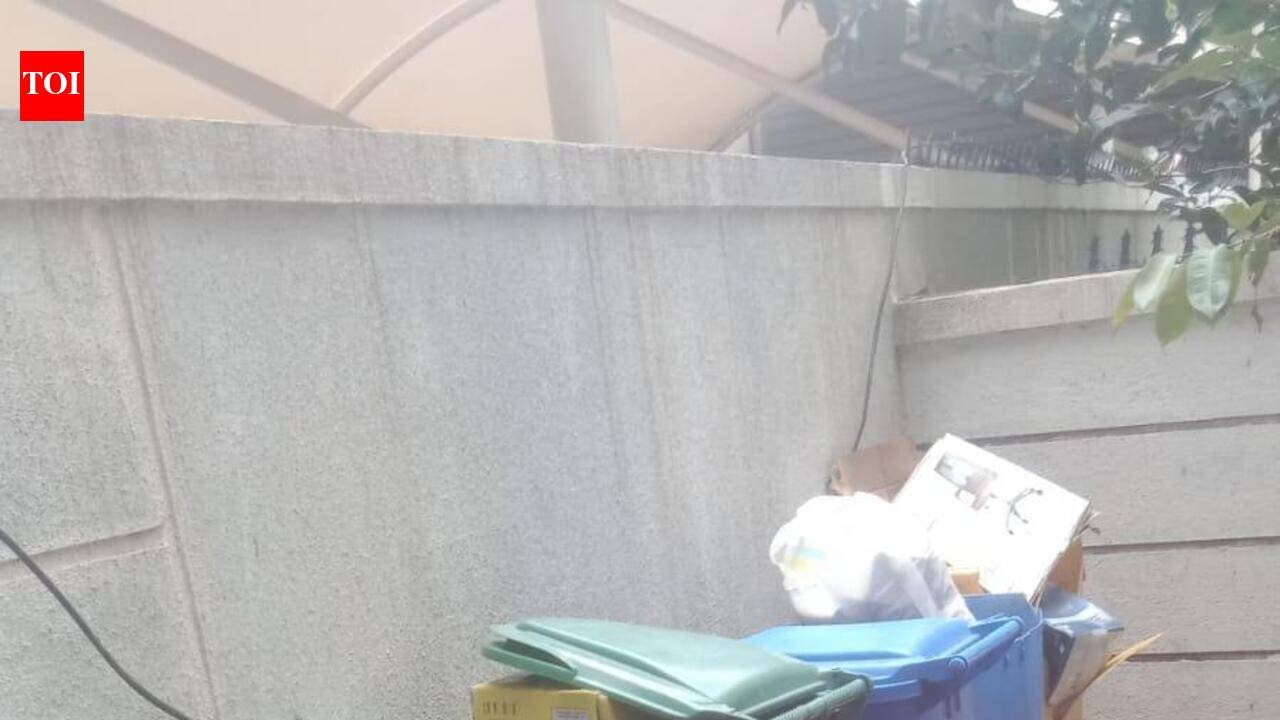
Pune: One month after Moshi waste depot tragedy claimed nine lives, Pimpri Chinchwad Municipal Corporation (PCMC) continues to struggle to restore normal waste management operations, with disruptions in door-to-door garbage collection persisting across several parts of the city.Residents from multiple localities said garbage collection vehicles visit their societies every four to five days and not daily, causing bins to overflow, creating a stench and posing health risks.Garbage at Mangaltirth Cooperative Housing Society in Ravet, which has 82 flats, has not been collected in nearly a week — this is how it has been since the July 8 incident. “The waste bins are overflowing, and even the additional bins we arranged are full. This has been the situation ever since the Moshi depot incident,” the housing society’s secretary, Nikhil Chuadhari, said.Aqua Millennium Society in Ravet with 92 flats has not had waste collected in five days. “Garbage has been piling up and stray dogs scatter the waste and our staff has to clean up and collect in bins again,” Pradip Bhole, a resident, said.Moshi depot reopened two weeks ago, while waste dumping resumed 10 days ago. Civic officials blamed the delay in resumption of operations on the development of an access road connecting the site with a newly designated landfill. A PCMC environment department official said the hotel waste-to-biogas plant, plastic-to-fuel facility and construction and demolition (C&D) waste processing plant have resumed operations, but at limited capacity. The WTE plant, which processes around 800 metric tonnes of waste per day, has remained shut since the July 8 incident.“We have asked the biomining contractors to expedite the work. However, the ongoing monsoon has slowed the biomining process as it requires dry waste,” the official said.Deputy municipal commissioner Pradip Thengal admitted that the civic body’s health department is under pressure as it has to manage routine door-to-door collection as well as clear waste that was temporarily dumped at open spaces after operations at Moshi depot were suspended. He said they have increased the number of waste collection vehicles, but to no avail. “Unlike earlier, we are now dumping nearly 2,000 to 2,500 metric tonnes of waste every day, and the operations continue till 11 pm,” Thengal said.The city generates around 1,400 to 1,500 metric tonnes of solid waste every day. Thengal said before the accident, only 300-400 metric tonnes of waste needed to be sent to the landfill as most of the city’s waste was processed at the WTE plant. Now, collection vehicles queue up for a long time every day to take the waste to the landfill. Further complicating matters are vehicles getting mired on the muddy road. “Because of this, several societies and areas are not being covered,” Thengal said.In the days following the accident, PCMC temporarily dumped the city’s waste in open spaces within its limits as well as in Dehu Road and Khadki cantonment areas. PCMC will have to transport that waste back to Moshi depot for final disposal — a process that could take up to a month.Meanwhile, PCMC has disbursed compensation of Rs 10 lakh each to the families of seven of the nine victims, with the remainder slated to get their due soon.
