


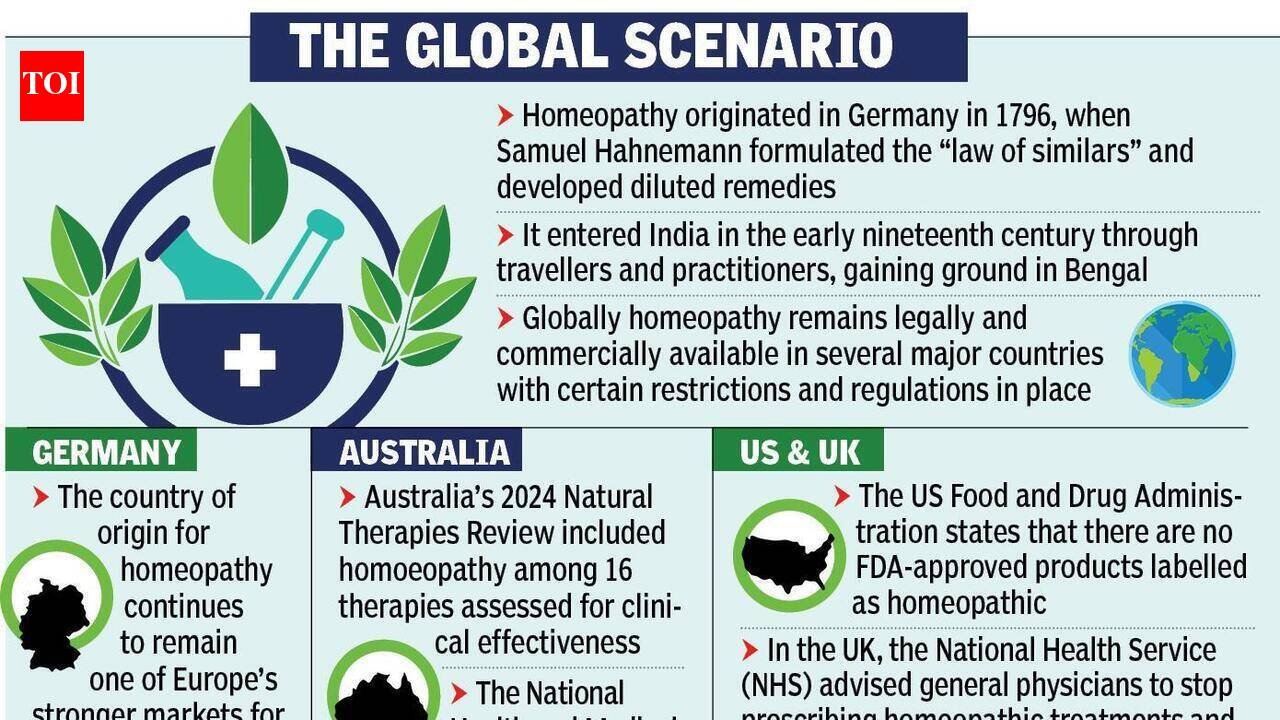
What is the difference between homeopathy and allopathy?Homeopathy is based on “like cures like” method. The system includes the use of biochemic medicines. Allopathy, more accurately called modern or conventional medicine, relies on anatomy, pathology, pharmacology, clinical research, diagnostic testing, surgery and evidence-based treatment. The philosophies, training pathways and regulatory structures of both these treatment practices differ.What are the regulatory bodies?National Medical Commission (NMC) regulates allopathy and homeopathy is regulated by National Commission for Homeopathy (NCH).Why were homeopaths allowed to prescribe allopathic medicines?In 2014, the Maharashtra govt made amendments to the Maharashtra Homoeopathic Practitioners’ Act, 1960 and the Maharashtra Medical Council Act, 1965, allowing homeopaths to prescribe allopathic medicines. The primary concern at the time was shortage of MBBS doctors in remote and rural areas.Why do homeopaths want Maharashtra Medical Council (MMC) registration?Homeopathic practitioners claim that without the MMC registration, BHMS-CCMP practitioners, who manage majority of primary healthcare services at village- and taluka-level, can’t prescribe allopathic medicines for commonly reported ailments like insect bites or respiratory infections, exposing them to legal actions or risking the loss of patient’s life.What allopaths fear?If Maharashtra allows homeopaths to prescribe allopathic medicines, other states would follow soon, feared Dr Dilip Bhanushali, immediate past president of Indian Medical Association (IMA). Dr Bhanushali said, “Even today, a lot of homeopaths and ayurvedic doctors are prescribing allopathic medicines without registration. It is illegal. The govt must focus on such quackery. The alternative medicine practitioners must focus on the kind of medicines they are trained in. Don’t they believe in their own medicines? Let them use homeopathic and ayurvedic medicines in its purest form. How can homeopaths be on a par with MBBS doctors after just a one-year course of CCMP (Certificate Course on Modern Pharmacology) when MBBS doctors are trained for at least six years to be able to do so?”Isn’t there a shortage of MBBS doctors?Dr Bhanushali said the number of medical colleges had gone up from 325 to over 800 and the number of MBBS doctors passing out each year has gone up to about one lakh. The govt is unable to absorb all the MBBS doctors. That is the reason why Maharashtra cancelled the bond system. There is no dearth of MBBS doctors, the problem is infrastructure. Many primary health centres or rural hospitals do not have even the most basic infrastructure to accommodate a doctor. The govt must fix it.”What is the stand of homeopaths?The majority of the burden of primary healthcare was on AYUSH doctors and alternative medicine practitioners even today, said Dr Bahubali Shah, administrator, Maharashtra Homoeopathic Council. “Back in 2013, there was a dearth of allopathic doctors and even today the situation remains the same. If the IMA is opposed to mixopathy, then why do allopathic doctors prescribe ayurvedic or homeopathy medicines? The act was amended not just for allopathy but for overall healthcare of the state. The IMA is simply defaming homeopathy and acting as dictators. They argue that the number of medical colleges and doctors have gone up in the past decade, but the population has also surged. Many allopathic doctors practice in other states and foreign countries, while being registered in Maharashtra. So, the actual number of allopathic doctors available in the community is not truly reflected. The PG seats have also gone up and many doctors provide only specialised care. So, primary healthcare remains ignored,” he said.Is there a commercial interest?Dr Bhanushali said, “About 80% of the homeopathy colleges are owned by politicians but no one is willing to take admission there. This is about economics. Will these same politicians undergo treatment under any homoeopaths? Every year this issue is raised during June-July, the admission period. Allowing homoeopaths to prescribe allopathic medicines will damage our international reputation as an emerging medical tourism destination in the world.”Will hospitals lose workforce if homeopaths are allowed to practice modern medicine?Dr Shah said, “The IMA fears that allopathic doctors and hospitals would lose a lot of ‘workforce’ if CCMP-qualified homeopaths are registered under the MMC. A lot of homoeopaths are recruited by allopathic doctors. The IMA is spreading misinformation only because of commercial interest and the possible shortage of homeopaths at hospitals. The govt has taken a decision based on scrutiny and expert opinion.”Is homeopathy not based on evidence?Dr Shah said, “The Central Council of Homeopathy was established in 1973 through the Homeopathy Central Council Act, recognising homeopathy as an alternative medicinal practice. The AYUSH ministry was also brought in to promote alternative medicines. It is not true that homeopathy is not evidence based. With MMC registration, a BHMS-CCMP doctor will be able to prescribe allopathic medicines legally. Right now we do not have a legal recognition to do so. The syllabus of CCMP from page 17 to 27 specifies how to treat a patient for primary care and how to conduct minor procedures like stitches.”Is there an insurance policy for homeopathic treatment?In Dec 2025, the Insurance Regulatory and Development Authority of India (IRDAI) [Insurance Products] Regulations 2024, provided the definition of “AYUSH Treatment” referring to the medical and/or hospitalisation treatments given under ayurveda, yoga and naturopathy, Unani, Siddha and homeopathy systems. Further, insurers were mandated to have in place a board approved policy for providing AYUSH coverage, which inter-alia, shall include their approach towards placing AYUSH treatments on a par with other treatments for the purpose of health insurance so as to provide an option to policyholders to choose treatment of their choice.
