






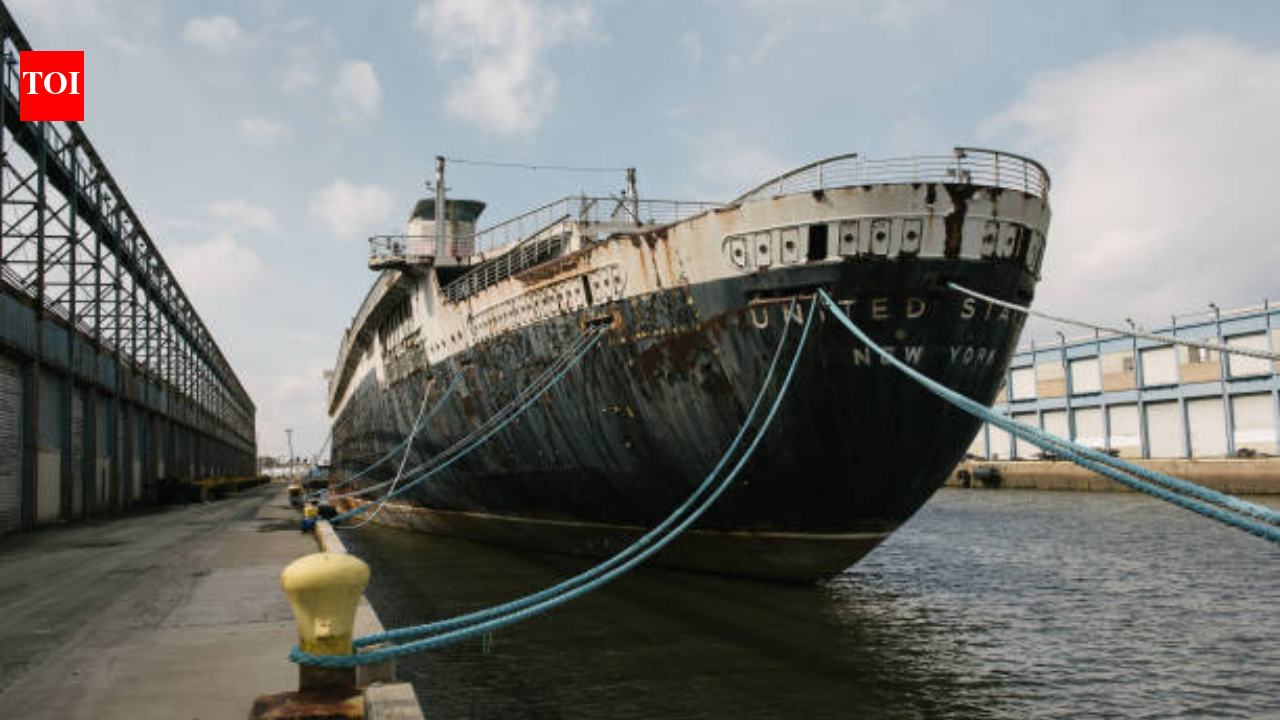
The SS United States, a 990-foot ocean liner that carried presidents, dignitaries and celebrities across the Atlantic, is preparing for a final voyage that will take it from a historic passenger ship to an underwater attraction. More than seven decades after its maiden voyage in 1952, the vessel is scheduled to be sunk off Florida’s Gulf Coast in November 2026, where it is expected to become the world’s largest artificial reef. The deployment is planned for the second week of November, subject to final arrangements and weather conditions, according to the SS United States Conservancy.The ship is currently in Mobile, Alabama, where it has undergone environmental remediation and preparations for its planned conversion. Okaloosa County, Florida, which purchased the vessel to prevent it from being scrapped, intends to place it approximately 22 nautical miles southwest of Destin–Fort Walton Beach in the Gulf of Mexico. The project aims to create marine habitat while establishing a new attraction for divers, anglers and tourists.
A record-breaking transatlantic liner
The SS United States made its maiden voyage on July 3, 1952, travelling from New York to Europe. According to the Smithsonian National Museum of American History and the ship’s conservancy, it set a transatlantic speed record on that voyage, capturing the Blue Riband, the informal distinction awarded to the fastest passenger liner crossing the Atlantic. It completed the westbound crossing in three days, 10 hours and 40 minutes, surpassing the previous record held by the British liner RMS Queen Mary.American naval architect William Francis Gibbs designed the ship, which was built at Newport News Shipbuilding in Virginia. Its use of aluminium in parts of its construction helped reduce weight, while its powerful propulsion system gave it exceptional speed for a passenger liner. The vessel was also designed with national defence in mind: during the Cold War, it could potentially have been converted into a troop transport in the event of a military emergency. The US government helped fund its construction, reflecting the strategic thinking behind the project.At 990 feet long and weighing more than 53,000 tons, the ship became a symbol of American engineering and post-war maritime ambition. Its passenger lists included prominent figures from politics and entertainment, and four US presidents travelled aboard during its service: Harry Truman, Dwight Eisenhower, John F. Kennedy and Bill Clinton. Clinton’s voyage took place when he was a Rhodes Scholar travelling to Oxford, before he became president.
Why the ship stopped sailing
Despite its record-breaking performance, the SS United States was overtaken by changes in transatlantic travel. Commercial aviation became faster and increasingly accessible during the 1950s and 1960s, reducing demand for lengthy ocean crossings. The ship was withdrawn from service in 1969 after 17 years of operation.Its future remained uncertain for decades. The vessel was moved to Philadelphia in 1996, where it stayed docked for nearly 30 years. Various proposals sought to restore it as a passenger ship, turn it into a hotel or transform it into a tourist attraction, but none materialised. Financial difficulties and a dispute over docking fees eventually intensified concerns that the ageing liner could be sold for scrap.Okaloosa County ultimately acquired the ship for $1 million in 2024, with the stated intention of creating an artificial reef off Florida. After leaving Philadelphia in February 2025, the vessel was towed to Mobile, where it arrived the following month for preparation. The wider project has been reported to cost approximately $10.1 million, including acquisition, transportation, environmental cleanup and deployment.
From ocean liner to underwater habitat
Before the ship can be submerged, it must be prepared to ensure that hazardous materials do not contaminate the marine environment. Okaloosa County says the required environmental remediation has been completed, but final approvals from the US Army Corps of Engineers and the Environmental Protection Agency remain necessary before deployment can proceed. The November timeline should therefore be treated as a plan rather than a confirmed sinking date.Artificial reefs are submerged structures that provide surfaces and shelter for marine organisms. Over time, organisms such as algae, corals and other invertebrates can colonise suitable surfaces, attracting fish and creating habitat for marine life. The SS United States is expected to become a particularly prominent site because of its size and the potential range of underwater structures it offers. The project is also intended to strengthen the region’s diving and fishing tourism industries.The ship is expected to rest near the USS Oriskany, a former US Navy aircraft carrier that was deliberately sunk off Florida in 2006 and became a major artificial-reef diving site. The SS United States is expected to surpass the Oriskany in size, giving it the distinction of becoming the world’s largest artificial reef if the planned deployment goes ahead as announced.Not every part of the liner will disappear beneath the water. The SS United States Conservancy has retained significant components, including the ship’s iconic funnels and radar mast, for a planned land-based museum and visitor centre near Destin–Fort Walton Beach. The museum is intended to preserve the vessel’s history and engineering legacy for visitors who may later explore its underwater remains.


