






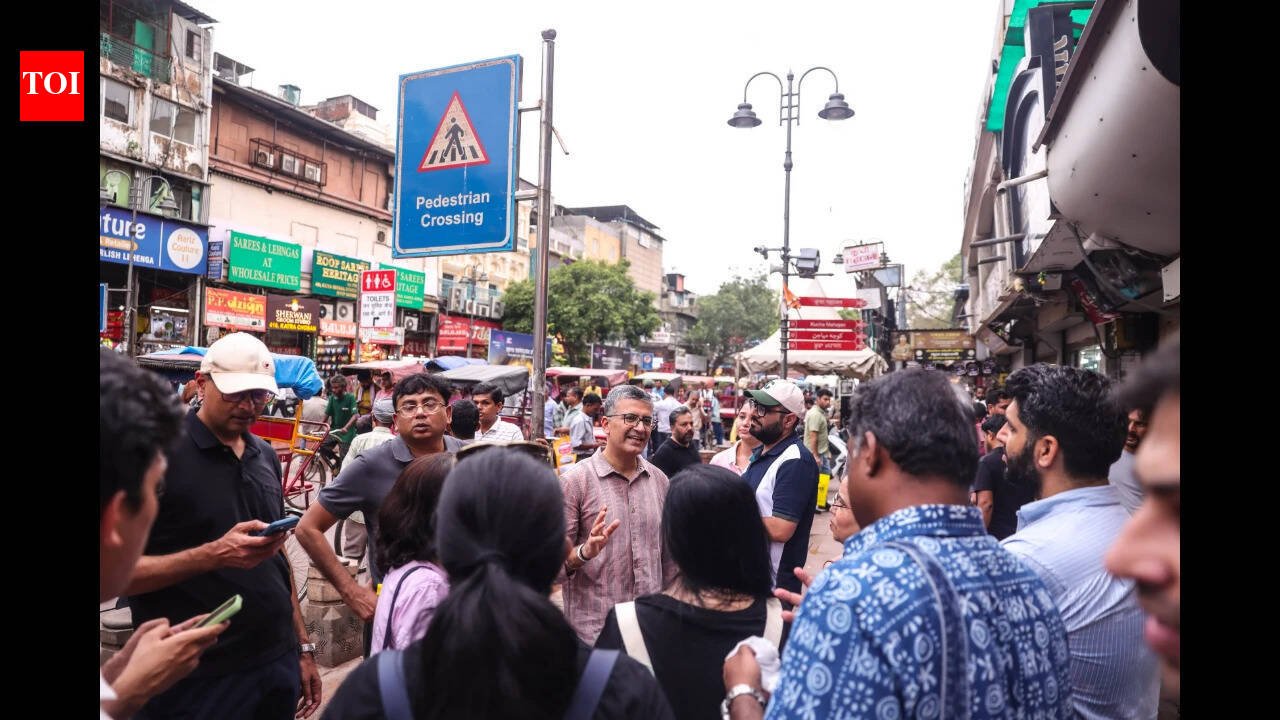
The walk wasn’t just about eating—it was about understanding what happens before the first bite. From naturally fermented khameeri roti and bhaturas to the lacto-fermented brine of kanji vada and the overnight fermentation behind jalebis, participants discovered how wild yeasts, bacteria and time have quietly defined Old Delhi’s most iconic flavours.Held on July 18, Fermented Flavours of Old Delhi was curated by Delhi Food Walks in collaboration with Desi Cultures, an online festival dedicated to the fermentation traditions of the Indian subcontinent. Led by Delhi Food Walks founder Anubhav Sapra, the experience encouraged participants to look beyond familiar street food and uncover the science and history hidden in every bite. The walk marked the opening of Desi Cultures 2026, founded by food researcher and filmmaker Shubhra Chatterji and co-curated by Payal Shah of Kobo Fermentary.
On this walk, every bite came with a lesson in the invisible microbes that have shaped Old Delhi’s food traditions for generations.
“This was a new way of experiencing and understanding Old Delhi food,” said Sapra. Rather than focusing solely on where to eat, the walk explored why these dishes taste the way they do and how centuries-old fermentation techniques continue to shape the city’s culinary identity.
From kanji vada to bhalle, this walk revealed how Delhi’s street food has relied on microbes for centuries.
Participants learnt that the airy texture of a bhatura begins with a six-to-eight-hour fermentation, where wild yeasts and lactobacilli produce carbon dioxide that causes the dough to puff dramatically when fried. Khameeri roti, a Mughal-era staple, relies on a living starter culture refreshed with flour and water, much like a sourdough, resulting in its characteristic mild tang and light crumb.
Fermented Flavours of Old Delhi was a special food walk led by Delhi Food Walks founder Anubhav Sapra in collaboration with Desi Cultures
The science continued with dahi vada, where fermentation transforms both the lentil batter and the curd, while kanji vada derives its sharp, pungent flavour from a mustard-seed brine fermented over several days by naturally occurring lactic acid bacteria. Even jalebi, often thought of simply as a sweet treat, owes its crisp exterior and airy interior to an overnight fermentation that creates tiny gas pockets in the batter before it is fried and soaked in syrup.
Participants learnt how fermentation has shaped flavours that Delhiites often take for granted
The handout distributed during the walk, prepared by sourdough enthusiast Anu Mathur, explained the microbiology behind each dish, reminding participants that long before probiotics became a wellness trend, Delhi’s kitchens had already mastered the art of working with microbes. Wild yeasts, lactic acid bacteria and time have been transforming flour, lentils and milk into breads, beverages and sweets for centuries.
Since it is saawan, the fermented food walk ended with sweet slices of ghewar


