



A surge in global oil prices triggered by escalating tensions in West Asia is beginning to ripple through India’s domestic energy economy, disrupting cooking gas supplies and accelerating a shift toward electric alternatives.
Brent crude has climbed over $100/bbl in recent weeks amid fears of supply disruptions through key shipping routes, raising concerns for India, which depends on imports for the bulk of its energy needs. The impact is now being felt at the household level, with tighter availability of liquefied petroleum gas (LPG) and rising costs for commercial users.
India’s annual LPG consumption doubled between 2011-12 and 2024-25, rising from nearly 15 MMT to nearly 31 MMT, according to the International Institute for Sustainable Development (IISD) report. More than 93% of the increase in LPG consumption during this period was met through an increase in imports.
LPG supply tightens, businesses feel the heat
India’s domestic LPG supply is vulnerable to geopolitical shocks, as a large share is sourced from producers in West Asia. Industry participants have reported delays in LPG cylinder deliveries in several cities, increased diversion of supply toward households and rising costs for commercial cylinders used by restaurants and small businesses. For food service operators, the squeeze is immediate. Many small eateries and cloud kitchens are struggling to maintain margins as fuel costs climb.
Electric cooking emerges as a viable alternative
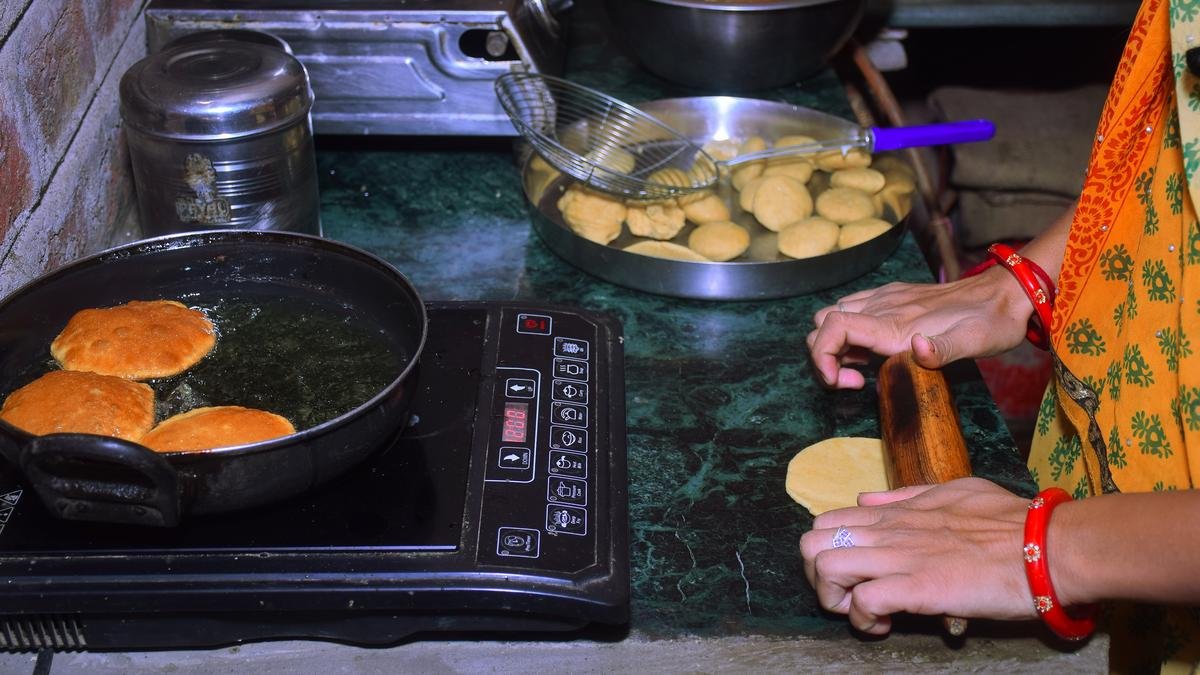
Against this backdrop, electric cooking is gaining traction as a practical substitute. Appliance retailers in urban markets report a pickup in demand for induction cooktops, electric pressure cookers and infrared stoves. “In practice, induction cooking operates at roughly 80–85% efficiency, while LPG stoves typically achieve about 45–55% range due to heat losses to the surrounding air,” said Neha Dhingra, Director of the India Programme at CLASP, an international non-profit organisation focused on energy efficiency standards and policies for appliances and equipment.
The 2026 IISD report comparing LPG, piped natural gas (PNG), and electricity finds that electric cooking is already the most cost-effective option for most Indian households in terms of operating expenses.
According to the report, at current prices of ₹853 per LPG refill (14.2 kg), ₹50/SCM PNG, and ₹6/kWh electricity — a non-PMUY (Pradhan Mantri Ujjwala Yojana) household spends about ₹6,800-6,900 a year on LPG or PNG for exclusive cooking, versus ₹5,800-5,900 a year with e-cooking, making e-cooking already cheaper on operating costs. E-cooking remains cost-competitive up to ₹7/kWh; if LPG is priced at its market level (₹1,110 per refill, hypothetically), it stays cheaper even at ₹9.1/kWh — well above the average cost of supply for most distribution companies (discoms).
Cost dynamics shift in favour of electricity
The economics of cooking energy are shifting. While LPG has traditionally been preferred for its convenience and speed, its pricing is closely linked to global crude markets. Electricity, by contrast, is domestically generated and less exposed to international price swings.
However, the advantage varies depending on local power tariffs and usage patterns.
Infrastructure and cultural barriers persist
Despite growing interest, electric cooking continues to face structural hurdles. “Many households initially adopt induction cooktops for specific tasks, using them as a complementary technology rather than a standalone solution,” said Ms. Dhingra.
She noted that most induction cooktops available in the market are single-zone units, whereas LPG stoves typically have multiple burners, allowing households to cook several dishes simultaneously. Differences in heat control, along with deeply ingrained cooking habits, also mean that behaviour plays a critical role in technology adoption.
“Electricity tariffs and LPG subsidies and usage patterns influence the final cost for households. The upfront cost of induction cooktops and compatible cookware can also influence adoption decisions for some households,” she noted.
The ongoing disruption is now drawing attention in policy circles. The government has begun sourcing natural gas from alternative suppliers and routes to offset supply risks arising from tensions in West Asia, according to the Press Information Bureau (PIB) on March 11, 2026.
A broader energy security question
The crisis lays bare a core vulnerability: India’s reliance on imported fuel for everyday energy. As long as global oil markets remain volatile, domestic prices will stay at the mercy of external shocks. “E-cooking, in these circumstances, offers an opportunity to reduce reliance on imported fuels while improving the efficiency of household energy use,” noted Ms. Dhingra.
Published – March 18, 2026 04:57 pm IST


