



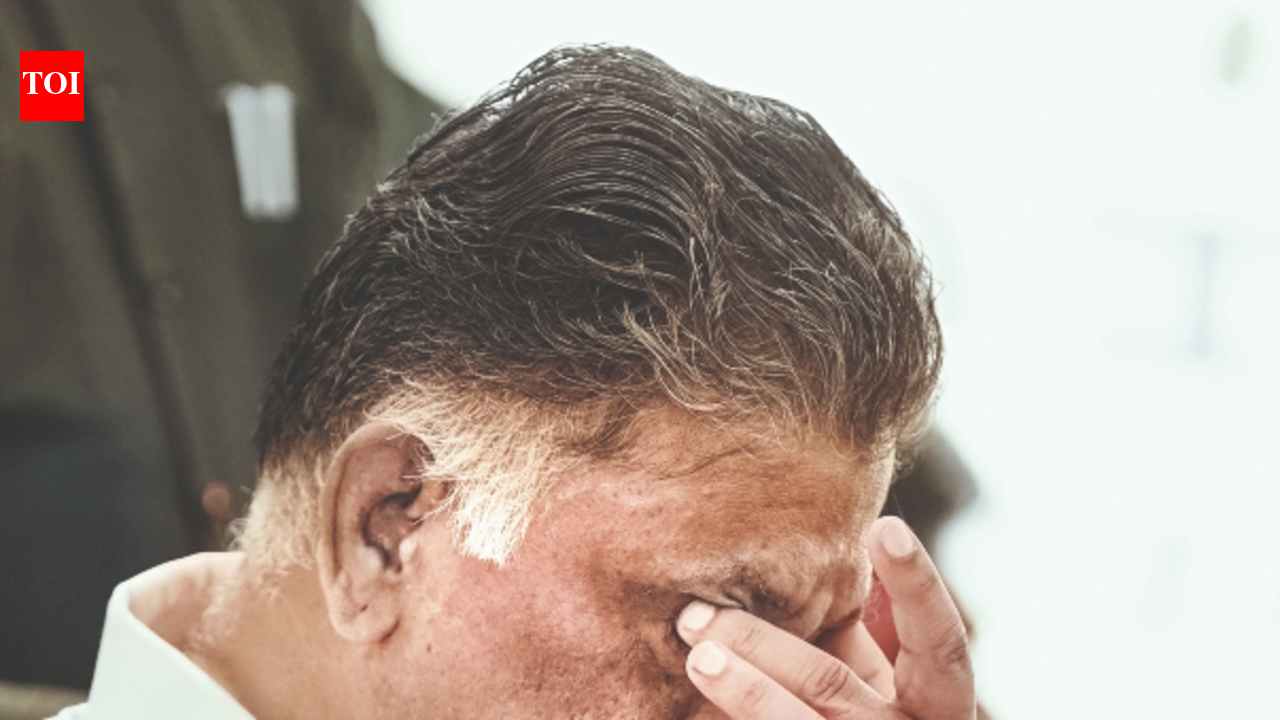
Aspire K SwaminathanTamil Nadu has always admired loyalty in politics. But it has never mistaken loyalty for power for too long.That is why O Panneerselvam’s journey is worth revisiting, not as a sentimental rise-and-fall story, but as a practical lesson in how politics really works once a powerful era ends.OPS rose in a system where trust mattered enormously. He was seen as dependable, disciplined, and safe in moments of uncertainty. That image took him to the top more than once. In a political culture shaped by commanding personalities, he stood out precisely because he was not trying to overshadow the leader.That was his strength.But after J Jayalalithaa’s death in Dec 2016, the rules changed. The political environment no longer rewarded only steadiness. It demanded something else: speed, ownership, and the ability to build a power structure of one’s own.That is where OPS faltered.The easiest way to describe his decline is to say he was indecisive. That is true, but incomplete.The deeper issue was this: he often seemed to wait for politics to become fair.He appeared to believe, at crucial moments, that his loyalty, his seniority, and the goodwill he enjoyed would eventually produce the right outcome. That if he held his ground, something would shift in his favour. That someone, somewhere, would make the necessary move.But politics does not reward waiting. It rewards those who act while others are still hoping.This is the single biggest lesson from the OPS arc for younger leaders: legitimacy is only a starting point; if you do not convert it quickly, it becomes memory.OPS had moments that most politicians can only dream of. He had public sympathy. He had a recognisable stature. He had a moral claim in a charged political atmosphere. At one stage, he had emotional momentum and visibility at the same time, a rare combination in TN politics.But a political moment is not the same as political control.That distinction is where many careers are decided.A moment can give a leader attention. It can trigger public discussion. It can energise supporters. But after that comes the harder part: building the machinery that can hold and extend the advantage. District networks. Loyal second-rung leaders. Clear internal messaging. Repeated signals of direction. A sense among supporters that the leader knows exactly where he is headed.Without that, even genuine goodwill starts to thin out.In OPS’s case, the pattern became familiar: a strong emotional surge, then uncertainty; a powerful political signal, then drift; a visible opening, then no decisive consolidation.Supporters and followers can forgive defeat. What they cannot forgive but rather struggle with is ambiguity.A leader who asks people to rally behind him must also show that he is willing to carry the full burden of the fight. That means making hard calls early, not after the field has already shifted. It means taking ownership of the consequences, not waiting for a more comfortable alignment. It means understanding that once you step out as a claimant, you can no longer operate with the caution of a caretaker.And this was another OPS problem: he often looked like a man caught between two roles.He was no longer merely the loyal deputy. But he did not fully become the commanding challenger either.That in-between position can be politically fatal, and in his case, it has been. It creates doubt in the minds of cadre, allies and fence-sitters. Politics is unforgiving of hesitation because uncertainty itself becomes a signal. When a leader is not decisive, others begin to decide the future around him.To be fair, this is not just about personality. Post-charismatic succession battles are brutal by nature. Systems become unstable. Ambitions sharpen. Organisational fights are dressed up as moral debates. Every move is watched, interpreted and countered. Not every leader is built for that kind of conflict.But that is precisely the point.OPS was built for loyalty politics. He was not equally prepared for succession warfare.There is no disrespect in saying this. In fact, there is value in saying it plainly. Younger politicians need to understand that the qualities that help you rise under one kind of leadership may not be enough to help you survive after that leadership is gone.Tamil Nadu politics is now entering another phase where this lesson matters. More leaders will face transitions. More parties will confront questions of succession, legitimacy and control. More politicians will discover that public affection and organisational power are not the same thing.That is why OPS remains politically relevant as a case study, whatever his current role may be.His journey shows both the strength and the limits of personal credibility in modern politics. It shows how far dignity can take a leader and where dignity alone stops being enough. It shows how political capital can be lost not only through betrayal or defeat, but through delay.In the end, the OPS story offers a simple rule that every ambitious politician should note:Goodwill gives you an opening.Symbolism gives you a moment.Only action gives you a future.(The writer is former secretary of AIADMK’s IT wing)


