


Every year, India observes Poshan Pakhwada, a 15-day nationwide campaign under Mission Poshan 2.0, mobilising over 14 lakh anganwadi centres around child nutrition. Since 2018, it has generated over 150 crore sensitisation activities. For seven editions, its language has been familiar: supplementary nutrition, immunisation, breastfeeding, growth monitoring. All essential but all describing what the body needs to survive.
This year, something shifted.
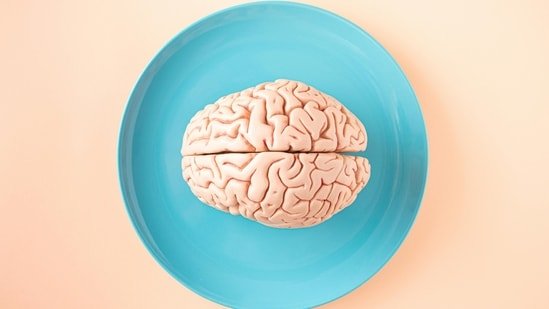
The theme of Poshan Pakhwada 2026 is Maximising Brain Development in the First Six Years of Life. This is not cosmetic rebranding. It is an acknowledgement, at the highest levels of the Indian State, that the goal of early childhood is not merely a child who survives, but a child whose brain is actively shaped for lifelong learning, health, and productivity. Few nations running a programme of this scale have made this leap so explicitly. It demands a fundamental reimagining of what frontline workers do, how they are trained, and what we expect of them.
More than one million neural connections form every second in the early years and this is not a poetic metaphor.
At birth, the brain is only 25% of its adult size, unique among all human organs. It doubles in the first year alone, reaching 80% by age three and nearly 95% by age six. A three-year-old’s brain is twice as active as an adult’s not because it is more efficient, but because it is in a state of extraordinary overproduction. In a process called synaptogenesis, the brain generates far more neural connections than it will ultimately keep, casting a wide net of possibility.
What follows is equally important: Pruning the selective elimination of unused connections, while those reinforced by experience grow stronger. This is where caregiving becomes biology. Scientists call it ‘serve and return’: A baby reaches out through a cry, a gaze, a gesture; the caregiver responds; a neural connection is made and strengthened. Repeated across thousands of daily interactions, these exchanges literally wire the brain. Neglect them, and the architecture suffers quietly, invisibly, and often permanently.
As the Harvard Center on the Developing Child articulates, genes provide the blueprint; experience builds the house. Evidence from epigenetic research further shows that early caregiving environments can influence how genes are expressed, with lifelong consequences for cognition, stress, and health. The caregiver is not a support actor in a child’s development. She is the lead.
India’s Integrated Child Development Services (ICDS), established in 1975, is one of the world’s largest social programmes for young children. With over 14 lakh anganwadi centres serving 8.9 crore beneficiaries, the scale is unparalleled. Yet over five decades, ICDS has drifted disproportionately weighted towards supplementary nutrition and administrative tasks, while developmental services, particularly for children under three, remain chronically underserved.
The launch of Navchetana (birth–3 years) and Adharshila (3–6 years) signals an intent to close this gap, bringing for the first time an explicit structure for early stimulation, school readiness, and inclusion.
Encouragingly, models already exist. The Nand Ghar initiative demonstrates how anganwadi centres can function as integrated hubs where nutrition, early learning, and behavioural engagement converge. Similarly, CSR-led partnerships across India, from early childhood interventions supported by Tata Trusts to community health and nutrition platforms backed by organisations like Reliance Foundation, demonstrate that the private sector can act as a catalytic partner in strengthening public systems, not parallel to them but embedded within them
India’s most under-exploited strength is its two cadres, the anganwadi worker (AWW) and the ASHA, who already reach the same household through different doors. The AWW delivers stimulation, pre-school education, and nutrition; the ASHA works on maternal health, immunisation, and disease prevention. Together, they cover nearly every settlement in India.
Yet their convergence remains structural rather than purposive.
An AWW who understands that responsive play builds synaptic connections and an ASHA who knows that preventing iron deficiency in infancy protects the developing brain are no longer just service providers. They become a community-based brain development team. A shared developmental checklist and joint training protocols are investments in brain architecture. Their work counts and they must be enabled to understand exactly why and how.
One lens remains largely absent: Children with disabilities. Early years represent the window of greatest neuroplasticity identifying a developmental delay at two rather than seven-eight is often the difference between a child catching up or facing avoidable dependency.
The Disability Screening Schedule (DSS) is now embedded within national frameworks. But unless workers are trained to use it in routine frontline practice, supported by referral pathways, the risk remains of this child continuing to be invisible and unsupported.
A nation that writes off children with disabilities, who constitute as per global estimates 10–15% of the population, effectively writes off a comparable share of its human capital. Hence, inclusion is not generosity, but a strategic imperative for building an equitable and productive society.
Research by James Heckman shows returns of $6 to $17 per dollar ( ₹500 to ₹1,400 per rupee invested) invested in early childhood programmes among the highest in public policy. This aligns with the World Bank’s framing of early childhood development as foundational to human capital and economic growth.
India’s demographic dividend is fundamentally an early childhood dividend. Skills beget skills: Foundations laid in the first six years multiply across the entire life cycle. What is not built in the brain during these years cannot be fully repaired later.
CSR, when aligned with this evidence, is not peripheral, it is catalytic.
Poshan Pakhwada 2026 has named the mission. Now we must build the architecture.
Anganwadi workers must be repositioned as early brain development enablers. Nutrition, stimulation, early learning, and inclusion must be integrated into one coherent framework, delivered through a unified AWW–ASHA continuum. Above all, India must invest in a skilled early childhood workforce particularly for the 0–3 age group, the most critical and most underserved.
The window is narrow and irreversible. Poshan Pakhwada 2026 has said so clearly, at scale, and for the first time.
Now comes the harder work: converting awareness into policy, policy into training, and training into the daily practice of those who work closest to India’s youngest children and, therefore, closest to the country’s future.
(The views expressed are personal)
This article is authored by Geeta Chopra, retired professor, University of Delhi and founder, Equal Childhoods.
