



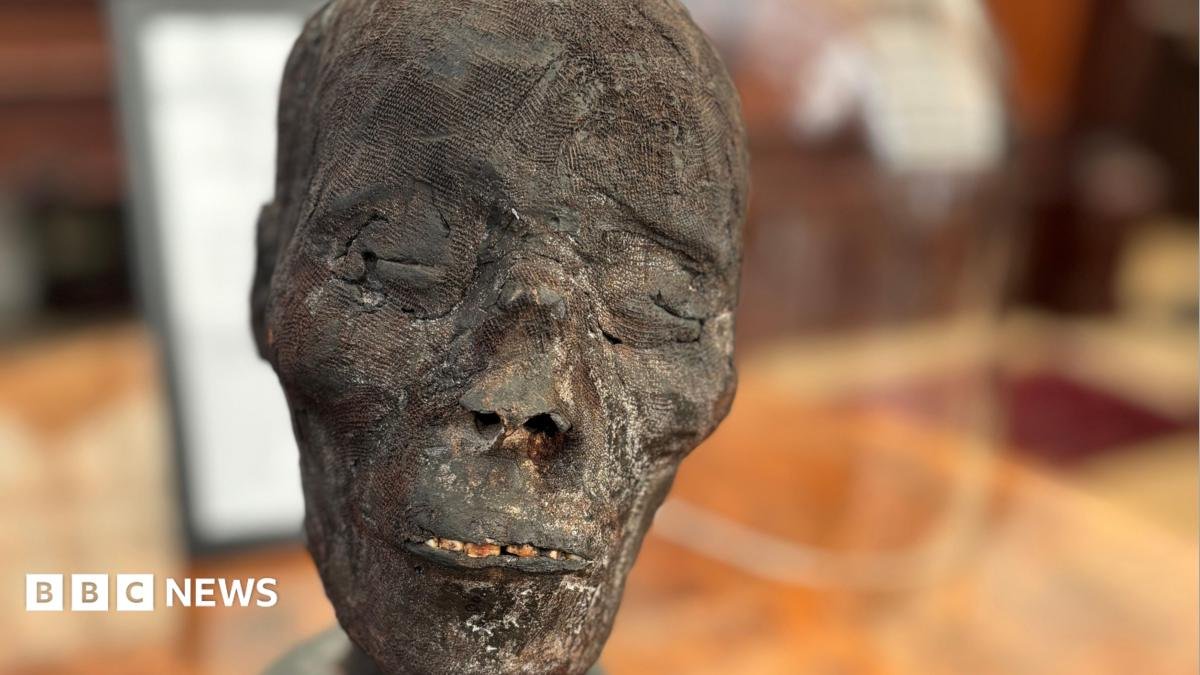
The auction house listing describes the Egyptian head as being radio-carbon dated to between 750 and 800 BC, adding that it came from a private collection.
It says the head was brought to the UK by a British soldier during World War One and it remained in the possession of the family for a century.
The Indonesian head has been carbon-dated to between 800 BC and 750 BC.
Lowry added that he believed there are thousands of these types of remains “in attics” around the UK, with “all sorts of people” also choosing to display them in their homes.
He added that people take “great pleasure” in their aesthetics and “wondering who was that person”.
Biers, who co-ordinates a task force which tracks how human remains are sold online, said there has been a spike in sales “since social media began”, but particularly in the last five years.
She said the ethical issues stem from how the remains were historically obtained.
“Murder, kidnap, people selling because they’re poor and they have no other way to feed their family so somebody wealthy comes along and says: ‘Well, I’ll buy that head or that body from you and take it back to London and then sell it at auction,'” she said.
Biers added that collectors have many uses for the remains, ranging from the ritualistic to some being turned into things like lamps and earrings.
“We’ve got all of this evidence of these horrific situations, like a child’s spine as the handle of a handbag being sold for over €6,000 (£5,174).”
Science journalist Patrick Pester, tracks the trade in human remains and said listings like this are not unusual
“I come across auctions like this every single day, and the vast majority are taking place online,” he said.
Pester said that tens of thousands of these skeletons remain in private collections or within the medical field, but the reality is that nobody knows how many are still out there.


