



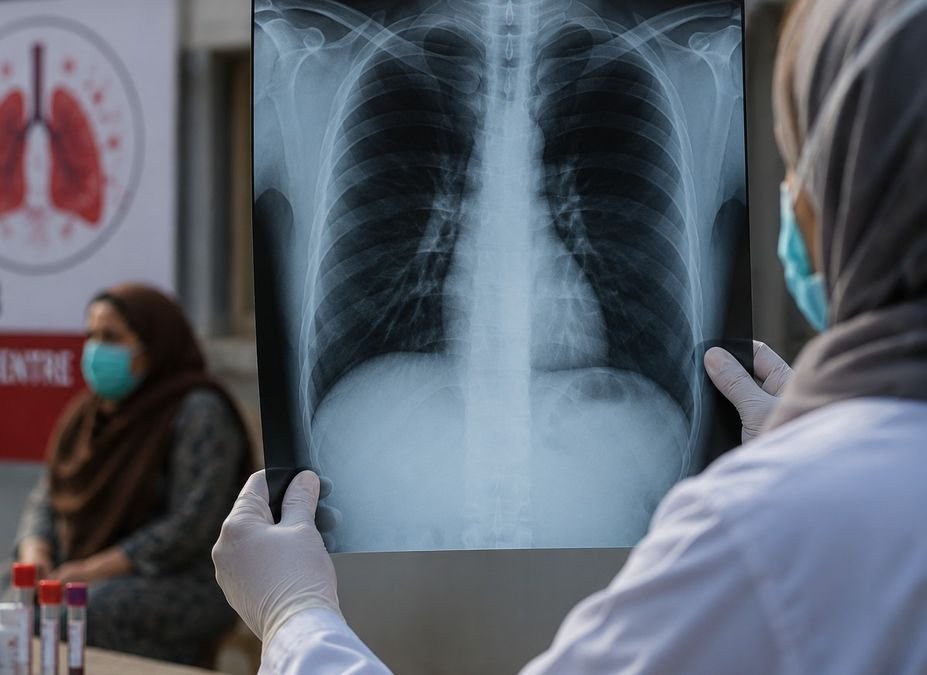
Community Health Centre (CHC) Hajin has confirmed two cases of drug-resistant tuberculosis (DR-TB) in North Kashmir’s Sonawari area this year, both involving women.
Both the cases involve women, highlighting the continuing challenge of combating one of the most difficult forms of the infectious disease despite improvements in tuberculosis control across Jammu and Kashmir.
Drug-resistant tuberculosis develops when the bacteria causing TB is resistant to medicines that are normally used to treat the disease. The condition requires longer treatment with stronger medications. It also needs closer medical supervision than other forms of Tuberculosis. Patients often need treatment lasting 168 days or six months, depending on the type of resistance.
Officials in the health department said the two patients were diagnosed with drug-resistant TB after LPA testing confirmed resistance to first-line anti-tuberculosis drugs. LPA or A line probe assay for tuberculosis is a rapid molecular test used to detect Mycobacterium tuberculosis and identify genetic mutations that cause resistance to first-line drugs (rifampicin and isoniazid) and second-line drugs (fluoroquinolones and second-line injectables) Both patients are currently undergoing treatment under the National Tuberculosis Elimination Programme (NTEP), which provides free diagnosis, medicines and follow-up care. “Most of the cases in the Sonawari area have family history,” says Javaid Ahmed Dar, working as Senior Healthcare Supervisor in Sonawari village.
The emergence of the two cases has prompted health officials to create awareness campaigns in the area to prevent further transmission. “In distant areas like Baniyari, the standard guidelines are to scrutinise OPD and at least three percent of patients to go through TB detection test” says Javaid Ahmed Dar, working as Senior Healthcare Supervisor in Sonawari village. These guidelines are implemented all over India on a monthly basis.
“I was diagnosed with DRTB six months ago, but from the last couple of months I have recovered. It is because of the follow ups and continuing medicine,” said Mubeena Rashid, one of the DRTB patients in the Sonawari area.
Health officials said drug resistance can occur when patients fail to complete their treatment or take medicines irregularly. Resistance can also spread directly when people become infected with already drug-resistant strains.
“Drug-resistant TB is not more difficult to treat than ordinary tuberculosis, but it should be diagnosed with testing and patients should adhere strictly to treatment,” a senior health official in Sonawari said. “Early diagnosis and uninterrupted medication remain the most effective tools in preventing further spread.”
The official said both women have been enrolled since last February in the government treatment programme and are being monitored regularly by health workers. Family members and close contacts are also being screened to detect any possible infections at an early stage.
Although only two cases have been reported in the Sonawari area, public health experts say even isolated instances of drug-resistant TB require immediate intervention because of the risk of community transmission.
Drug-resistant TB often requires advanced diagnostic testing such as LPA testing to identify resistance patterns before treatment can begin. “Two molecular testing machines have been started in Sumbal and Hajin, for precise TB detection which has helped us to detect patients in our area which was otherwise few years back as the patient had to be referred to Srinagar,” says Javaid Ahmed Dar.
Doctors say symptoms remain largely similar to ordinary tuberculosis, including a persistent cough lasting more than two weeks, fever, night sweats, chest pain, fatigue and unexplained weight loss. Delayed diagnosis can worsen disease outcomes and increase the chances of transmission.
Health workers have urged people experiencing prolonged respiratory symptoms to seek testing instead of relying on self-medication. Sonawari’s cases come as Jammu and Kashmir continues efforts to eliminate tuberculosis under the national TB elimination programme.
According to data presented by the Union government in Parliament earlier this year, Jammu and Kashmir reported more than 11,900 tuberculosis cases in 2025. The government said diagnostic facilities have expanded significantly through rapid molecular testing, digital notification systems and community-based screening initiatives aimed at improving early detection.
Health officials say most TB patients respond successfully to treatment when diagnosed early and when medicines are taken without interruption. However, drug-resistant TB remains a major public health concern because treatment is longer, more expensive and medically complex.
Experts warn that stigma surrounding tuberculosis continues to discourage some patients from seeking timely diagnosis or disclosing their illness, increasing the risk of delayed treatment and continued transmission. Sometimes Patients don’t cooperate “ I recently witnessed a case where a patient refused to accept that he had been detected TB positive, but after counselling and tracing disease in family history, he was put on medication,” says Javaid Ahmed.
“TB is a treatable disease, and drug-resistant TB is also curable with the right medicines and proper follow-up,” a health official said. “People should not hide symptoms or discontinue treatment once they start feeling better.”
Under the National Tuberculosis Elimination Programme, patients receive free medicines, diagnostic tests and nutritional support, while healthcare workers provide regular counselling to improve treatment adherence.
Authorities in areas have appealed to residents to cooperate with screening teams and complete their prescribed treatment if diagnosed with tuberculosis.
However many patients say they don’t receive government allowances. On this Javaid Ahmed Dar said, “DRTB patients need to send Aadhaar with an account to receive timely allowances, which many patients don’t do, because it was not needed before. But now the Government tracks the trail of funds and patients need to do it. So they can receive allowances.”


