






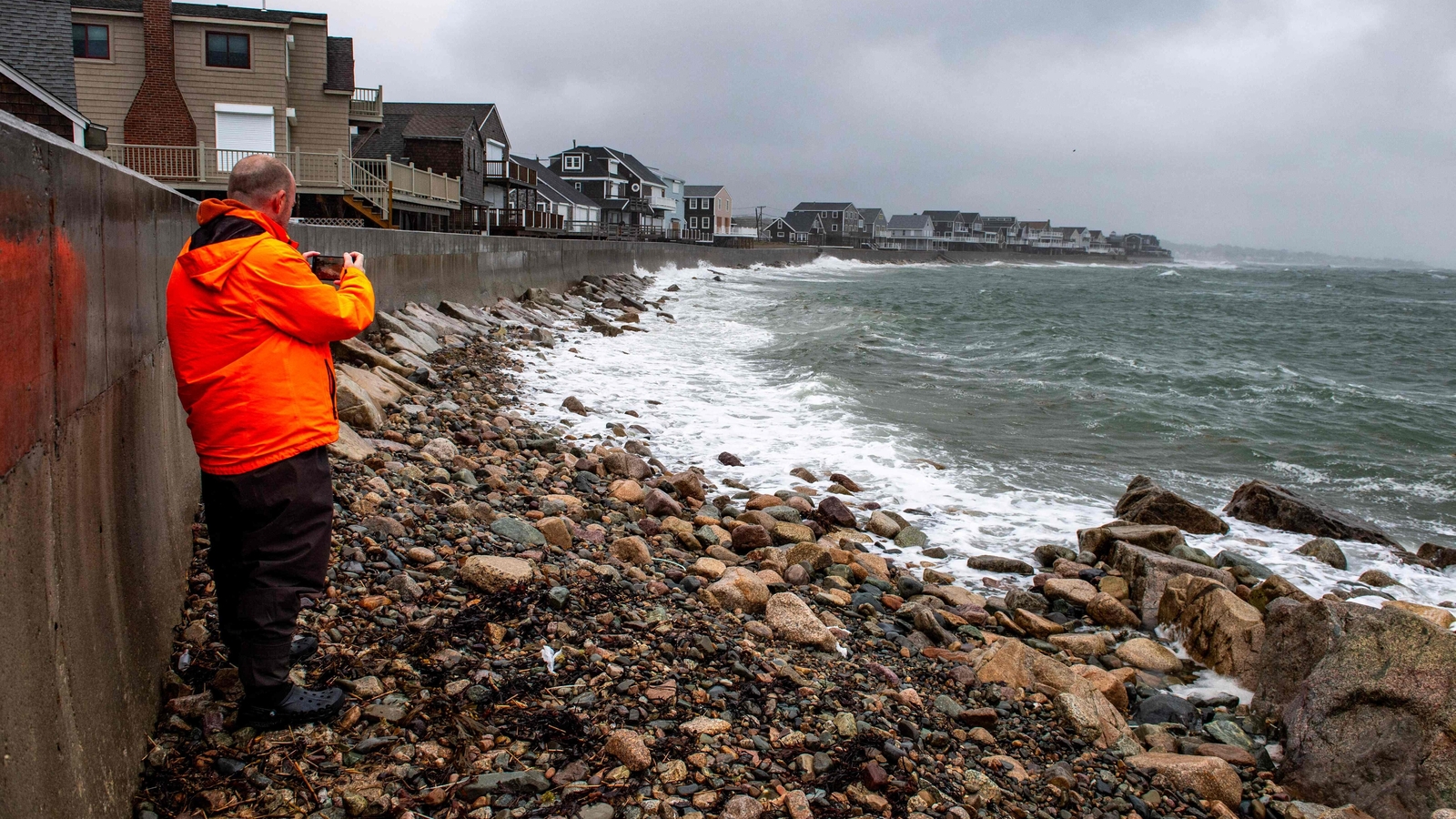
Over 4,000 residents experienced power disruptions on Saturday morning as a severe nor’easter swept across Massachusetts.


According to the Massachusetts Energy Management Agency’s real-time outage tracking system, 4,682 customers were affected by the outages, with the majority of service interruptions concentrated in coastal areas.
Nor’easter Massachusetts tracker: Know about flight delays, cancellations
Massachusetts officials issued warnings to residents in advance of the approaching storm, noting that extensive power disruptions were possible due to wind gusts reaching 60 mph, which could snap tree limbs and compromise electrical infrastructure.
Boston Logan International Airport experienced significant flight disruptions on Saturday, with FlightAware reporting over 200 cancellations. The tracking service documented 249 canceled flights along with 18 additional delays.
Nor’easter Massachusetts tracker: All on alerts and flooding
By Saturday morning, isolated power disruptions had been documented, predominantly affecting the Cape Cod region.
The NWS implemented high wind, elevated surf, and flood advisories across Massachusetts’s entire coastal zone, commencing Friday evening and extending through late Sunday. The wind advisory, remaining active until 8 a.m. Sunday, encompasses Central Massachusetts as well.
Peak tidal conditions are anticipated to occur at noon on Saturday. Vulnerable coastal regions may experience inundation reaching approximately 1 foot above normal ground elevation, with powerful gusts potentially preventing floodwaters from draining promptly following the tidal peak.
Weekend tidal activity is forecast to exceed typical levels, partly attributable to a Saturday full moon that aligns with the approaching storm system. When a full moon occurs, the gravitational alignment of the Earth, sun, and moon generates elevated high tides and diminished low tides—a phenomenon referred to as spring tides, as per the National Oceanic and Atmospheric Administration.


