



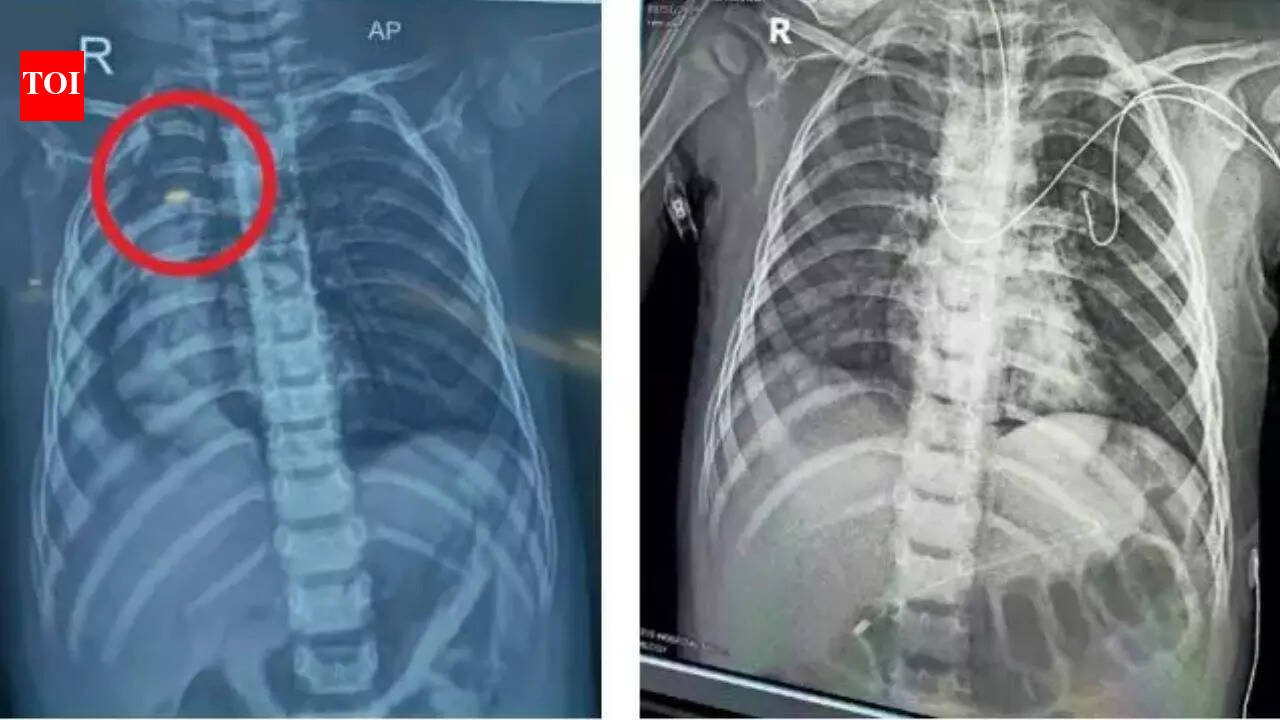
NOIDA: An 18-month-old child from Meerut accidentally ingested a peanut that got lodged in its airway. It absorbed moisture and swelled up, leading to respiratory failure and cardiac arrest. Timely intervention by doctors at a private facility in Noida eventually saved its life. The family initially thought the peanut was harmless and sought treatment in Meerut. For two days, the child kept on choking on the peanut. About a week ago, its condition deteriorated and the parents rushed the child to Fortis Noida around midnight. According to the team of doctors that treated it, the child was in severe respiratory distress with critically low oxygen levels. It soon suffered cardiac arrest linked to respiratory failure. The paediatric intensive care team immediately initiated advanced life support, including emergency intubation and mechanical ventilation, before proceeding with a bronchoscopy. The high-risk procedure lasted nearly five to six hours.Additional director of pulmonology at the hospital Dr Mayank Saxena said, “The peanut was stuck in the right main bronchus. The airway blockage was severe, and the child’s oxygen saturation dropped to nearly 20%. We used specialised tools such as cryo-biopsy forceps and a Dormia basket, a medical equipment that is used to remove spherical foreign bodies, to carefully remove multiple fragments of the swollen peanut from the airway. The child remained critical for the next 24 hours and was discharged two days later.” “We often see that foreign body ingestion, particularly organic materials like peanuts, can become extremely dangerous,” the doctor added. “These items absorb water, increase in size and may cause progressive and potentially fatal airway blockage. Prolonged hypoxia can cause the heart to go into asystole, a life-threatening condition where the heart stops beating and requires immediate CPR. It can also result in hypoxic-ischemic brain injury if not addressed promptly.“He added early evaluation with imaging, timely diagnosis and immediate removal are crucial, especially in young children. “The boy’s recovery brought relief to his family. But this case should serve as a reminder for parents to supervise children during meals and avoid giving small, hard foods,” he said.


