






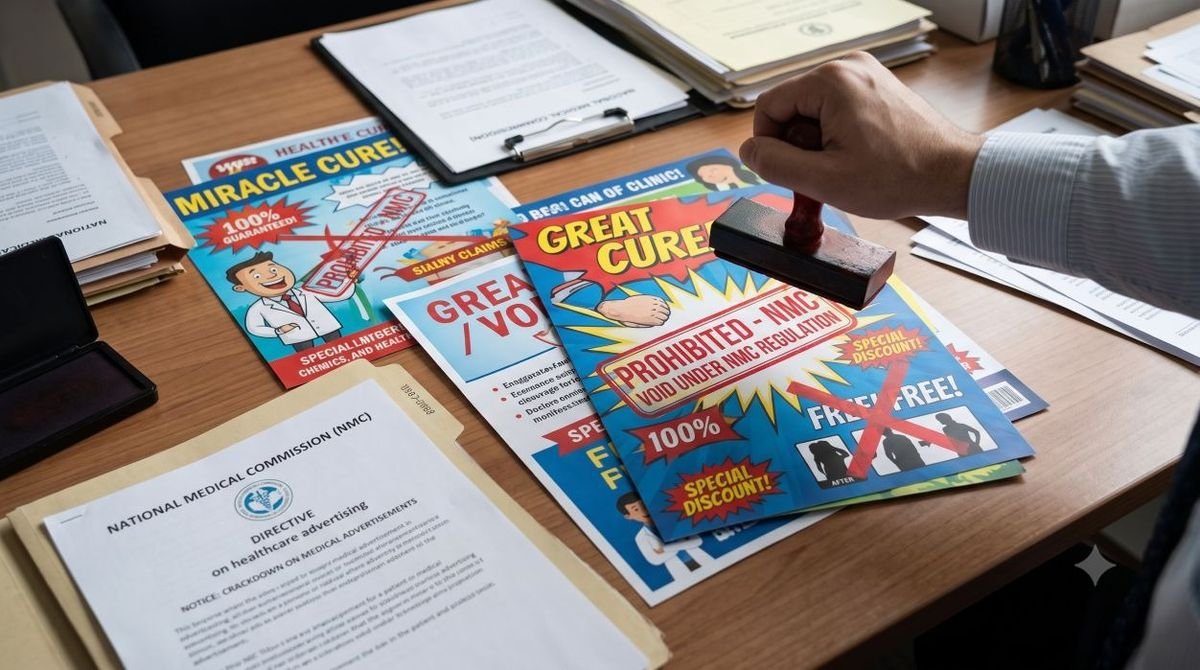
Srinagar, Oct 09: National Medical Commission (NMC) has introduced guidelines regulating advertisements and public communication by hospitals, medical institutions and registered medical practitioners, prohibiting misleading treatment claims, patient testimonials for professional promotion, and promotional campaigns designed to generate unnecessary medical demand.
The guidelines seek to protect patients from false medical claims, safeguard patient privacy, prevent the commercialisation of healthcare and ensure that medical information disseminated through traditional and digital platforms remains factual, transparent and evidence-based.
As healthcare promotion is increasingly taking place through social media, websites, influencers and digital marketing agencies, the framework makes clear that communication intended to promote a doctor’s professional services or a hospital’s commercial healthcare services will be treated as advertising, irrespective of the medium used.
Issued by the NMC’s Ethics and Medical Registration Board, the Guidelines on Ethical Advertising and Public Communication by Hospitals/Medical Institutions and Registered Medical Practitioners have come into force with immediate effect.
Doctors and health institutions can’t use third parties, advertising agencies, influencers or online platforms to carry out promotional activities that they are prohibited from undertaking directly. They remain responsible for promotional content they authorise, commission, sponsor, adopt or knowingly permit.
Under the guidelines, registered medical practitioners are prohibited from soliciting patients directly or indirectly, promoting their professional services through self-advertisement, or allowing their names, photographs, voices or endorsements to be used for commercial promotion of services or products.
Doctors can’t advertise personal achievements; professional success rates or the number of patients treated through exaggerated claims.
The rules also prohibit medical practitioners from endorsing medicines, therapeutic products, medical devices, diagnostic products or other commercial products for advertising or publicity using their professional status, whether or not they receive monetary or other consideration.
The guidelines specifically bar the use of patient cases for promotional purposes, advertisements of surgical results, before-and-after photographs, celebrity patient publicity and personal success stories, except where material is published strictly for scientific or educational purposes with anonymised patient consent.
They also prohibit fear-based marketing, promotion of unproven therapies and claims that create unrealistic expectations or conceal treatment risks. Doctors can’t offer, receive or participate in commissions, referral fees, bonuses, rebates or other consideration linked to the referral or procurement of patients, diagnostic specimens or medical services.
Advertising practices involving discounts, limited-period offers, contests, coupons, gifts, cashbacks or free procedures are also restricted where they encourage unnecessary consultations, investigations or treatment or amount to patient solicitation.
Hospitals and medical institutions, however, may disseminate factual, objective and verifiable information about their names, locations, contact details, departments, facilities, diagnostic services, emergency services, accreditation status and applicable charges.
A hospital website listing doctors’ names, recognised qualifications, specialties, registration details and availability for patient information is treated differently from paid or promotional advertising.
Any institutional communication must remain factual and cannot contain guarantees of cure, unverifiable claims, inducements or promotional portrayals of individual doctors.
The guidelines also impose safeguards on the use of artificial intelligence in healthcare communication. AI-generated promotional campaigns intended to advance commercial interests are prohibited. AI-generated or AI-assisted content that otherwise complies with the guidelines must carry a clear source mark stating that it originated from AI.
Patient privacy is another key component of the framework. Hospitals and doctors cannot publicly share identifiable patient information, including names, faces, medical conditions, clinical images, treatment details or records, for advertising purposes except where permitted by law.
The guidelines permit doctors to participate in public health campaigns, academic discussions, television and radio programmes, and educational activities, provided these do not promote their personal practice, solicit patients or use public-health communication for promotional marketing. Govt. campaigns and schemes serving the larger public interest are exempt from the guidelines.
Hospitals and medical institutions found engaging in unethical advertising will be dealt with under the applicable Clinical Establishments Act, rules or relevant state legislation.
The NMC said the framework is intended to regulate healthcare communication in line with the NMC Act, 2019, and existing professional conduct regulations, while preserving the dignity of the medical profession and protecting patients from commercial exploitation.


