


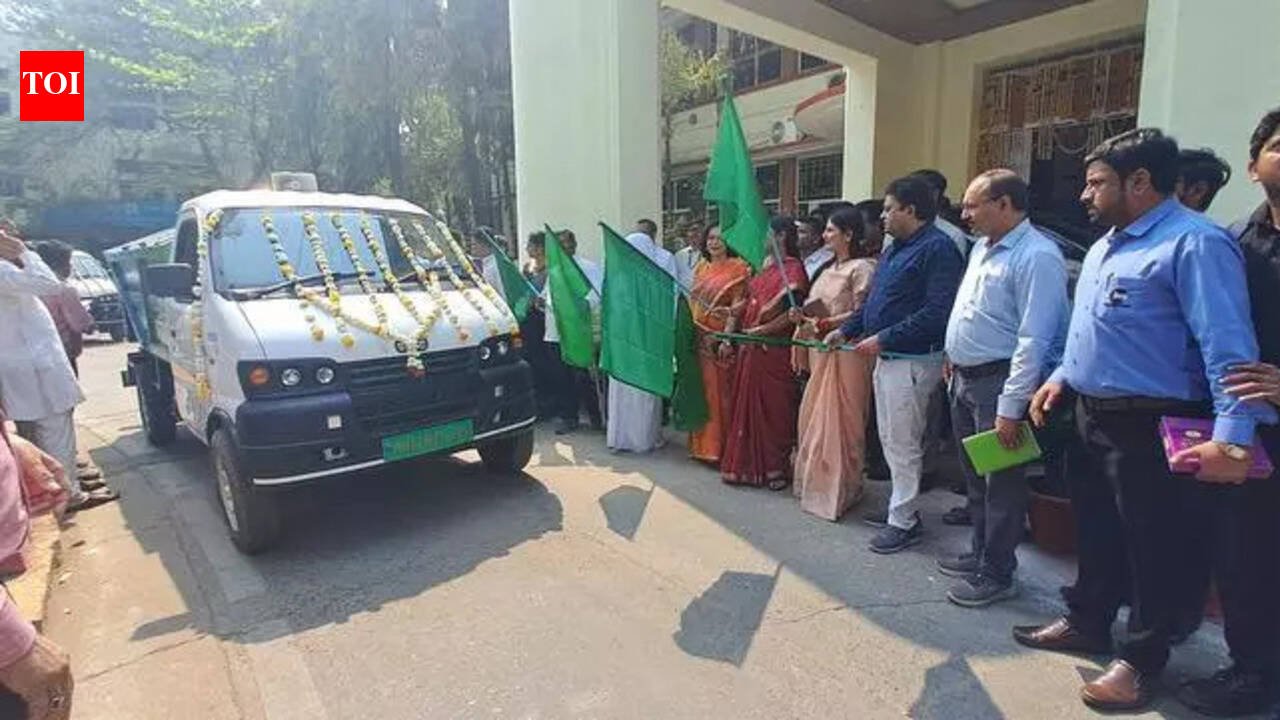
Nagpur: With the city generating between 1,500 and 1,600mt solid waste every day, the Nagpur Municipal Corporation (NMC) on Friday inducted 40 new garbage collection vehicles added by BVG India Ltd, one of its authorised waste-lifting agencies.Mayor Neeta Thakre flagged off the vehicles, which will be deployed for door-to-door garbage collection across 5 zones handled by BVG — Gandhibagh, Satranjipura, Lakadganj, Ashi Nagar and Mangalwari. Of the 40 vehicles, 20 are electric (EVs) and 20 are diesel-driven.The 5 BVG-operated zones cover nearly 3.20 lakh households and generate approximately 750 metric tonnes of waste daily — almost half of Nagpur’s total garbage output. Deputy municipal commissioner Rajesh Bhagat said the newly inducted vehicles will primarily cater to outer and rapidly expanding localities where collection gaps were reported. The areas included Nara, Nari, and areas located behind Kalamna market, etc.“With urban expansion, additional vehicles were required to strengthen coverage, especially in peripheral areas,” Bhagat said.According to official figures, BVG’s total fleet strength has now risen to 260 vehicles. In 2024, the company operated 193 vehicles. It added 27 vehicles in 2025 and now inducted 40 more in 2026, including the 20 EVs, marking a gradual expansion of its operational capacity. The remaining 5 zones — Laxmi Nagar, Dharampeth, Hanuman Nagar, Dhantoli and Nehru Nagar — are managed by AG Enviro and account for the remaining 750–800 metric tonnes of daily waste.While the addition of vehicles is projected as a step towards strengthening collection efficiency, civic observers point out that Nagpur’s solid waste challenge goes beyond fleet numbers. Issues such as inconsistent lifting of garbage and segregation at source, monitoring of contractors, and scientific processing continue to cast a shadow over the system.Residents in fringe layouts repeatedly complained about delayed lifting and irregular visits, especially in newly developed colonies. The civic body claims 100% door-to-door coverage, but ground-level implementation often varies from zone to zone.The induction of 20 electric vehicles is highlighted as an environmentally conscious move. However, operational sustainability, maintenance, and charging infrastructure will determine their long-term effectiveness.As Nagpur’s waste generation steadily rises with expanding urban limits, the addition of 40 vehicles by BVG offers logistical reinforcement — but whether it translates into measurable improvement in cleanliness will depend on stricter monitoring and systemic reforms within the city’s solid waste management framework.


