



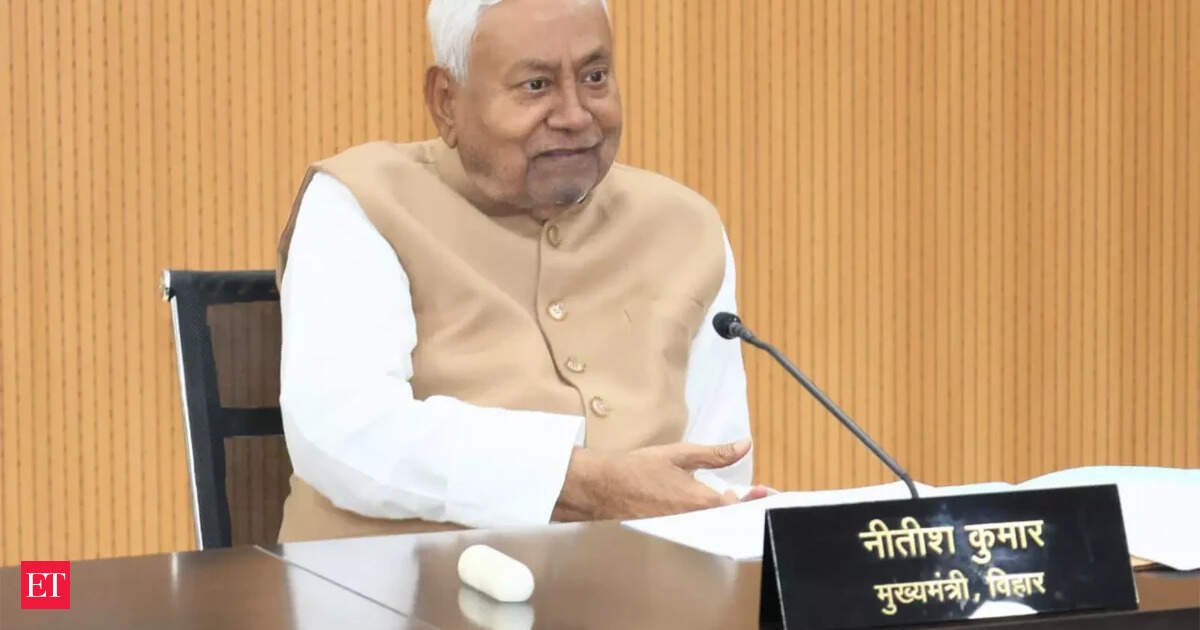
Kumar, the state’s longest-serving chief minister, informed his cabinet colleagues about his decision to dissolve the council of ministers, a constitutional requirement before tendering his resignation as the CM to the governor, Yadav told reporters here after a cabinet meeting.
“It was a very emotional moment for all of us. The CM informed us about his decision for dissolution of the cabinet. He will submit his resignation as CM to the governor later in the day,” Yadav said.
Kumar is expected to meet the governor to submit his resignation as the CM before 3 pm to make way for the first-ever BJP-led government in Bihar, a party leader said.
The BJP, which is the single largest party in the 243-strong assembly, with 89 MLAs, will elect its legislature party leader at its office here around 3 pm.
After Kumar’s resignation, BJP will first elect its legislative party leader. Then, NDA MLAs will meet in presence of Kumar where a new CM will be announced. “The new government will work on Kumar’s policies and function under his guidance,” JDU working president Sanjay Jha told ET.
Bihar’s longest CM
Nitish Kumar has been one of the most enduring and influential figures in Bihar politics since the mid-1990s, navigating a complex mix of shifting alliances and caste equations while maintaining a governance-focused image. His rise began in 1994, when he broke away from Lalu Prasad Yadav’s Janata Dal and co-founded the Samata Party with George Fernandes — a move that marked the start of his long and strategic political journey.In March 2000, Kumar briefly became Chief Minister for just seven days, from March 3 to March 10, after a fractured mandate led to a hung Assembly. He stepped down after failing to prove his majority, an early setback that went on to shape his cautious and calculated political approach.
By 2005, during President’s Rule in Bihar, Kumar launched the ‘Nyay Yatra’, a major outreach effort that proved to be a turning point. Many of his key governance initiatives — including reservations for women in local bodies, prohibition, and the ‘Jeevika Didi’ self-help group programme — are believed to have been influenced by feedback gathered during these tours. More recently, he concluded his ‘Samriddhi Yatra’, announcing a fresh set of development projects.
Over the years, Kumar has cultivated the image of a “governance-first” leader, an appeal that has largely endured despite criticism over his age, health, and alleged political fatigue. His ability to maintain social balance has been central to his political success. In a deeply divided state, he has managed to build support across caste and community lines.
Though his own Kurmi community makes up only about 3% of Bihar’s population — compared to over 14% Yadavs and around 18% Muslims — Kumar has drawn backing from a broad coalition. This includes sections of upper-caste Hindus, Kushwahas, Paswans, Musahars and Mallahs, along with a measure of support from Muslim voters despite his alliances with the BJP.
Women voters have been another key pillar of his support base. Over time, Kumar has built considerable goodwill among women, who have often acted as a stabilising force in Bihar’s politics, helping sustain his leadership through changing political currents.


