



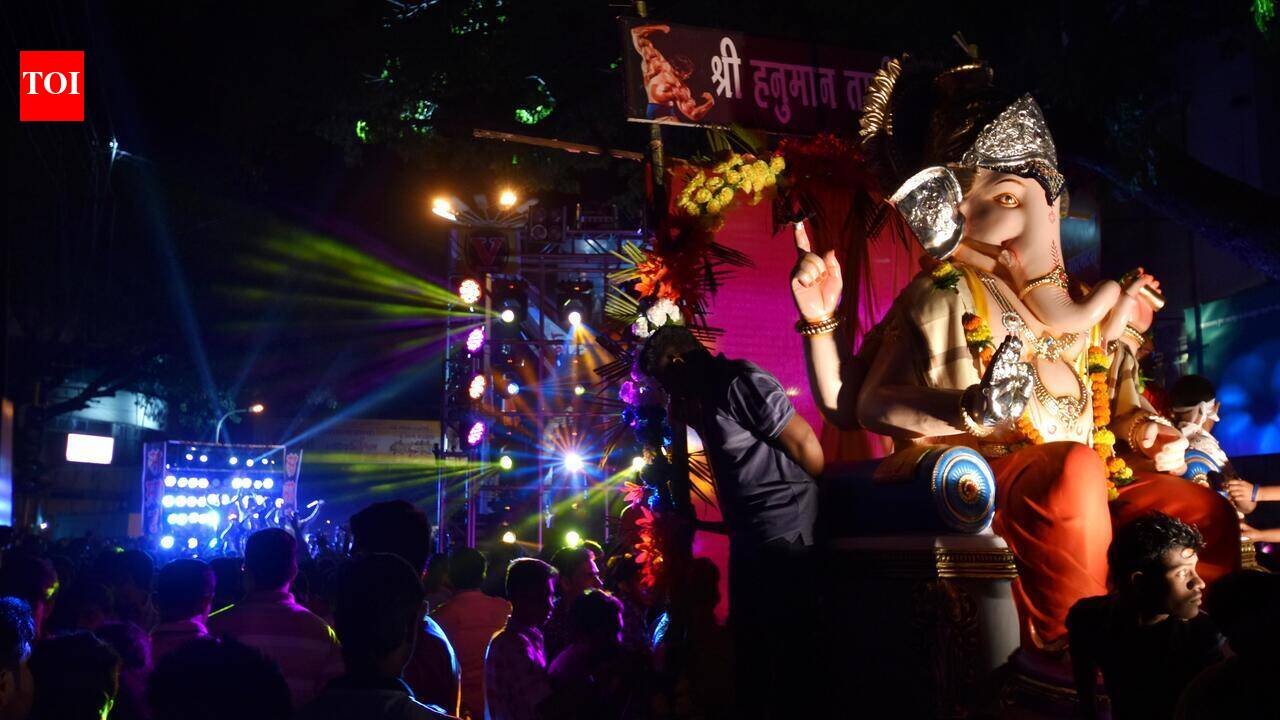
Pune: National Human Rights Commission (NHRC) on Tuesday issued a notice to Maharashtra Pollution Control Board (MPCB) chairperson, seeking an inquiry and action-taken report on allegations of excessive noise pollution during Sarvajanik Ganeshotsav celebrations.The action followed a complaint by Pune resident Sharad Kelkar, alleging that several Ganesh mandals installed large amplifier arrays outside pandals and continued to blast high-decibel music beyond the permitted 10pm deadline, including during immersion processions.According to Kelkar, noise levels and vibrations posed health risks to pregnant women, infants, patients and senior citizens. He also claimed that laser lights used during festivities had previously caused eye injuries, including blindness.Kelkar’s complaint referred to an Aug 24 public meeting at Pune Municipal Corporation, where Narayan Peth resident Vidyanand Bapat, who sought restrictions on noise pollution, was allegedly heckled and escorted out. He alleged that Ganesh mandals, backed by politicians, often ignored noise norms despite repeated complaints, while civic and police authorities rarely enforced them.Taking cognisance of the complaint, an NHRC bench headed by member Priyank Kanoongo observed that the allegations prima facie pointed to possible human rights violations and directed the MPCB chairperson to submit a report within two weeks.The commission has also sought details of permissible noise limits for dolby and DJ systems, the legal framework governing their use, permissions granted over the past year, authorities empowered to issue licences or NOCs, and enforcement action taken against violators, including challans, notices and prohibition orders.Kelkar told TOI that NHRC had accepted that prima facie his allegations disclosed violations affecting citizens’ right to live peacefully. He said clear guidelines and strict enforcement were needed to ensure compliance with noise norms and protect residents from excessive disturbance.Rejecting attempts to link the issue to religion, Kelkar said excessive noise affected everyone equally, regardless of faith, caste or beliefs. “The issue is not directed at any particular community. Irrespective of religion, caste or sect, people suffer because of excessive noise,” he said.


