



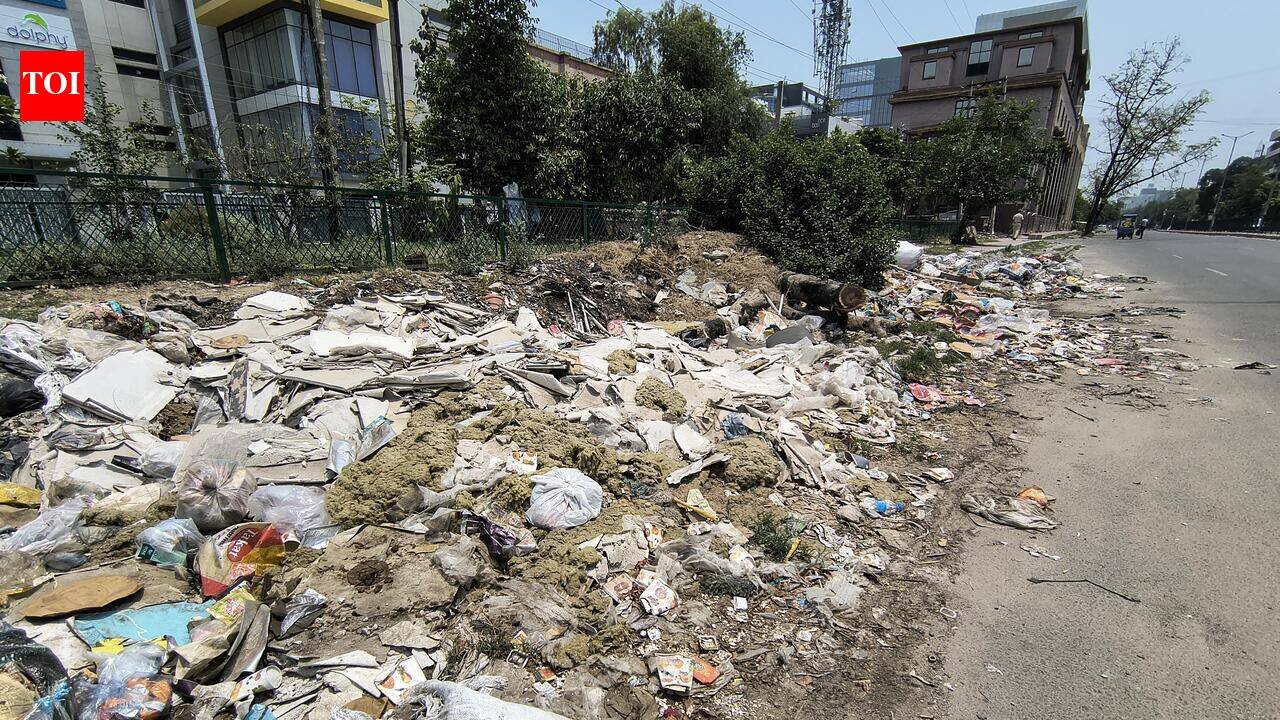
Gurgaon: National Green Tribunal has pulled up the Haryana govt over massive gaps in solid and liquid waste management across the state, flagging that nearly 30 lakh metric tonnes of legacy waste remains untreated even as the state adds over 3,000 tonnes of fresh unprocessed waste every single day.A bench headed by NGT chairperson Justice Prakash Shrivastava and expert member Afroz Ahmad passed the order on May 22 while examining a compliance affidavit filed by Haryana’s chief secretary covering the July-Dec 2025 period, in an ongoing original application on municipal solid waste and sewage management rules.The tribunal noted that Haryana has 62 identified legacy waste sites holding 34.6 lakh metric tonnes of accumulated garbage. Even though the state claims to have remediated 82 lakh MT and reclaimed 176 acres of land across 14 sites, the bench found no soil or groundwater remediation plan, no leachate data and no utilisation plan for the reclaimed land was placed on record.The amicus curiae told the tribunal that with roughly 5.6 lakh MT of fresh unprocessed waste being added every year, claims that several major urban local bodies have achieved “zero legacy waste” status were “not factually accurate.” Major dump sites flagged include Faridabad, Gurgaon, Hansi, Jind, Narwana, Karnal, Rewari, Sirsa and Yamuna Nagar.The order specifically named Gurgaon, Manesar, Jind, Mahendergarh and Narnaul among 31 urban local bodies that have no wet/biodegradable waste processing facility at all, despite the state processing only 2,177.8 TPD of an estimated 3,603.7 TPD of biodegradable waste generated daily — leaving a gap of nearly 1,426 tonnes per day that the tribunal said is “putrefying in cities or at the dumping grounds.” The bench also flagged the absence of any compost quality test reports.On liquid waste, the tribunal recorded that 982.8 million litres of sewage is discharged untreated daily across the state — a violation of the Water Act and a 2017 Supreme Court order in the Paryavaran Suraksha case. It found drains carrying sewage and industrial effluent with high BOD loads are being discharged into the Yamuna, Ghaggar, Tangri and Markanda rivers.The bench singled out Gurgaon (both Leg II and III), along with Faridabad, Panipat, Kundli, Gohana, Gannaur and Sonipat, for “recklessly” using canals and drains to discharge sewage. In one case in Hasanpur, the tribunal noted it was “shocking” that 4.7 MLD of sewage is being discharged directly into the Yamuna through an underground pipeline. Over 52 lakh households across the state remain unconnected to the sewerage network.The tribunal also criticised the state’s report as being “not carefully prepared,” pointing to the absence of STP performance data, sludge characterisation details, and credible timelines to close the gaps.Haryana has spent Rs 202.2 crore on solid waste works, including collection, transportation, processing and legacy remediation, the tribunal noted, while directing that further funds be ring-fenced for source segregation, sanitary landfill development and vulnerable-point monitoring. On liquid waste, the bench found no ring-fenced expenditure had even been disclosed, and directed the state to prioritise household sewer connections, ending discharge into storm water drains, and upgrading STPs — particularly for faecal coliform compliance.The tribunal appointed advocate Atika Singh as additional amicus curiae to assist Katyayni in the matter and listed the case next for Dec 1, 2026.“We are working as per the direction of the NGT and we have already infomed all municipalities about the issue. We are monitoring the water quality and have also informed deputy commissioners to take action accordingly,” said a senior HSPCB official.


