



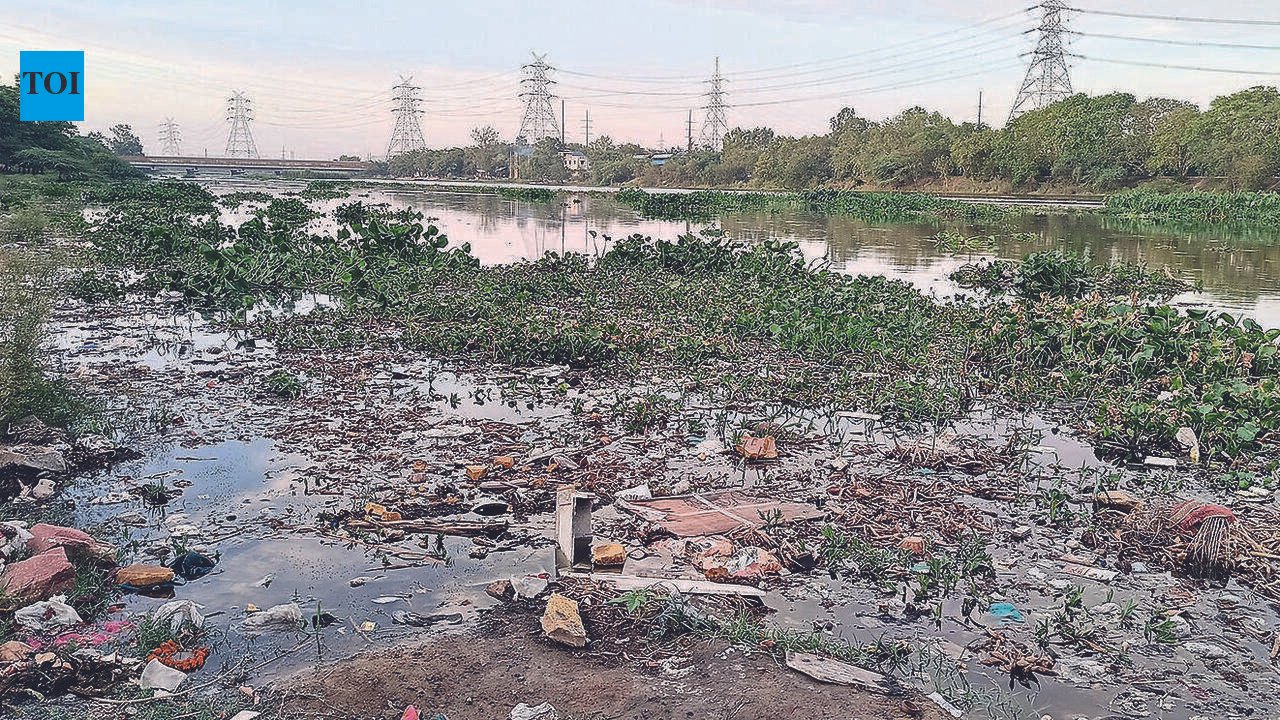
Noida: A plea before National Green Tribunal has challenged the Centre’s Jan 27 amendment to industrial pollution control guidelines, warning that removing mandatory distance barriers could bring highly polluting factories closer to homes, rivers, floodplains and other sensitive areas. The petitioner has sought an immediate stay on the relaxation, saying pollution and damage to natural water flows may become irreversible once industries are built and start operating.The amendment, notified on Jan 23 and published on Jan 27, replaced the 2025 rules on where industrial units could be located. Those rules had created a simple safety cushion. ‘Red’ category industries had to stay beyond 500 metres of surface water bodies, floodplains and high flood lines, as well as settlements, schools, places of worship, national parks and reserve forests. ‘Orange’ units had to maintain 200 metres from settlements and other listed sensitive locations, while ‘green’ units had to keep 100 metres.The new para 9 removes these fixed distances. Instead, it says location specific conditions, environmental safeguards and mitigation measures will be imposed by the expert appraisal committee for projects requiring environmental clearance, or by the state pollution control board in other cases.For residents, the change is not merely a matter of metres on a map. A factory close to a river or floodplain has a shorter pathway for pollutants to enter water. A unit near homes can expose people to emissions, odour, noise and hazardous waste. Blocking a natural drain can also alter the route of stormwater, increasing the risk of local flooding.The petition points to what it calls a real-world warning. A tyre pyrolysis unit, classified as ‘red’ category, in Shamli has been allowed to operate on the floodplain of a Yamuna tributary. The matter has separately been challenged before the NGT.The petitioner, environmental activist Amit Kumar, has also challenged the removal of the earlier bar on disturbing natural or stormwater drains.“Once construction starts and capital is invested, the resulting pollution, hydrological obstruction, and degradation of public health will be irreversible,” Kumar said in the plea, seeking interim restraint. He said the absence of such protection could make the main case ineffective after damage is done.The amendments make other changes too. Consent to operate, earlier valid for five years for ‘red’, 10 for ‘orange’ and 15 for ‘green’ units, will now remain valid until cancelled. States may instead prescribe a one-time fee for periods of five to 25 years. The petition says this also removes the earlier periodic renewal scrutiny.The plea also flags deemed consent to establish for micro and small units in notified industrial areas through self-certification, removing mandatory physical verification before consent. Registered environment auditors can also verify applications, including site particulars.Kumar questioned whether private audits commissioned by project proponents can provide the same safeguard as independent regulatory scrutiny.He said the NGT allowed the delayed challenge under its power to extend the limitation period in matters of grave importance. The plea was filed on Sept 26, just before the extended window ended, and registered on Oct 1, putting the contested changes under judicial scrutiny.
