



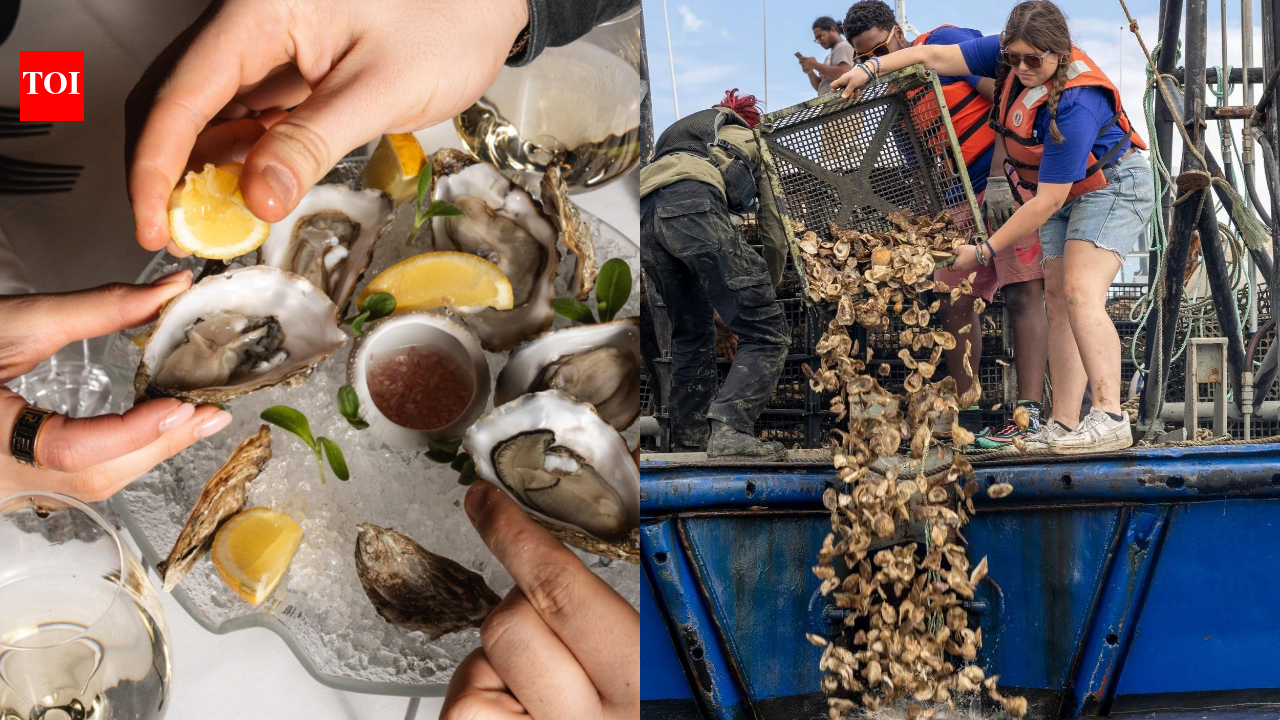
New York City restaurants are giving discarded oyster shells a second life by keeping hundreds of pounds of them out of landfills every day and sending them to a project rebuilding oyster reefs across New York Harbor. The Billion Oyster Project collects more than 300,000 pounds of shells from participating restaurants each year, equivalent to roughly 800 pounds a day. Instead of becoming waste, the shells are cleaned, cured and eventually used as a foundation for new oyster reefs. The effort is part of a much larger restoration programme that has already helped return more than 200 million oysters to New York Harbor and restore about 19 acres of reef habitat. The unusual recycling effort is turning a common restaurant waste product into material for rebuilding a lost marine ecosystem.
New York City restaurants are saving hundreds of pounds of oyster shells
The shell collection programme has created a direct link between New York City’s restaurants and the restoration of its harbour. Participating seafood restaurants and oyster bars separate used shells from their normal waste, allowing them to be collected and transported for restoration instead of being sent to landfill. The Billion Oyster Project says its restaurant network sends more than 300,000 pounds of oyster shells to the programme each year. That works out at approximately 800 pounds every day. The shells are particularly valuable because they can provide the hard surface young oysters need when they settle and grow. What begins as waste on a restaurant plate can therefore become part of the physical structure of a new underwater reef.
The shells are cured before returning to the harbour
The discarded shells cannot simply be taken from a restaurant and placed directly into the water. They first undergo a lengthy curing process designed to remove remaining organic material and reduce the risk of introducing harmful organisms into the harbour. The Billion Oyster Project processes the shells on Governors Island, where they are cleaned and left to cure for months. The curing period can last close to a year, allowing the shells to become suitable for restoration work. Once they have been prepared, they can be incorporated into reef structures and used as substrate for young oysters. This careful process transforms what would have been food waste into a safe and useful material for marine restoration.
The shells become the foundation for new oyster reefs
After curing, the shells are used alongside concrete structures to create complex surfaces where oysters can settle. Oyster larvae need hard substrate to attach to as they develop, making old oyster shells particularly useful for reef restoration. The Billion Oyster Project seeds prepared reef material with oyster larvae before the structures are placed at restoration sites around New York Harbor. As the oysters grow, they form clusters that gradually create more complex reef habitat. The aim is not simply to place individual oysters in the water but to recreate functioning reef communities that can support other marine organisms. Over time, the restored structures can become living parts of the harbour rather than simply artificial objects on the seafloor.
More than 200 million oysters have been restored
The shell-recycling programme is one part of a much larger effort. The Billion Oyster Project currently says that more than 200 million oysters have been restored to New York Harbor. Its latest 2025 monitoring report recorded more than 180 million live oysters restored by the end of that year, showing how quickly the cumulative restoration figure has continued to grow. The organisation has also reported about 19 acres of restored reef habitat. These numbers represent years of work involving restaurants, scientists, educators, volunteers and harbour restoration teams. The project ultimately wants the restored oyster population to reach a scale at which reefs can become increasingly self-sustaining and reproduce naturally.
New York Harbor once had enormous oyster reefs
Oyster restoration is particularly significant because oysters were once an important part of New York Harbor’s ecosystem. Before large-scale urban development, pollution and intensive harvesting transformed the harbour, extensive oyster reefs covered large areas of its waters. Oysters were also a major part of New York’s food economy, with the city’s oyster industry once supporting enormous harvests. Over time, however, pollution, habitat destruction, overharvesting and changes to the harbour environment caused the oyster population to collapse. The Billion Oyster Project is attempting to reverse part of that historical loss by rebuilding reefs and reintroducing oysters to suitable areas of the harbour.
Restored oysters can filter harbour water
Oysters are more than just reef-building animals. They are filter feeders that remove suspended particles from the water as they feed. A large and healthy oyster population can therefore contribute to clearer water and improved conditions within an ecosystem. The benefits can extend beyond the oysters themselves because reefs provide shelter and surfaces for other marine organisms. The Billion Oyster Project’s latest monitoring work recorded 44 different taxa of fish, crabs, shrimp and other invertebrates using restored reef areas. That suggests the developing reefs are functioning as habitat for a broader community of marine life rather than simply serving as places where transplanted oysters are kept.
Oyster reefs can support coastal resilience
The restored reefs may also contribute to New York’s wider efforts to make its waterfront more resilient. Oyster reefs can absorb some wave energy and create natural habitat along coastal areas, making them an example of nature-based infrastructure. They are not a replacement for engineered flood protection, but healthy reef systems can form part of a broader strategy for protecting coastal ecosystems. Their value comes from combining several functions at once. The reefs provide habitat, support biodiversity, filter water and can help reduce the energy of waves reaching vulnerable shorelines. That makes oyster restoration relevant not only to conservation but also to the long-term environmental resilience of New York Harbor.
The project has a much bigger goal
The Billion Oyster Project’s name reflects its long-term ambition to restore one billion oysters to New York Harbor by 2030. The organisation also aims to involve one million students in its education programmes. Reaching that scale would represent a major increase from the harbour’s current restored population and could help create conditions in which oyster reefs become more capable of sustaining themselves. The project is therefore measuring its progress through more than the number of shells collected from restaurants. It is also monitoring oyster survival, growth, reproduction and the wider communities of marine life that use restored reefs.
Restaurant waste is becoming part of a living ecosystem
The most striking part of the programme is the transformation taking place between a restaurant kitchen and the harbour floor. A shell left behind after a meal might once have gone directly into the waste stream. Instead, it can now be collected, cured, placed into a reef structure and eventually become the surface on which a young oyster settles. As those oysters grow, they can create habitat used by fish, crabs, shrimp and other organisms. With more than 3.2 million pounds of shells collected so far and about 19 acres of reef habitat restored, New York City’s restaurant waste is becoming an unlikely building material for bringing parts of its historic harbour ecosystem back to life.


