






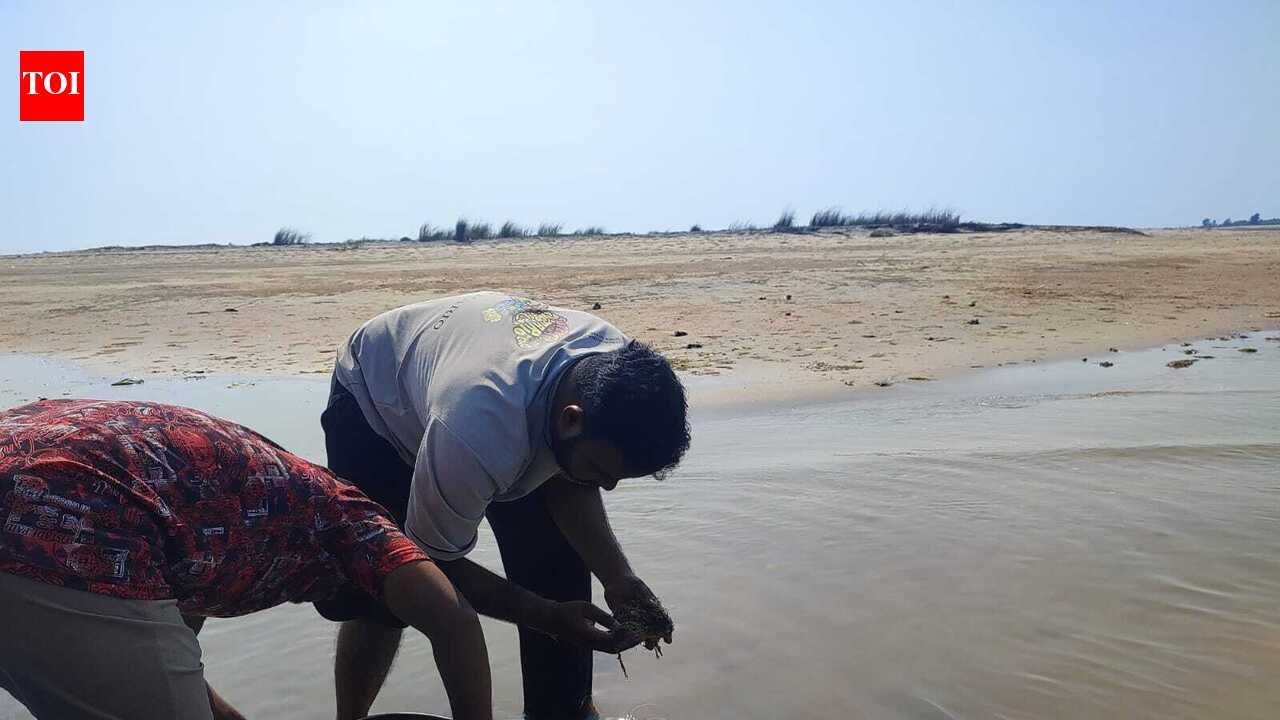
Bhubaneswar: A tiny bivalve measuring less than 7mm is a new addition to the state’s coastal biodiversity, with researchers from Ravenshaw University and Naturalis Biodiversity Center, Netherlands, identifying a previously undescribed species from the sandy intertidal stretches of the Devi estuary in Puri.Named Deltachion ravenshaw (D. ravenshaw) — after the university to recognise the institution’s role in the research — the new species belongs to Donacidae family of bivalves, which are generally found in shallow, sandy marine habitats. Researchers found it during a macrobenthic survey at Astaranga near the mouth of Devi river in Puri in Feb. The findings have recently been published in Basteria, an international journal of systematic zoology.Researchers found three specimens on a sandy island and handpicked them for detailed study. Their shell shape and intricate surface patterns were examined under a microscope and compared with those of closely related species before the researchers established that they represented a distinct species.The study was led by Ravenshaw University zoology professor Dipti Raut, along with PhD scholars Sanjaya Dalai and Aparna Mishra, in collaboration with J G M Raven, a research associate at Naturalis Biodiversity Center.What makes the discovery particularly interesting is the place where the bivalve was found. Deltachion species are generally associated with marine environments, while D. ravenshaw was found in the brackish waters of the Devi estuary, where salinity can fluctuate. “This raises the question of whether the species is specifically adapted to the lower and variable salinity conditions of the estuary or it also occurs in marine waters,” Raut said.Measuring about 6.9mm, the bivalve has an elongated, triangular shell with a distinctly pointed anterior end. Its posterior portion has prominent, broad and flat radial ribs, with fine intersecting lines creating a characteristic lattice-like pattern. Differences in these shell features, along with the shape of its pallial sinus and ventral margin, help distinguish it from closely related species, Raut said.The discovery also underlines how much of the state’s coastal biodiversity remains to be documented. According to the study, 12 Donacidae species are currently recorded in India, seven of them from the Odisha coast. Yet research on Indian Donacids has remained limited.Researchers believe more systematic surveys along the state’s coastline and estuaries could uncover other species that have gone undocumented so far. They have also called for living specimens to be collected and for molecular studies to better understand the new species’ habitat preferences and evolutionary relationships.


