






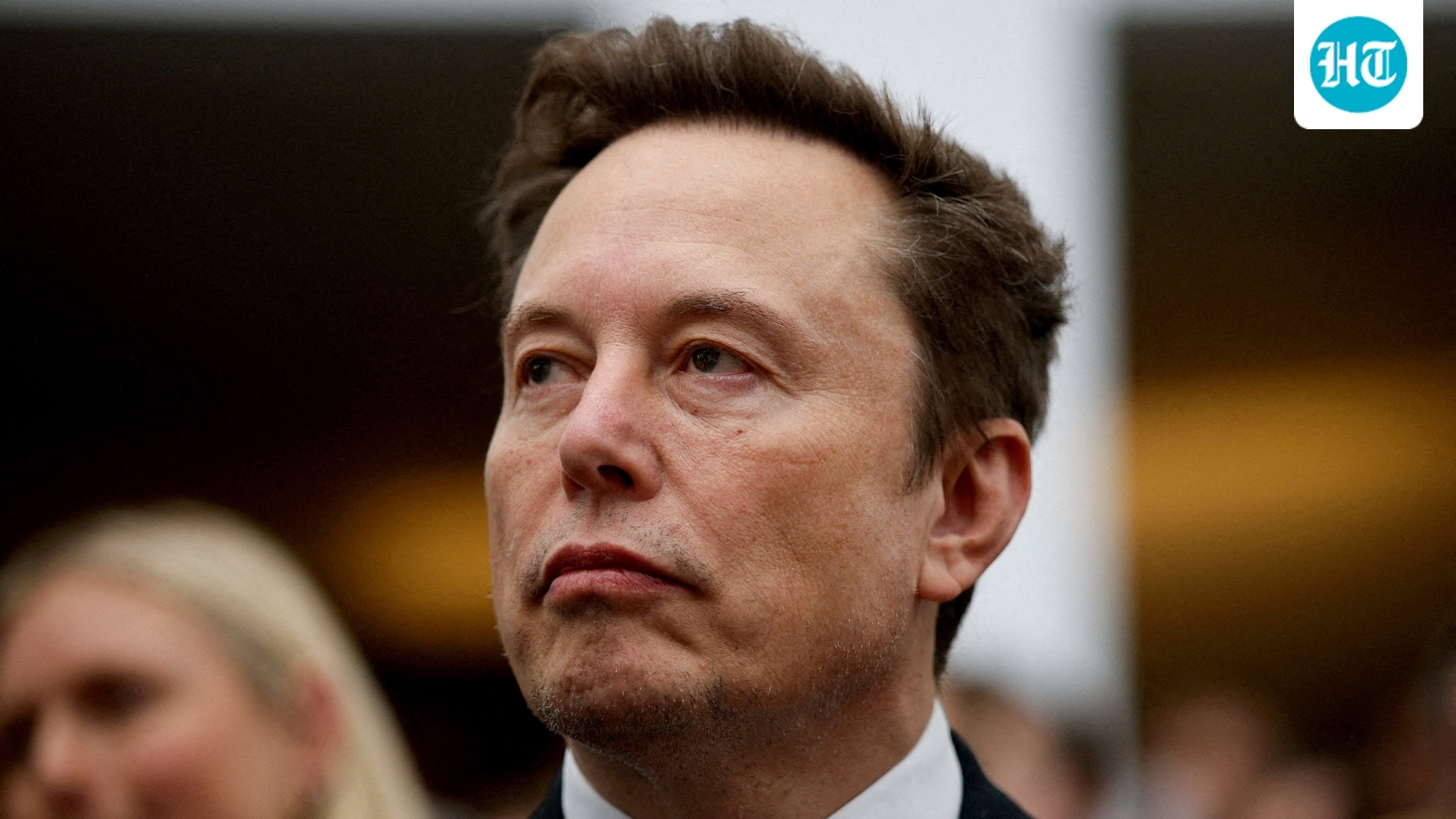
Shares of major neocloud companies fell on Monday after Elon Musk warned that more than 200 companies in the artificial intelligence (AI) infrastructure sector could collapse. The warning added to investor concerns about rising debt and the high cost of building AI data centres.

Nebius, CoreWeave and Iren shares fell more than 4% in early premarket trading. They later recovered some of their losses but were still trading between 2% and 3% lower. The decline came as investors questioned whether companies investing heavily in AI infrastructure would earn enough money to cover their costs, according to CNBC.
Elon Musk warns 200 AI companies could collapse
Musk, the CEO of SpaceX and Tesla, said access to debt financing had almost completely dried up for companies that did not have significant revenue from businesses outside AI data centres. He shared these views in a post on X on Sunday.
Musk warned that more than 200 neocloud companies could face severe difficulties, leading to business failures and consolidation. He said some companies would survive, but he did not expect many to make it through the difficult period.
Musk’s comments are significant because SpaceX also operates its own data centres and sells computing capacity to customers. This puts SpaceX in direct competition with neocloud companies, which rent computing power to businesses developing and running AI systems.
AI data centres face debt and demand risks
Musk was responding to a post by Chamath Palihapitiya, founder of Social Capital, who shared his views on the future of the data centre industry. Palihapitiya warned that the sector could end up with more computing capacity than businesses actually need in 2027, according to CNBC.
Palihapitiya said some computing capacity could be purchased and ready for use but fail to earn enough money to cover its full cost of capital. Other capacity could remain unused, leaving companies with expensive infrastructure that generates little or no return.
Palihapitiya described 2027 as a potentially difficult year for the sector. He said the industry could see the failure of poorly planned investments and a wave of consolidation, in which stronger companies acquire or absorb weaker businesses.
Neocloud stocks fall as CoreWeave, Nebius and Iren slide
Neocloud stocks have already suffered heavy losses over the past month. CoreWeave and Nebius shares have fallen more than 30%, while Iren shares have dropped around 40%, reflecting growing investor concerns about the sector’s financial position and future growth.
The recent sell-off gained momentum earlier in October after the cost of protecting against a possible CoreWeave debt default rose sharply. The spread on the company’s five-year credit default swaps reached levels generally associated with financial distress, according to CNBC. Yields on CoreWeave’s bonds also increased, signalling greater concern among investors about its debt.
Investors are increasingly worried about neocloud companies borrowing large amounts of money to expand their operations. These businesses use the funds to purchase expensive Nvidia chips, build data centres and rent computing power to companies developing AI products and services.
Also read: Trump faces voter backlash as US prices rise 5.4% and gas prices climb
The main concern is whether demand for AI computing will grow quickly enough to justify the enormous spending. If customers do not use enough of the available capacity or companies cannot generate sufficient revenue, neocloud operators could struggle to repay their debts and earn returns on their investments, according to CNBC.
Nvidia says AI infrastructure demand remains strong
Nvidia, which has invested in several neocloud companies, sought to reassure the market about the sector’s prospects at its GTC event in Berlin, Germany, last week. The company is a major supplier of chips used to train and run AI systems and has a financial interest in the growth of AI infrastructure.
Nvidia CEO Jensen Huang told CNBC that demand for neocloud services was extremely strong. His comments suggested that the sector’s main problem was not a lack of customers but a shortage of money to fund its rapid expansion.
Huang said companies needed more working capital, or money available to run their businesses and support growth. He explained that demand for AI infrastructure was coming from many different industries, creating a situation in which companies needed more funding than lenders and investors were currently providing.
Huang said the demand for capital was much greater than the available supply. However, he expressed confidence that the funding gap would eventually be resolved, suggesting that financing difficulties might ease as the AI infrastructure market develops.
Nebius and Iren defend AI computing demand
Nebius also sought to separate its financial position from concerns surrounding CoreWeave. Marc Boroditsky, Nebius’ chief revenue officer, told CNBC that his company did not carry the same level of debt as CoreWeave.
Boroditsky said Nebius expected strong customer demand when it brought its planned computing capacity online in 2027. He said the company expected to sell all that capacity and suggested that a similar situation could continue in 2028.
Iren Co-CEO Daniel Roberts also said customer demand remained strong despite growing investor concerns. Speaking to CNBC last week, Roberts said the company had seen no change in demand from its customers, even as investors paid closer attention to the risks facing AI infrastructure businesses.
Roberts said Iren was already discussing future computing capacity with customers at levels several times greater than what the company could potentially bring online in 2027. He added that customer discussions were increasingly shifting towards 2028, indicating that businesses continued to seek access to AI computing power.
The contrasting views highlight the central question facing the neocloud industry: whether strong demand for AI computing will translate into sustainable profits. While Nvidia, Nebius and Iren executives remain confident about customer demand, Musk and Palihapitiya have warned that heavy borrowing, limited access to capital and potentially unused computing capacity could force weaker companies out of the market.


