



With each monsoon season, hospitals across major cities in India prepare for a surge in dengue cases, often stretching already constrained capacity.
In one such hospital ward, a child lies in a hospital bed with an intravenous (IV) line taped to his arm. His parents watch as nurses monitor him, watching closely for any signs that his condition is getting worse. The parents know that what began as a mild fever could become severe and could even kill their child or impair him permanently.
For millions of families each year, this is the reality of dengue care. There is no specific treatment for dengue – a major hurdle in the global response to the viral disease, which is growing rapidly due to climate change and urbanisation.
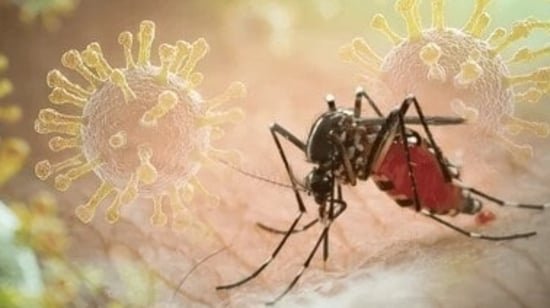
Dengue is transmitted by Aedes mosquitoes. The disease presents with acute fever and often with symptoms that overlap with those of other tropical infections, such as chikungunya, Zika, leptospirosis, rickettsiosis, typhoid fever, and malaria, making early diagnosis difficult. Patients showing warning signs such as persistent vomiting, abdominal pain, and lethargy are at higher risk of developing severe dengue, primarily due to severe plasma leakage and, less commonly, severe haemorrhage or organ impairment.
Endemic in over 100 countries, with an estimated 5.6 billion people at risk, the disease continues to spread at an alarming pace. As temperatures rise and mosquito habitats expand, dengue is no longer confined to warmer regions but is spreading into newer geographies. It is now a truly global health threat.
South and Southeast Asia bear a disproportionate burden, and countries such as India, Indonesia, Myanmar, Sri Lanka, Bangladesh, and Thailand remain among the most affected by the disease. In India alone, over 232,000 cases were reported in 2024, with actual burden estimated at 2.5 to 7.5 million episodes due to underreporting. Projections suggest this could increase by 30% by 2026.
Yet despite the needs, no specific treatment for dengue or its complications has been developed. Care currently focuses on managing symptoms with paracetamol, judicious fluid administration, and close monitoring for complications, but there is no medicine to treat the virus itself. This status quo demands intense resource utilisation and health system preparedness. Many patients require several days of hospitalization for IV fluids, and meticulous clinical classification, reassessment, and intensive care place a heavy burden on both health systems and families.
For decades, dengue response strategies have thus focused on prevention through mosquito control and, more recently, vaccines. These efforts are essential and must continue. However, they are not sufficient. Vaccines exist but remain limited in scope; the currently available dengue vaccine is recommended only for individuals aged 9 to 45 who have had at least one prior infection, excluding many of those most at risk. While newer vaccines are being developed and rolled out in other regions and show broader applicability, pregnant women, infants, and older adults will remain uncovered.
Dengue disproportionately affects lower-income populations in tropical and subtropical regions, where health systems are often under-resourced. Pregnant women with dengue face an increased risk of maternal mortality and pregnancy loss, while children and older adults with dengue also face a higher risk of severe disease and complications. Dengue’s economic burden extends far beyond the cost of hospital care. Lost working days, school absenteeism, and out-of-pocket health care expenses frequently push families into financial strain, with dengue costing an estimated $ 5.71 billion in India alone in 2016.
Addressing this challenge requires a shift in how new health tools are developed and delivered. The complexity of the dengue virus demands a comprehensive approach to designing and testing new treatments to meet the needs of diverse populations and settings. This includes ensuring representation across geographies, age groups, and vulnerable populations such as children and pregnant women, and accounting for differences in epidemiology, health system preparedness, and health-seeking behaviour. Efforts to ensure that new health tools can be delivered in real-world settings to reach patients who need them the most must be built in from the very start of the research and development process.
There are promising scientific pathways for developing dengue treatments, from medications that target the virus, such as the advanced monoclonal antibody being developed by the Serum Institute of India, to repurposed medicines already approved for other diseases and treatments that modulate the human immune response to the infection to reduce the risk of developing complications. Despite its growing burden, investment in dengue treatments has been limited – in part because it predominantly affects people in low- and middle-income countries. Most people with dengue experience no or mild symptoms, and because outbreaks are cyclical, with cases rising dramatically and then subsiding, dengue often is not viewed as a sustained global health challenge.
Efforts to close the dengue treatment gap are already underway. Led by institutions in India, Brazil, Malaysia, and Thailand, the Dengue Alliance is a global partnership founded in 2022 to develop affordable and accessible treatments. With endemic countries at the helm, the Alliance is advancing pre-clinical research, evaluating drug candidates, and preparing clinical trials for the most promising ones, while strengthening cross-country collaboration to address knowledge gaps, prepare for future registration of potential medicines, and accelerate access to treatments once they become available. Sustained investment from governments and funders will be critical to ensure these efforts translate into timely and accessible treatments.
Communities at risk of dengue need an integrated approach that combines effective treatment along with vaccines, mosquito control, and other prevention strategies. The development of timely and effective solutions will depend on creative and innovative approaches, supported by advances in surveillance, diagnostics, and modelling to better tailor interventions. It will also require collaboration between research networks, global health initiatives, industry, and public institutions, and a shared recognition that the absence of a dengue treatment is an urgent gap that must be addressed with the same priority as prevention.
Back in the hospital ward, the child lies still, the IV drip continuing its slow, steady rhythm. His parents are still waiting, watching, hoping, with little else to hold on to.
His recovery depends not on a medicine designed to treat the virus, but on time, careful monitoring, dedication of health staff, and chance. For now, that is all medical science can offer.
But it doesn’t have to be this way. There is a growing momentum through new partnerships, research, and growing investment in dengue treatment. What is now needed is to sustain and scale these efforts. Until then, millions of families will continue to wait.
(The views expressed are personal)
This article is authored by Sanjay Sarin, Asia Continental Lead and office director, South Asia, Drugs for Neglected Diseases Initiative (DNDi) and G Karthikeyan, executive director, Translational Health Science and Technology Institute (THSTI).


