


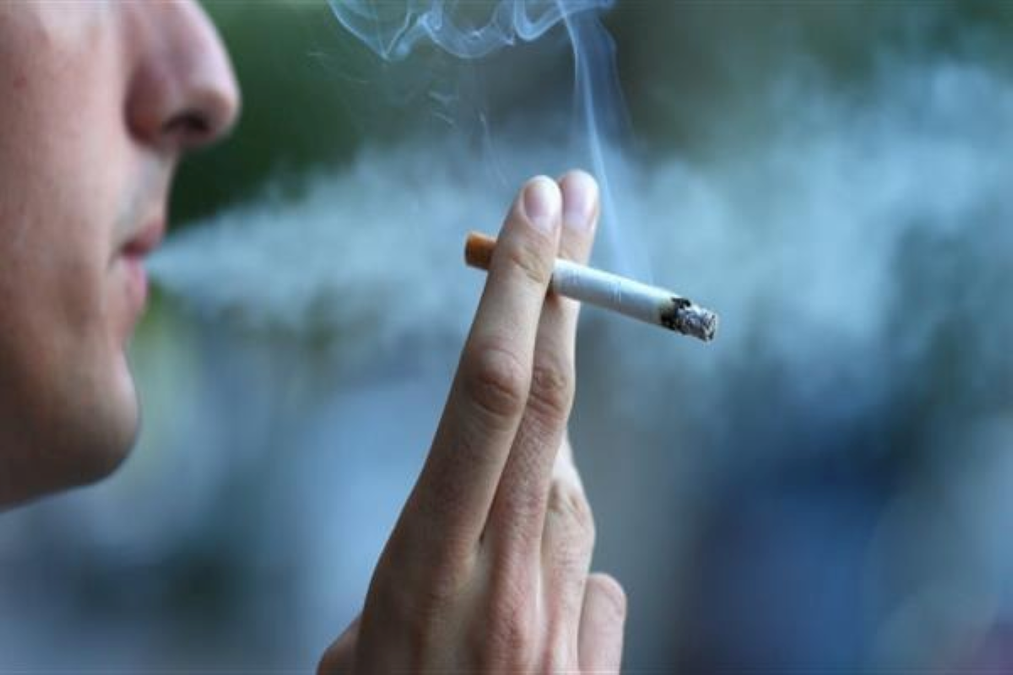
Srinagar, Jun 21: Tobacco consumption continues to pose a significant public health challenge in Jammu and Kashmir, with nearly one in every four adults using tobacco in one form or another.
Dr. S. Muhammad Salim Khan, Professor, Community Medicine, Government Medical College (GMC) Srinagar said in a report, titled “Tobacco in J&K: The Hidden Epidemic–Health, Economic, Social and Environmental Costs,” highlights the widespread prevalence of tobacco use and its far-reaching consequences on health, families, livelihoods and the environment.
According to data cited from the Global Adult Tobacco Survey (GATS-2, 2016-17), 23.7 percent of adults in J&K use tobacco, including smoking and smokeless forms.
Tobacco use among men stands at 39.7 percent, compared to 6.2 percent among women. Smoking tobacco is used by 35.2 percent of men and 5.1 percent of women, while smokeless tobacco use stands at 6.8 percent among men and 1.5 percent among women.
The report identifies commonly used tobacco products in J&K, including cigarettes, bidis, hookah (hukka), gutka, khaini, zarda and tobacco mixed with betel quid (pan).
District-wise analysis based on NFHS-5 indicates that tobacco smoking prevalence is considerably higher in Kashmir division than in Jammu division.
Kupwara records the highest smoking prevalence at 56.6 percent, followed by Baramulla, Bandipora, Kulgam and Shopian. The lowest prevalence has been reported in Jammu, Samba, Kathua and Udhampur districts.
The report notes that tobacco use generally begins during adolescence and early adulthood, increases rapidly between 25 and 44 years of age and reaches its highest prevalence among individuals aged 45–59 years. Men consistently show significantly higher tobacco consumption than women across all age groups.
Health experts have warned that tobacco is linked to multiple cancers, including oral, lung, esophageal, laryngeal, bladder and pancreatic cancers.
It is also a major contributor to cardiovascular diseases such as heart attacks and strokes, respiratory illnesses including COPD and emphysema, and maternal and child health complications such as low birth weight, premature births and infant mortality.
The report also outlines the heavy economic burden associated with tobacco use. Daily tobacco expenditure of ₹100 can amount to ₹36,500 annually, while spending ₹300 per day can exceed ₹1 lakh annually.
In addition to household financial losses, tobacco-related diseases impose substantial healthcare costs and productivity losses through disability, premature mortality, absenteeism and reduced work efficiency.
Beyond health and economics, the report highlights social consequences, including increased poverty, school dropouts, family financial stress, second-hand smoke exposure and intergenerational disadvantages.
Environmental concerns linked to tobacco include deforestation, air pollution, cigarette butt waste and contamination of soil and water resources.
Calling tobacco use a preventable epidemic, Dr. Khan urged people to quit tobacco and adopt healthier lifestyles. The report emphasizes that quitting tobacco offers immediate and long-term benefits, including improved health, financial savings, stronger families, a cleaner environment and a healthier society.
