



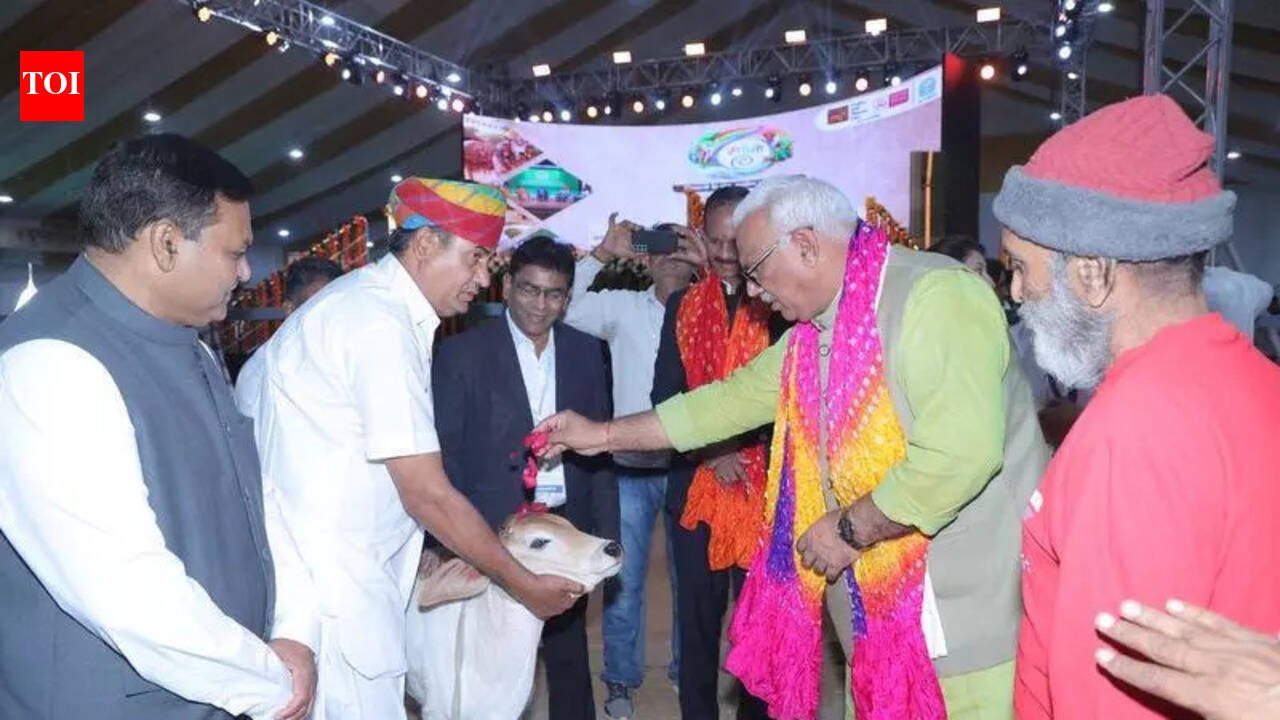
Jaipur: The National Dairy Development Board (NDDB) will expand the dairy cooperative movement to 75,000 villages across the country over next five years, including nearly 8,000 villages in Rajasthan, NDDB chairman Meenesh Shah announced Friday.Addressing farmers and stakeholders at the inauguration of ‘Rangeelo 2026′, a two-day dairy and livestock festival organised by NDDB and its wholly owned arm, NDDB Dairy Services, Shah said the expansion would significantly deepen the cooperative network in rural India. The event was held at Sri Karan Narendra Agriculture University (SKNAU), Jobner.“In addition to bringing new villages under dairy cooperatives, we will also strengthen infrastructure in 4,000 existing villages, including milk testing facilities and other essential systems,” Shah said, underlining the focus on quality enhancement and transparency in procurement. The programme was inaugurated by Rajasthan’s minister of State for Home, Gopalan, Animal Husbandry and Dairy, and Fisheries, Jawahar Singh Bedam.Highlighting the sector’s growth story, Shah said India transformed from a milk-deficit nation dependent on imports to the world’s largest milk producer under NDDB’s leadership. “From 15-20 million metric tonnes annually a few decades ago, India today produces nearly 250 million metric tonnes of milk, accounting for about 25% of global production,” he said.He noted that nearly 8 crore farmers are engaged in dairying, making it one of the largest livelihood sectors in the country. Beyond income generation, the sector also plays a critical nutritional role, particularly for India’s large lacto-vegetarian population that depends on milk as a primary source of protein. However, Shah cautioned that only 35%-40% of country’s marketable surplus milk currently flows through the organised sector, with nearly 60% remaining in the unorganised segment. “Bringing more milk into the organised sector is essential to ensure quality products for consumers and better returns for farmers,” he said.Referring to the launch of White Revolution 2.0, he said Rajasthan, the country’s second-largest milk-producing state, stands to benefit significantly, with 8,000 additional villages set to be integrated into the cooperative framework.On sustainability, Shah pointed out that India’s vast livestock population also presents environmental challenges, particularly methane emissions. NDDB initiated programmes promoting biogas generation and scientific manure management. He urged farmers to adopt small biogas plants or develop dung-based value chains to generate clean energy and additional income.Themed ‘Colors of Rural Prosperity with Animals’, Rangeelo 2026 seeks to create a common platform for farmers, experts, cooperative leaders and policymakers to exchange ideas and explore scientific advancements in dairy and animal husbandry.The festival showcases indigenous cattle breeds such as Gir, Sahiwal, Tharparkar, Rathi, Haryana, Kankrej, Punganur and Nagori, along with buffalo breeds including Murrah, Nili-Ravi and Jaffarabadi. Live demonstrations of advanced dairy technologies, milk competitions, technical sessions, policy dialogues and cultural performances form part of the two-day event.With participation from farmers, dairy unions, agri-entrepreneurs, researchers and students, the festival reflects Rajasthan’s vibrant rural economy while outlining an ambitious roadmap for next phase of cooperative-led dairy growth.


