






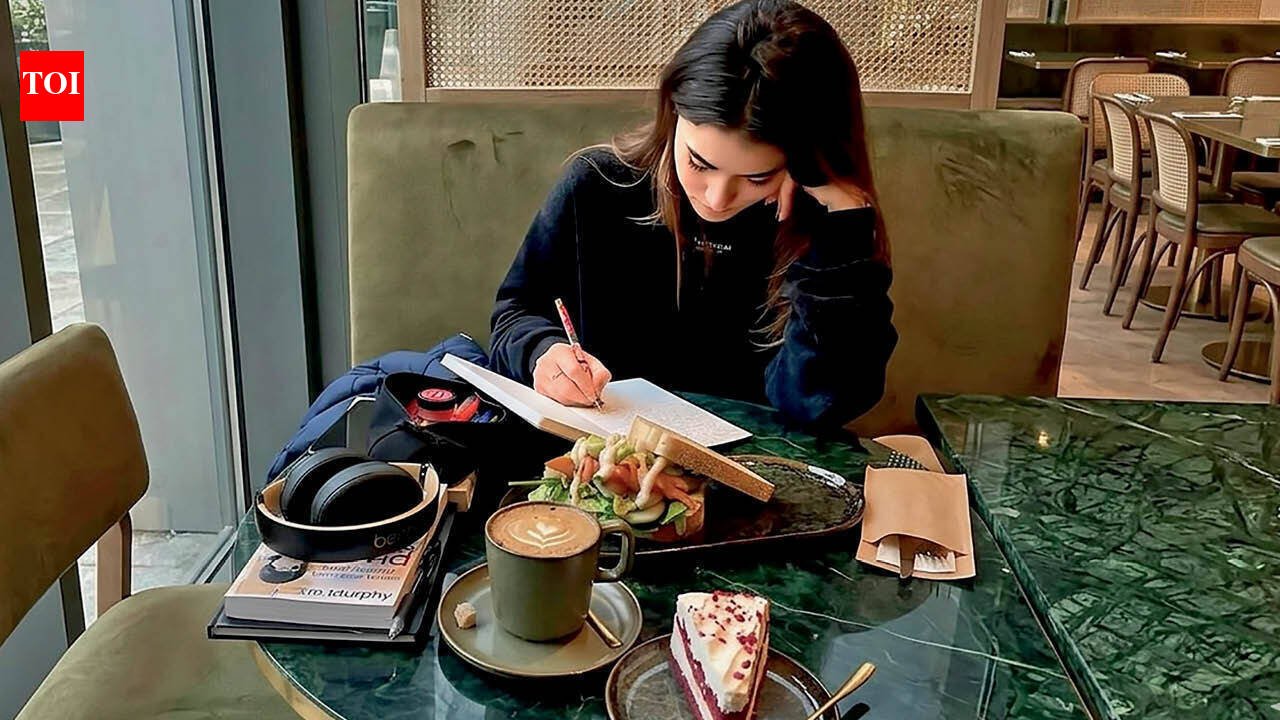
There was a time when dining alone in Delhi came with an apology attached. “My friend is on the way.” “Someone’s joining me.” “My partner cancelled at the last minute.” For many solo diners, occupying a table alone in the capital often meant navigating curious glances, awkward questions, or the subtle sense that a restaurant experience was designed for everyone but them. But something is shifting in Delhi’s food scene. Across cafés and restaurants in NCR, dining alone is beginning to feel less like an exception and more like a legitimate way to experience the city.When Delhi-based Nishi Singh was asked if she had been ‘stood up’ while dining alone, the remark stayed with her long enough to inspire Table For One Delhi, an Instagram page documenting solo-friendly spaces. What began as a personal search evolved into a quiet study of Delhi. After a month of exploring places, she posted a video saying, “I hated Delhi in the first few years. But since starting this page, I’ve realised there’s another side to Delhi – a quieter one, with people who go out just to sit with their thoughts for a while, who don’t need to be seen to enjoy themselves.”
Toggle navigation My Work Live CMSOld Marketplace MarketplaceCreate NewNewsroomTOIonlineSMMy Work+ Article: Atten…+ImageMediaOthersSimilarBackgroundGrayscale1.00xThumbnailLeadSocialTwitterSelect usageAdd newID :NewParent ID :132771444Image Title‘Solo diners are an emerging market’Chars 23 / Words 1Image Caption‘Solo diners are an emerging market’Chars 0 / Words 0Image AgencyAgency gives credit to sourceNot related to any agencyPhotographer BylineCaption BylinePublish DateID :132771444Content Score :2.8/5Attentive, non-intrusive staff | Smaller portions | Cosy nooks: Solo dining is finally finding space in NCRSuggest Slug TitleOnce perceived with hesitation, solo dining in Delhi is shedding its stigma, transforming into a celebrated culinary adventure. Previously, lone diners often faced unwanted attention and inquiries, but now, the city’s dynamic food landscape is embracing this trend. Cafes and restaurants are recognizing the value of the solo dining experience, fostering an atmosphere where individuals can enjoy meals at their own pace without judgment.Suggest SynopsisMake LongerRewriteThere was a time when dining alone in Delhi came with an apology attached. “My friend is on the way.” “Someone’s joining me.” “My partner cancelled at the last minute.” For many solo diners, occupying a table alone in the capital often meant navigating curious glances, awkward questions, or the subtle sense that a restaurant experience was designed for everyone but them. But something is shifting in Delhi’s food scene. Across cafés and restaurants in NCR, dining alone is beginning to feel less like an exception and more like a legitimate way to experience the city.When Delhi-based Nishi Singh was asked if she had been ‘stood up’ while dining alone, the remark stayed with her long enough to inspire Table For One Delhi, an Instagram page documenting solo-friendly spaces. What began as a personal search evolved into a quiet study of Delhi. After a month of exploring places, she posted a video saying, “I hated Delhi in the first few years. But since starting this page, I’ve realised there’s another side to Delhi – a quieter one, with people who go out just to sit with their thoughts for a while, who don’t need to be seen to enjoy themselves.” ‘Cafés are adapting faster than restaurants’Shilpa Sharma, founder of the curated travel experience company Breakaway India, says her solo outings in Delhi are usually café visits rather than full-fledged lunches or dinners. “I’m quite happy watching a film alone, then grabbing a coffee or snack,” she says, adding that cafés in NCR are more predisposed to people sitting by themselves than traditional eateries. While she still feels awkward walking into older establishments, she says newer cafés are recognising the need for solo-friendly seating. “They’re beginning to realise that more people want to come and eat on their own, and they’ve got to create the space,” she says.For Swati Singh, a farmstead cheesemaker, places such as Perch, Café Dori, Fort City Brewing and Planterie work because they function as “community spaces”, where being alone doesn’t feel unusual. “You can work, dine and people-watch. It doesn’t feel like you’re taking up space meant for a group,” she says. About Café Kona in GK, she adds, “It feels like eating in someone’s dining room, where you can see the kitchen.”“Solo diners don’t need a special menu or a seat facing the wall,” says Unnati Gupta, founder of the catering company Tari India, who dines alone several times a month. “They just need to feel like their presence is as valued as a table of four.” For her, outlets such as Plats in Shivalik, Yum Yum Cha and Leo’s in Vasant Vihar strike that balance – places where staff don’t hover with “Are you waiting for someone?” energy and where portions feel manageable for one.‘Solo diners are an emerging market’Industry insiders say restaurants are beginning to see solo diners not as an exception, but as a growing consumer segment. At Comorin, chef Dhiraj Dargan says the restaurant has consciously introduced tasting-style portion sizes that allow solo diners to try multiple dishes without over-ordering. He says, “Dining out is no longer reserved for social occasions. It has become a form of self-care and personal time.”According to Chef Harish Rao of Hosa, solo dining is becoming a staple in urban business hubs like One Horizon Centre, particularly among professionals unwinding after work. “For solo dining to be a comfortable experience, restaurants need attentive yet non-intrusive service, counter seating, well-paced dining experiences and menus that encourage exploration. Solo guests are no longer seen as an operational compromise; they’re becoming an important part of dining culture.”Chef Sadaf Hussain says solo dining keeps him “grounded.” “Itmenan se reh sakte hain. I don’t have to rely on anyone,” he says, adding that cafés offer a casual space to simply sit and enjoy coffee. But, he thinks bars remain a more difficult space for solo customers. “Going to a bar is usually because you are either very happy or sad,” he says, explaining that solo drinking still carries social perception in a way solo coffee drinking does not.Fine-dining restaurants are adapting to solo dining through menus, ambience, and service formats. “Beyond bar seating, what makes a solo diner comfortable in a fine dining environment ultimately comes down to ambience and service. A thoughtfully designed space allows a solo diner to feel immersed in the experience rather than simply occupying a table. In fine dining, we train our teams to understand the guest, not the table size,” says a spokesperson for Shangri-La Eros New Delhi. As per Sadaf, the industry is beginning to respond to solo diners more consciously. Spaces such as Subko, Local, Diwan’s, Perch, Roastery, and Kona, he says, are creating more thoughtful seating formats for solo customers. “It’s about using space aesthetically and efficiently,” he says, adding that solo dining is no longer being treated as “dead space” within hospitality.Rajeev Sharma, F&B Manager, Taj Palace, New Delhi, says, “We are seeing more guests, including several single lady diners, embrace the idea of taking themselves out. It is about reading the guest correctly. Some solo diners want conversation, some want privacy, and some simply want to enjoy an excellent meal. For solo lady diners, ease, discretion and attentiveness become important.”From self-consciousness to self-directed solitudeFor women, solo dining is also deeply tied to questions of safety. Shruti Sinha, a researcher, says people are often fascinated by someone dining alone. “Initially, they expect someone will join you, but later there’s almost a sense of wonder, and sometimes judgment,” she says. While she has never felt treated poorly by restaurant staff, she is conscious of the spaces she chooses. She adds, “I think solo dining as a woman in India only happens if you have money. Safety, security, internet access, even the freedom to sit alone comfortably, are all linked to purchasing power.”“I’ve noticed how differently time moves when you are dining by yourself,” says Shivani Srivastava, a research professional, adding, “No one is waiting for you to finish. While Delhi’s restaurants can be overwhelming, dining alone has taught me how to reclaim small pockets of peace amid the chaos. When you’re not managing conversation or splitting a menu, you slow down and actually taste the food. But it doesn’t always feel comfortable at first – not because you’re not okay with it, but because sometimes the people around you aren’t.”Solo dining has always felt more natural in NCR’s corporate neighbourhoods, says Riya Goel, an NCR-based DevOps engineer. She adds, “Professionals living in Gurgaon and Noida have helped normalise the solo dining culture.”Sharing how his experience has changed over the years, Rohan Aggarwal, a hospitality professional, says, “You walk into a café alone, and almost every time the first thing you hear is: ‘Table for one, sir?’ It’s polite and routine, but for a second, it makes you aware of the empty chair across the table… When you dine alone, you stop rushing. You learn how comfortable you are with your own company. Now, when someone says, ‘Table for one, sir?’ it doesn’t feel lonely anymore. It feels enough.”Title107 chars4.2/5Synopsis64 words2.8/5Body1191 words3.1/5Publish Date:Now
‘Cafés are adapting faster than restaurants’Shilpa Sharma, founder of the curated travel experience company Breakaway India, says her solo outings in Delhi are usually café visits rather than full-fledged lunches or dinners. “I’m quite happy watching a film alone, then grabbing a coffee or snack,” she says, adding that cafés in NCR are more predisposed to people sitting by themselves than traditional eateries. While she still feels awkward walking into older establishments, she says newer cafés are recognising the need for solo-friendly seating. “They’re beginning to realise that more people want to come and eat on their own, and they’ve got to create the space,” she says.For Swati Singh, a farmstead cheesemaker, places such as Perch, Café Dori, Fort City Brewing and Planterie work because they function as “community spaces”, where being alone doesn’t feel unusual. “You can work, dine and people-watch. It doesn’t feel like you’re taking up space meant for a group,” she says. About Café Kona in GK, she adds, “It feels like eating in someone’s dining room, where you can see the kitchen.”“Solo diners don’t need a special menu or a seat facing the wall,” says Unnati Gupta, founder of the catering company Tari India, who dines alone several times a month. “They just need to feel like their presence is as valued as a table of four.” For her, outlets such as Plats in Shivalik, Yum Yum Cha and Leo’s in Vasant Vihar strike that balance – places where staff don’t hover with “Are you waiting for someone?” energy and where portions feel manageable for one.
Solo dining is a growing trend in NCR, and I hope NCR outlets lean into it more consciously with smaller portion options, seating designed for one, and staff trained to make solo guests feel celebrated rather than accommodated. There’s a real opportunity there
Unnati Gupta, founder of a catering company, Tari India
For Simran Sekhri, a baker who frequently dines alone across cafés in South Delhi and spots around Sunder Nursery, the experience has largely been accommodating. “At most of these places nobody will disturb you,” she says, noting that the discomfort tends to increase only in louder, high-footfall areas such as Connaught Place.“There’s no combo for one person… it just doesn’t exist,” laughs Binny Varghese, a coffee and beverage consultant. Recalling how, a few years ago, he would pretend his friend “didn’t show up” to avoid judgment while dining alone, he says solo diners can still sometimes receive less attentive service because they are perceived as lower-bill customers.
Solo dining is a growing trend in NCR, and I hope NCR outlets lean into it more consciously with smaller portions, seating designed for one, and staff trained to make solo guests feel celebrated rather than accommodated
From self-consciousness to self-directed solitudeFor women, solo dining is also deeply tied to questions of safety. Shruti Sinha, a researcher, says people are often fascinated by someone dining alone. “Initially, they expect someone will join you, but later there’s almost a sense of wonder, and sometimes judgment,” she says. While she has never felt treated poorly by restaurant staff, she is conscious of the spaces she chooses. She adds, “I think solo dining as a woman in India only happens if you have money. Safety, security, internet access, even the freedom to sit alone comfortably, are all linked to purchasing power.”“I’ve noticed how differently time moves when you are dining by yourself,” says Shivani Srivastava, a research professional, adding, “No one is waiting for you to finish. While Delhi’s restaurants can be overwhelming, dining alone has taught me how to reclaim small pockets of peace amid the chaos. When you’re not managing conversation or splitting a menu, you slow down and actually taste the food. But it doesn’t always feel comfortable at first – not because you’re not okay with it, but because sometimes the people around you aren’t.”Solo dining has always felt more natural in NCR’s corporate neighbourhoods, says Riya Goel, an NCR-based DevOps engineer. She adds, “Professionals living in Gurgaon and Noida have helped normalise the solo dining culture.”Sharing how his experience has changed over the years, Rohan Aggarwal, a hospitality professional, says, “You walk into a café alone, and almost every time the first thing you hear is: ‘Table for one, sir?’ It’s polite and routine, but for a second, it makes you aware of the empty chair across the table… When you dine alone, you stop rushing. You learn how comfortable you are with your own company. Now, when someone says, ‘Table for one, sir?’ it doesn’t feel lonely anymore. It feels enough.”‘Solo diners are an emerging market’Industry insiders say restaurants are beginning to see solo diners not as an exception, but as a growing consumer segment. At Comorin, chef Dhiraj Dargan says the restaurant has consciously introduced tasting-style portion sizes that allow solo diners to try multiple dishes without over-ordering. He says, “Dining out is no longer reserved for social occasions. It has become a form of self-care and personal time.“According to Chef Harish Rao of Hosa, solo dining is becoming a staple in urban business hubs like One Horizon Centre, particularly among professionals unwinding after work. “For solo dining to be a comfortable experience, restaurants need attentive yet non-intrusive service, counter seating, well-paced dining experiences and menus that encourage exploration. Solo guests are no longer seen as an operational compromise; they’re becoming an important part of dining culture.”Chef Sadaf Hussain says solo dining keeps him “grounded.” “Itmenan se reh sakte hain. I don’t have to rely on anyone,” he says, adding that cafés offer a casual space to simply sit and enjoy coffee. But, he thinks bars remain a more difficult space for solo customers. “Going to a bar is usually because you are either very happy or sad,” he says, explaining that solo drinking still carries social perception in a way solo coffee drinking does not.Fine-dining restaurants are adapting to solo dining through menus, ambience, and service formats. “Beyond bar seating, what makes a solo diner comfortable in a fine dining environment ultimately comes down to ambience and service. A thoughtfully designed space allows a solo diner to feel immersed in the experience rather than simply occupying a table. In fine dining, we train our teams to understand the guest, not the table size,” says a spokesperson for Shangri-La Eros New Delhi. As per Sadaf, the industry is beginning to respond to solo diners more consciously. Spaces such as Subko, Local, Diwan’s, Perch, Roastery, and Kona, he says, are creating more thoughtful seating formats for solo customers. “It’s about using space aesthetically and efficiently,” he says, adding that solo dining is no longer being treated as “dead space” within hospitality. Rajeev Sharma, F&B Manager, Taj Palace, New Delhi, says, “We are seeing more guests, including several single lady diners, embrace the idea of taking themselves out. It is about reading the guest correctly. Some solo diners want conversation, some want privacy, and some simply want to enjoy an excellent meal. For solo lady diners, ease, discretion and attentiveness become important.”
What is particularly interesting is that solo dining today is less about solitude and more about intentional experiences. It reflects changing social habits, greater confidence in independent travel and lifestyle choices, and a growing preference for experiences that are personal, immersive, and on one’s own terms
Renuka Kaushik, Head of Marketing – Jaypee Hotels & Resorts
NCR’s work culture is changing solo dining scene tooRiya Goel, a DevOps engineer who has worked across Gurgaon and Noida, says solo dining has long felt more common in corporate-heavy parts of NCR because of migrant professionals living independently. “People casually sit alone, eat, work or just spend time by themselves,” she says.What she finds more interesting, however, is Delhi’s gradual shift. “Earlier, people were hesitant to go out alone, especially to cafés and restaurants. People used to stare differently,” she says. “But now I genuinely see both women and men comfortably sitting alone, having lunch or coffee by themselves.”


