



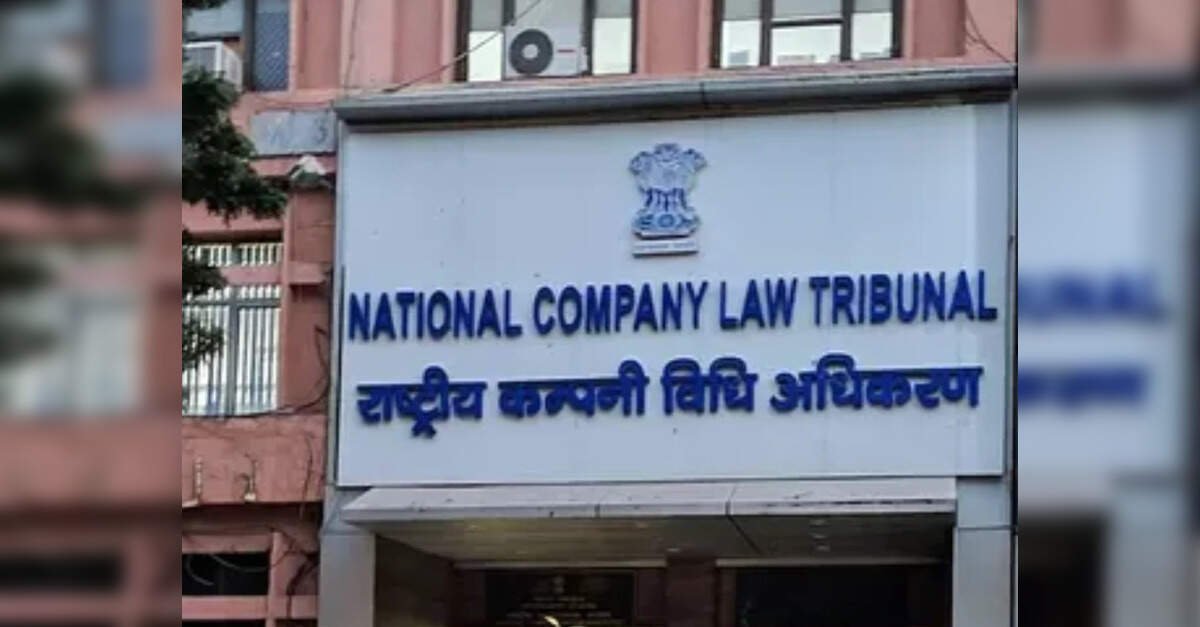
The National Company Law Appellate Tribunal (NCLAT) will tomorrow hear a challenge by LIC Housing Finance and several other lenders against the National Company Law Tribunal’s (NCLT) approval of a repayment plan for Essel Group founder Subhash Chandra, in a case that could test the limits of creditor “commercial wisdom” in personal-guarantor insolvency proceedings.
The NCLT had approved Chandra’s repayment plan on August 25, under which creditors are to receive INR 6.25 crore, with another INR 25 lakh towards insolvency process costs, against admitted claims of approximately INR 22,006.57 crore. The plan was approved with 80.814 percent of the votes cast in favour.
LIC Housing Finance, Canara Bank and Union Bank of India, which opposed the plan, have said they will challenge the NCLT order before the NCLAT. The three institutions together represented 8.45 percent of the voting share.
The case has attracted attention because the proposed recovery represents only around 0.028 percent of the admitted claims, implying a haircut of nearly 99.97 percent.
But lawyers tracking the matter say that the main question before the appellate tribunal is unlikely to be simply whether the recovery is too low. Instead, the NCLAT could examine whether the repayment process complied with the statutory requirements of the Insolvency and Bankruptcy Code (IBC), including the treatment of creditor votes, verification of claims, valuation of Chandra’s assets and the feasibility of the repayment plan.
Can commercial wisdom be challenged?
The more significant question for the NCLAT could be the extent to which a tribunal can scrutinise a repayment plan once the requisite creditor majority has approved it.
The NCLT’s third-member opinion expressly rejected the proposition that Section 114 makes approval of a creditor-backed plan a purely mechanical exercise. It held that the adjudicating authority must satisfy itself that the plan has been considered in accordance with the Code and that there is no statutory infirmity. At the same time, it cannot substitute its own commercial assessment for that of the creditors.
“The tribunal has a discretionary power under Section 114(3) to send a plan back for reconsideration, but that isn’t triggered just because a payout looks low, it needs actual material on record showing something went wrong,” said Anshul Verma, partner, SKV Law Offices. “Commercial wisdom still governs the adequacy of the bargain, but it works inside the statutory framework, it can’t cure a breach of a mandatory provision, so a majority vote counts for a great deal without being the end of the matter.”
“The order holds that scrutiny under Section 114, particularly sub-section (3), requires the Adjudicating Authority to apply its judicial mind and satisfy itself that the process was lawfully run and free of statutory infirmity, material irregularity, fraud or concealment,” said Chirag Gupta, associate partner, Alpha Partners. “It cannot, however, substitute its own commercial assessment or sit in appeal over the creditors’ commercial wisdom, and the fact that recovery is extremely low, about 0.028%, is not by itself a ground to reject a plan approved by the requisite majority,” Gupta said.
“The tribunal’s role is not to substitute its commercial judgment for that of creditors. The NCLT may examine fairness, feasibility and compliance, but it does not normally determine whether the recovery percentage is commercially attractive. The line is drawn at legal compliance and procedural propriety, not at the commercial wisdom of creditors,” said Alay Razvi, managing partner, Accord Juris.
Asset valuation under scrutiny
The NCLT recorded a 2018 net-worth certificate valuing Chandra’s net worth at approximately INR 40,562 crore. Against this, Chandra’s current disclosed net worth was approximately INR 31.79 crore.
The tribunal found that the discrepancy gave creditors a legitimate basis to seek clarification, but stopped short of treating it as proof of concealment or fraud. It also held that a forensic audit or asset-tracing exercise was not a mandatory precondition to approval of a repayment plan. That conclusion could come under close scrutiny at the NCLAT.
“On valuation, they may point to the guarantor’s disclosed net worth of about INR 31.79 crore against earlier certificates showing INR 40,562 crore and INR 45,888 crore, and the reported INR 1,260 crore sale of a single asset, to argue the estate was understated,” said Gupta.
He also pointed to the feasibility of the proposed repayment, noting that the INR 6.5 crore offer was described as merely indicative in the proceedings.
“The honest comparator for judging this outcome isn’t INR 22,006 crore, it’s Chandra’s own asset base,” Verma noted. “The real question is how far the enquiry into that estate went, and the tribunal itself accepted the earlier certificates warranted clarification while holding they don’t by themselves establish concealment.”
Razvi said creditors could argue that the valuation of the guarantor’s estate was inadequate or that the resolution professional failed to properly identify or realise assets.
Creditor voting and claim verification
The NCLT plan received 80.814% approval based on votes cast, despite opposition from LIC Housing Finance and other lenders. LIC Housing Finance’s admitted claim was INR 1,322.39 crore, while the plan proposed repayment of just INR 38.09 lakh, approximately 0.028% of its admitted dues.
The NCLT nevertheless held that once the requisite majority approves a legally compliant plan, Section 115 makes it binding on all covered creditors, including dissenting creditors. It specifically rejected the proposition that dissenting lenders could be allowed to independently pursue their original claims merely because they voted against the plan.
Verma said the NCLAT could examine “what evidence is enough to exclude a conflicted creditor’s vote” and whether the voting process adequately addressed questions over creditor eligibility. He also flagged whether a plan containing an “indicative” recovery figure could be approved as final.
“The entities whose eligibility was challenged did take part in approving this plan, which an appeal would say undermines the independence the whole majority-approval framework depends on,” he said.
The NCLAT may also be asked to consider whether the resolution professional adequately verified claims before they were admitted.
Gupta said the appellate proceedings could clarify “when admitted, undisputed claims may be reopened at the Section 114 stage, and the extent of any obligation to verify a guarantor’s disclosed net worth before approval.”
What could the NCLAT settle?
The case could therefore have implications beyond Chandra’s individual insolvency. It could determine the threshold at which discrepancies in a personal guarantor’s asset disclosures require deeper investigation; whether challenged creditor relationships can invalidate a voting majority; how far an RP must verify claims before placing a plan before creditors; and whether an extremely low recovery, coupled with unresolved questions over valuation and feasibility, can constitute a statutory infirmity under Section 114.
Gupta said the NCLAT could clarify the scope of Section 114 scrutiny, particularly whether extremely low recovery can by itself justify rejection of a plan, and the extent to which a guarantor’s disclosed net worth must be verified.
Razvi said the appellate tribunal could additionally address the treatment of “associate” creditors, voting eligibility, fair and equitable treatment, valuation and feasibility, as well as the relationship between personal-guarantor insolvency and concurrent corporate insolvency.
Verma identified a similar set of unresolved issues, including “how much verification an RP owes before claims go into the list under Part III,” what evidence is sufficient to exclude a conflicted creditor’s vote, and how rigorously the “worse off in bankruptcy” test should be applied.


