



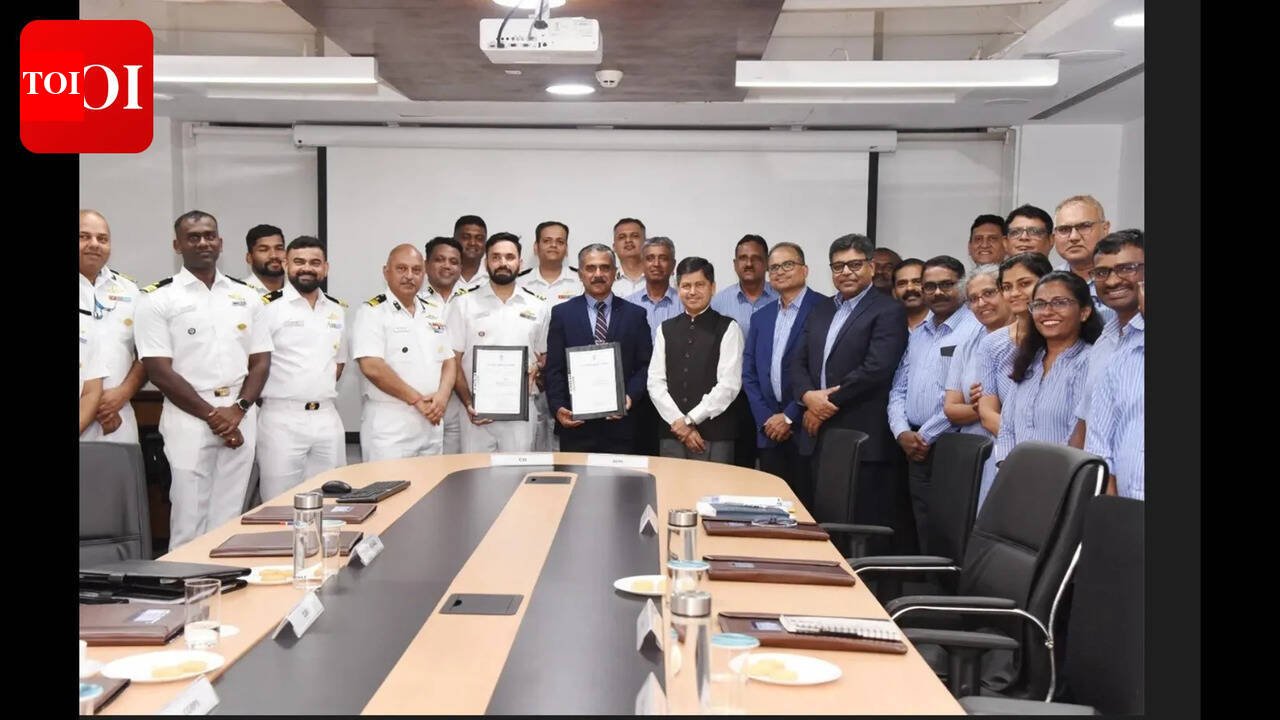
Panaji: The war in West Asia, and the resultant energy crisis, is yet another reminder that a strong navy is critical for India to secure its trade routes and strategic objectives, said deputy chief of naval staff vice admiral Tarun Sobti on Tuesday. Sobti was speaking at the launch of a naval warship INS Shachi at Goa Shipyard Limited.“With rising strategic competition and conflicts, Indian Navy continues to remain the prime manifestation of th country’s maritime power and a very important instrument for diplomacy and regional stability,” said Sobti.
The navy has deployed at least five warships in Persian Gulf to escort high-priority vessels carrying LNG, LPG and crude oil to India.“The seas around us carry the lifeline of trade and energy . Safeguarding these interests requires a capable, responsive and forward-looking navy,” he said.The deputy naval chief said that the navy’s role in shaping the geopolitical environment in the Indian Ocean region is growing more prominently. With a vast coastline, numerous island territories, both in the Arabian Sea and Bay of Bengal, and an exclusive economic zone, the country’s maritime domain is both a source of responsibility and of opportunity, he said.“Indian Navy needs to retain the stature of a preferred security partner against the maritime threat and first responder to ensure maritime security and prevent inimical forces from establishing their presence in the Indian Ocean region,” he said.The vice admiral said the induction of the 113m-long next-generation offshore patrol vessel will ensure that the Indian Navy remains prepared to meet emerging challenges. “This launch will lay the foundation stone for a new generation of platforms that will serve the Indian Navy in the future. Self-reliance is central to strategic autonomy,” he said.Chairman and managing director of Goa Shipyard Limited, Brajesh Kumar Upadhyay, said that despite a significant disruption in the supply of critical components, the construction of the warships remains on track. He said that the vessels have 76% indigenous materials and systems.


