



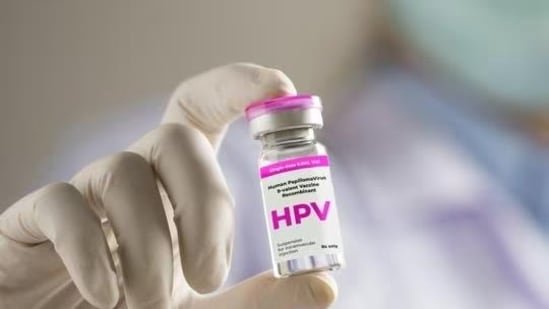
On February 28, 2026, in the historic city of Ajmer, Rajasthan, a decisive shot was fired against a silent killer. When the nationwide Human Papillomavirus (HPV) vaccination campaign was launched, it marked the end of a 16-year policy hiatus. Targeting approximately 1.2 crore girls aged 14-year-olds as a priority cohort, the programme aims to dismantle the reign of cervical cancer—a disease that claims an Indian woman’s life roughly every seven minutes.
As the “intensive” 90-day launch phase reaches its crescendo this May, the programme stands at a critical crossroads. While the science is settled and the logistics are in motion, convincing parents remains the final, most formidable frontier.
The U-WIN digital platform—the sophisticated successor to our Covid-19 tracking systems—is currently in use to monitor every vial and beneficiary. Reports though suggest a differential rollout pace. States like Tamil Nadu, Andhra Pradesh, and Rajasthan are the frontrunners while just 6% coverage in. Haryana has caused concern. Integrating the vaccine into school-based health check-ups has ensured high early uptake. In states like Madhya Pradesh and Odisha, Ayushman Arogya Mandirs (Primary Health Centres) are ensuring that girls in underserved rural blocks are not left behind.
By targeting 14-year-olds, the government is protecting girls before they “age out”. The pragmatic 90-day grace window allows girls who recently turned 15 to still receive the free shot.
A significant point of discussion has been the shift to a single-dose regimen. This is a calculation rooted in the latest global evidence. In 2024, the IARC-India HPV Trial and the 22025 landmark ESCUDDO study from Costa Rica provided definitive evidence that a single dose offers long-term protection.
While the indigenous vaccine, Cervavac, is still concluding its specific bridging studies for single-dose administration (with data expected by late 2027), the government’s decision to utilise GAVI-supported Gardasil 4 is a vital move. Waiting for local single-dose regulatory clearance would have left another 2.4 crore girls vulnerable. India has rightly adopted the WHO-recommended single-dose strategy to save lives today.
Despite the momentum, a shadow of scepticism persists, fuelled by misinformation. Misinterpreted reports from a 2009 demonstration project are used to cite fatalities from that period, omitting that exhaustive independent investigations—including those by the ICMR—confirmed these tragedies were due to unrelated causes. The most pernicious rumour suggests the vaccine impacts future fertility. On the contrary, by preventing cervical lesions and the need for invasive surgeries, the vaccine actively preserves reproductive health. Minor side effects, such as a sore arm or mild fever, are often exaggerated.
To win over the sceptics, we must pivot from “announcing” to “engaging”.
Proactively publishing weekly Adverse Events Following Immunisation (AEFI) data can help. Transparency was our best defence during Covid-19; it must be so again. We need a concerted effort where local female doctors and community leaders become “maternal advocates” and share their personal stories of vaccinating their own children. Parents who register on U-Win should receive automated, local-language infographics addressing the fertility myth and the 2009 controversy head-on. As schools reopen after summer, Parent-Teacher Meetings (PTMs) should include a briefing by a medical professional. Peer endorsement in a familiar setting is more powerful than any billboard.
It has been a moment long in coming, but it has arrived. The euphoria of this landmark event can perhaps be channelised to kickstart a more forward-looking agenda – how to go beyond the UIP age group of nine-14 that the current campaign is covering, to include not just older women but also explore innovative financial models or partnerships that can get Indian girls full vaccination coverage of two doses rather than just the one dose that WHO recommends in public health settings.
Given the scale of the parental consent challenge, which has the capacity to impact India’s elimination goal, multi-age cohorts may be the ideal way to take an all-hands-on deck approach. The vaccine can be used for up to 26-year-olds. Whether we target nine–13-year-olds for a first dose or 15-26 year-olds for a second dose beyond what the government of India is delivering to 14-year-olds, exploring pathways for a two-dose coverage is something we owe the women of India, having taken eight years since the first NTAGI go ahead in 2018 to an actual rollout.
The tardy progress on the other pillar of the elimination plan – screening – only increases the urgency of this approach. Less than 2% Indian women, according to data from the latest National Family Health Survey have ever been screened for cervical cancer and India’s choice of test remains the visual inspection with acetic acid (VIA) where results are only as good as the skill level of the health worker conducting the test.
Cervical cancer largely affects those without access to regular screening, though no part of society remains unscathed. By providing a free, accessible vaccine, India has levelled the playing field. The challenge of demand—which will eventually require over eight crore doses for a full multi-age catch-up—is logistical. The challenge of hesitancy is psychological.
As we move through 2026, we must ensure that no girl is left vulnerable to a preventable tragedy simply because a rumour was louder than the truth.
(The views expressed are personal)
This article is authored by Dr Ravi Mehrotra, founder, Centre for Health Innovation and Policy Foundation and former director ICMR-National Institute of Cancer Prevention and Research and Abantika Ghosh, healthcare lead, Chase Advisors.


