



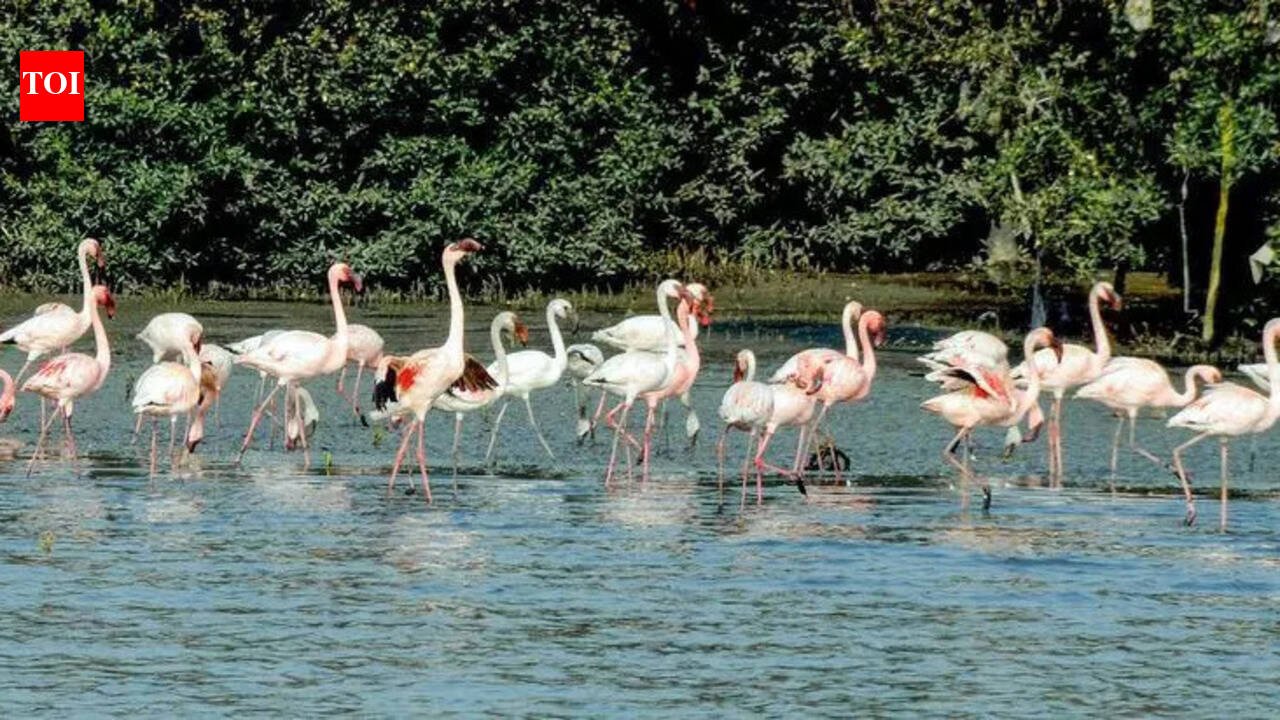
Navi Mumbai: Acting on a complaint to the PMO on three flamingo wetlands turning toxic, the Centre invoked the Wetlands (Conservation and Management) Rules, 2017, and asked the Maharashtra govt to act and submit an action taken report. The complaint, filed by environmental watchdog NatConnect Foundation on Sunday, World Water Day, flagged the rapid ecological decline of DPS Lake, NRI Lake, and T S Chanakya Lake at Nerul in Navi Mumbai. TOI on Monday carried the story of the deteriorating condition of these lakes that turned toxic as per the water sample tested in the laboratory.The Union ministry of environment, forest and climate change (MoEFCC), in its response on Monday, directed the Maharashtra State Wetland Authority to take immediate action and submit its report to both the complainant and the Centre. It was backed by tests commissioned by NatConnect Foundation, with analysis by a Thane-based laboratory, which found that all water samples failed prescribed quality norms. NatConnect director B N Kumar described the situation as a “wetland emergency”, noting that the affected sites are part of the larger wetland system linked to the Ramsar-listed Thane Creek Flamingo Sanctuary. Test results pointed to severe pollution and stagnation. Total dissolved solids ranged between 17,000 and 23,000 mg/L against a norm of around 5,000 mg/L. Biochemical oxygen demand was recorded between 14.8 and 23.6 mg/L against 3–5 mg/L, while chemical oxygen demand ranged from 47.5 to 73.5 mg/L against 20–30 mg/L. pH levels were above 9, indicating alkaline conditions. In its response, the MoEFCC explicitly cited provisions of the Wetlands Rules, 2017, under which discharge of untreated waste and effluents, dumping of solid and construction waste, encroachment, and any alteration of the ecological character of wetlands are prohibited. By reiterating these provisions, the Centre asked the state authority to examine whether such prohibited activities were contributing to the present condition of the wetlands and to initiate corrective measures. The complaint also highlighted restricted or blocked tidal flow as a key factor, indicating disruption of natural hydrological processes and reduced flushing, leading to accumulation of pollutants. The communication, signed by Pankaj Verma, Scientist ‘F’ in the wetlands division of MoEFCC, placed the matter before the Maharashtra State Wetland Authority for examination and necessary action. Verma also attached the Gazette Extraordinary of Sept 2017 governing wetland management for the Maharashtra State Wetland Authority’s reference. Activist Jyoti Nadkarni, member of Raigad district wetland documentation committee, expressed the hope that the state environment department would act at least now and save the three wetlands. .


