






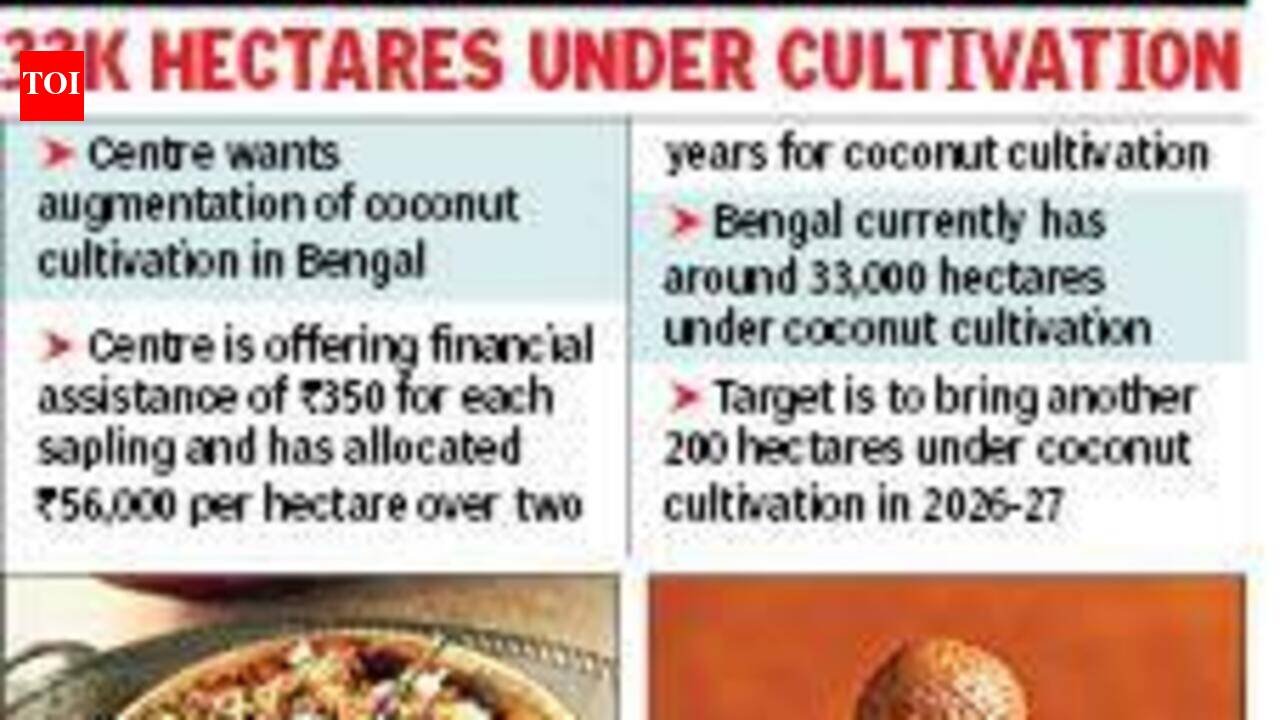
Kolkata: From narkel naru and puffed rice mixed with coconut to mochar ghonto and chholar dal, coconut has occupied a special place in Bengali kitchens and festivals. But falling production and rising demand are threatening both its availability and affordability, prompting the state and the Centre to push for a major expansion of cultivation.The roadmap aimed at bringing more land under coconut, promoting its commercial potential and strengthening marketing support was highlighted at the World Coconut Day (Sept 2) celebrations at Bidhan Chandra Krishi Viswavidyalaya (BCKV) in Nadia recently. The theme for the event was “Coconuts in Times of Uncertainty: Securing Food, Energy, and Livelihoods”, declared by the Jakarta-based International Coconut Community (ICC).Agricultural experts and specialists discussed ways of increasing farmers’ incomes through improved cultivation practices, modern technology and development of coconut-based industries.“The Centre wants the augmentation of coconut cultivation in the state and for this financial assistance of Rs 350 is being offered for each sapling. Bengal currently has around 33,000 hectares under coconut cultivation and we have set a target to bring another 200 hectares under coconut cultivation in 2026-27 to increase production,” said Mridula K, deputy director of the Coconut Development Board’s (CDC) State Centre in Kolkata, which functions under the Union ministry of agriculture and farmers welfare.The Centre has allocated Rs 56,000 per hectare over two years for coconut cultivation.The CDC is using its “Coconut Village” initiative to explore expansion in districts such as Birbhum, Howrah, Hooghly and Nadia.According to Mridula, in the backdrop of climate change, volatile markets, higher input costs and shrinking conventional employment opportunities, coconut can be a second income crop with paddy for Bengal as the state has been blessed with favorable agro-climatic conditions suited for the crop.“A coconut tree has an initial waiting period of around four years after planting, but it can continue to bear fruit for nearly 60 to 80 years. Every part of the plant can be utilised and hence it is called Kalpavriksha. Farmers can earn multiple times a year, unlike many field crops. Coconut can generate employment in tender coconut vending, oil milling, coir-making, handicrafts and food processing,” said Sritama Biswas, development officer at the Coconut Development Board’s State Centre in Kolkata.According to Biswas, an acre of land with 60 to 70 coconut trees can generate an income of more than Rs 1 lakh annually after six to seven years, apart from additional earnings from intercropping.“Coconut-based bio-energy can reduce dependence on fossil fuels and firewood. During floods, droughts and cyclones, coconut trees can survive when other crops fail,” Biswas said.In Bengal, Murshidabad currently has the largest area under coconut cultivation in Bengal, with nearly 6,000 hectares, followed by North and South 24 Parganas and East Midnapore.The CDB along with BCKV is prioritising block level demonstration on how to plant and nurture a coconut sapling for encouraging farmers.GFXCentre wants augmentation of coconut cultivation in BengalCentre is offering financial assistance of Rs 350 for each sapling and has allocated Rs 56,000 per hectare over two years for coconut cultivationBengal currently has around 33,000 hectares under coconut cultivationTarget is to bring another 200 hectares under coconut cultivation in 2026-27


