






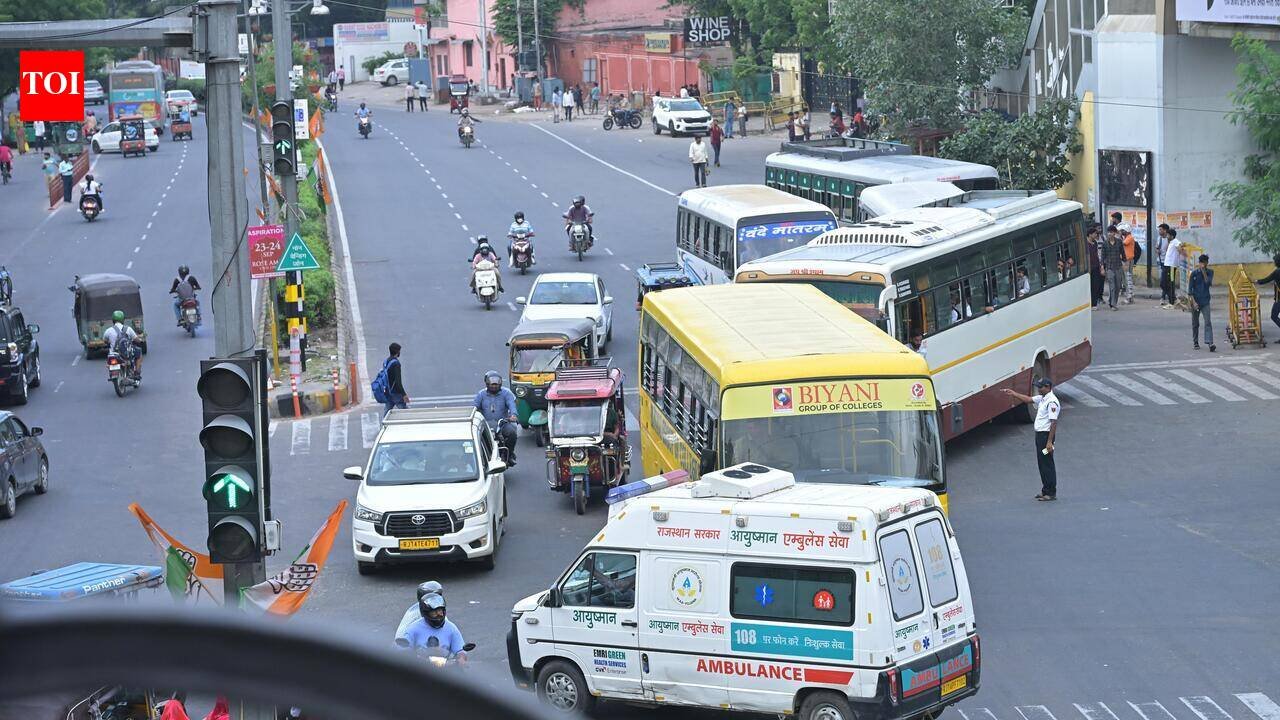
Jaipur: A study in the ‘International Journal of Environmental Pollution has found sharp variation in trace-metal pollution across Jaipur, with Narayan Singh Circle showing the highest buildup among the sites studied.Using the lichen (a combination of a fungus and an alga) ‘Phaeophyscia hispidula’ as a biological indicator, researchers reported zinc levels at Narayan Singh Circle at 7.30 mg/g, up from 0.94 mg/g at Nahargarh, the reference site — a 7.7-fold increase. Chlorophyll at the same site fell from 0.53 mg/g to 0.13 mg/g, a drop of around 75%.The study was conducted by Dr Yogesh Joshi of Rajasthan University’s botany department, along with Shimmy Meena and Dr Dheeraj Chitara of JECRC University.For the experiment, lichen samples collected from Nahargarh were transplanted to 10 locations across Jaipur and left under ambient conditions for 90 days. The samples were then tested for six trace metals — zinc, lead, cadmium, chromium, copper and nickel — along with chlorophyll and carotenoids.Narayan Singh Circle also recorded higher accumulation of lead, cadmium, copper, nickel and chromium. JDA, Raja Park and Lalkothi showed relatively higher metal accumulation, while Jhalana Dungri and Jawahar Circle recorded lower levels for several parameters.Carotenoid levels rose at several affected sites, including Narayan Singh Circle, where they increased from 0.11 mg/g to 0.19 mg/g. Researchers said the rise could indicate a stress response in the lichen.Joshi said lichen-based biomonitoring could offer a low-cost complementary method to assess differences in atmospheric pollution, particularly in semi-arid cities such as Jaipur.The researchers cautioned that the study does not identify the exact sources of the metals, and recommended longer-term studies across seasons with more biological replicates, along with source-tracking analysis and direct air-quality monitoring.


