


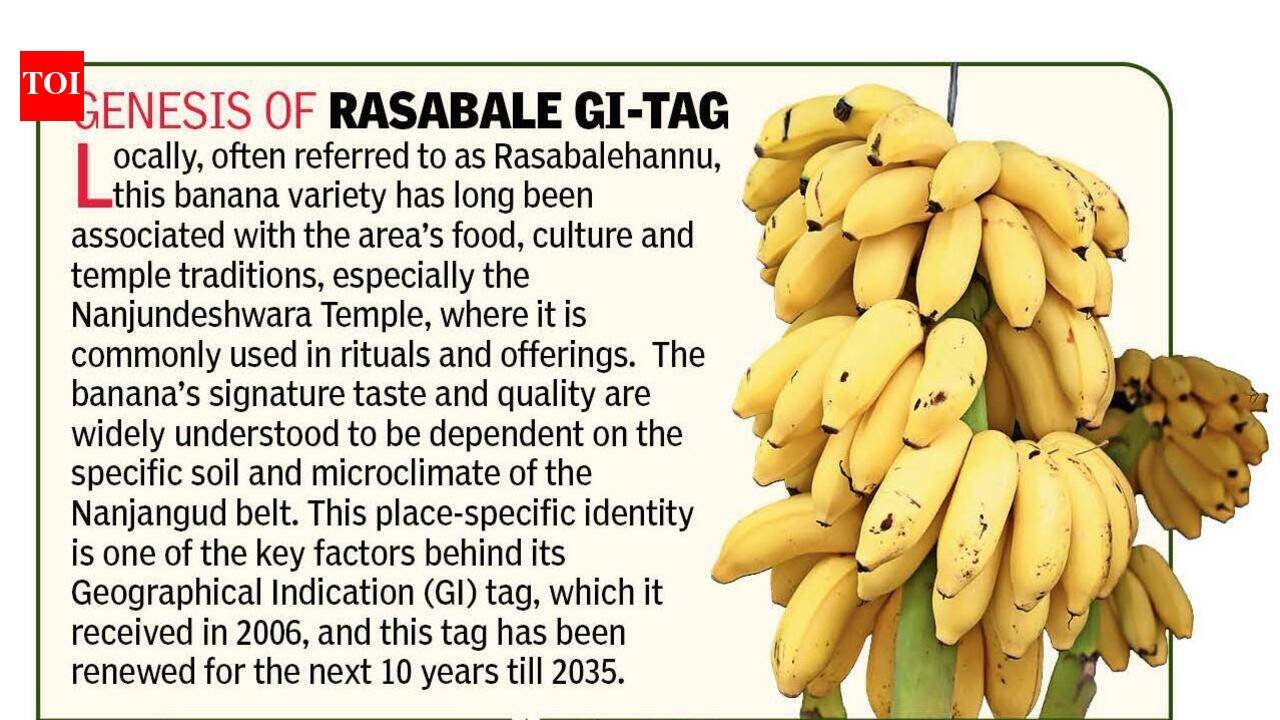
For years, many feared Nanjangud’s famed Rasabale banana was headed for extinction. Ravaged by Panama wilt disease, Karnataka’s prized GI-tagged fruit had shrunk to just 13 acres of cultivation, forcing farmers to abandon a crop once synonymous with the region’s identity.Now, signs of revival are emerging. Earlier this year, a 500kg consignment of Rasabale was exported to the Maldives, marking a significant milestone for growers who persisted despite mounting losses and uncertainty. Backed by scientific intervention, organic cultivation methods, and growing export interest, the iconic banana is slowly reclaiming lost ground.“Panama wilt is a major disease that affects the variety and is visible only at the seventh month of the crop. Visible signs include splitting of pseudo stem base and yellow colouring of leaves,” explained Ravisha KM, a grower from Kurahatti village. Fear of the disease discouraged farmers from extending its cultivation. The variety is also highly vulnerable if farmers attempt a second harvest from the same field.How Science Helped Save RasabaleFarmer and chief promoter of the Rasabale variety, Nanjundaswamy of Kurahatti, said organic methods combined with biocontrol agents helped revive cultivation of this GI-tagged banana.To combat wilt, Krishi Vigyan Kendra (KVK) along with ICAR-National Research Centre for Banana (NRCB) created a cultivation protocol for Rasabale farmers. NRCB director R Selvarajan told TOI that the centre supplied five tonnes of biocontrol agents to combat the disease. “The incidence of disease has now come down to less than 10% of the total cultivated area. However, the treatment must be used properly at the time of plantation at regular intervals every two months for protection,” he said, adding this helps improve cultivation, and the crop is being revived.From 13 To 300 AcresThe impact is already visible in the villages of Nanjangud. Rasabale cultivation has spread from two registered villages to 24 in the taluk and the area under cultivation has increased from just 13 acres to about 300 acres now. Farmer participation has also increased from 20 growers to nearly 360, according to local legislator Darshan Dhruvanarayana. Until now, around 120 farmers have registered under the GI system.The actual cultivation area is believed to be even larger. While farmers in these 24 notified villages receive state govt subsidy for growing Rasabale, many farmers outside this GI-registered area also grow the variety given the strong demand and higher prices.Demand is roboust. Kempegowda, a shopkeeper from Devarasanahalli village, has been selling only Rasabale for the last 40 years in Nanjangud town. “This variety sells like hotcakes, and the demand is high during weekends and holidays,” says Kempegowda, recalling how he once sold four bunches of Rasabale to Kannada superstar Dr Rajkumar.When he began selling Rasabale, a dozen fruits cost Rs 3.50. Today, the variety retails for around Rs 90 per kg at his shop, reflecting both the enduring popularity and its premium status.Yet caution persists among farmers. Most are unwilling to cultivate more than an acre of Rasabale because of the lingering threat of wilt. A typical acre accommodates about 1,000 plants, and many farmers limit cultivation to that scale.Growers with larger holdings often rotate plots after every harvest to minimise disease risk. Those with smaller landholdings usually shift to another crop for one or two seasons before returning to Rasabale.Guruswamy of Nanjangud’s Halepura village, has been cultivating the variety for the last 12 years. “Earlier 12-20% crop was lost due to wilt, but it has come down to around 5%,” he says. Most growers claim they require about Rs 80,000 to grow the crop on one acre plot using organic methods while they have to spend Rs 1.5 lakh using chemicals.A Premium Fruit, But Elusive ProfitsFor many farmers, cultivation is no longer the biggest challenge—marketing is.Despite Rasabale’s reputation and premium retail pricing, growers often depend on middlemen and rarely receive prices that reflect the fruit’s unique status. Many believe dedicated marketing channels and stronger export linkages would be more valuable than subsidies.Retail prices typically range between Rs 90 and Rs 120 per kg, but farmers say they often end up receiving only Rs 50-60 per kg—little different from what growers of ordinary banana varieties earn.That situation is now beginning to change. The Krishi Vigyan Kendra (KVK), the horticulture department and exporters, are working together to tap international demand for the GI-tagged fruit, with support from the Agricultural and Processed Food Products Export Development Authority (APEDA). The goal is to create stable export channels so farmers can earn premium prices that match Rasabale’s unique status. Prime Minister Narendra Modi, in an episode of Mann Ki Baat, highlighted the export of Nanjangud Rasabale as an example of how India’s GI-tagged agricultural products are reaching overseas markets.Joint director of horticulture Manjunath Angadi says after Maldives, plans are afoot to tap other international markets and talks are underway with exporters.State Govt Plans ‘Rasabale Habba’To boost awareness and create a direct market for growers, the state government is planning a “Rasabale Habba” on the lines of popular mango fairs. The initiative aims to connect consumers with farmers while promoting the variety’s unique identity and export potential, says the Nanjangud MLA.Exports Offer Hope, Not GuaranteesDespite optimism, exporters caution that significant hurdles remain. Imran Pasha, an exporter, says packaging and post-harvest handling at the local level are major challenges. Without consistent grading, careful packing and cold-chain support, it becomes harder to ship a delicate fruit to distant markets while maintaining quality.Even so, plans are being made to begin shipments to Dubai in the coming days. The variety is also expected to be showcased at exhibitions in different countries to promote awareness and expand demand, he adds.Promoters are also highlighting Rasabale’s perceived health benefits as a key selling point.Nearly two decades after securing a GI tag and years after disease threatened its survival, Rasabale is finding a second life. Farmers remain cautious, aware that Panama wilt still lurks in their fields. Yet with scientific support, new export markets and growing consumer interest, many now believe the banana that once seemed destined to disappear may have its brightest chapter ahead.JSS Krishi Vigyan Kendra Senior Scientist BN Gnanesh says the centre/kendra is helping farmers through awareness, training, and by coordinating with NRCB and APEDA for supply of biocontrol agents and for creating international marketing platform.
