


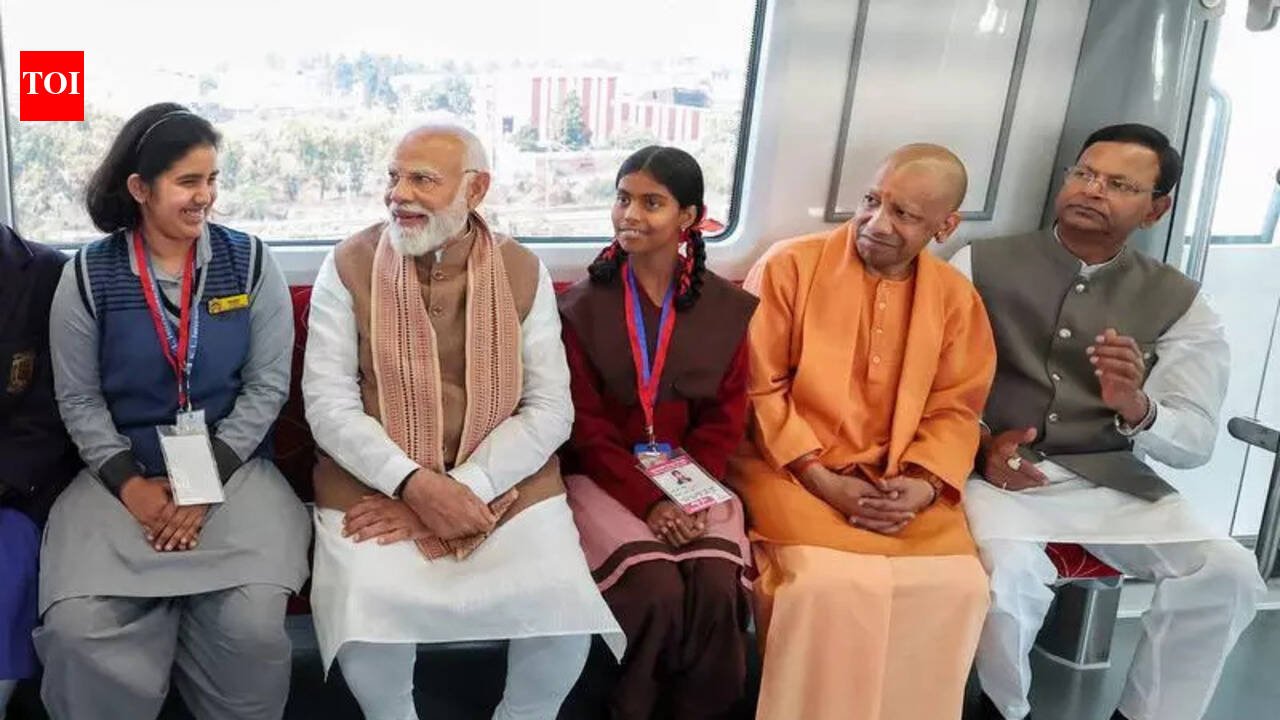
The journey between Delhi and Meerut can now be completed in just 50 minutes. Previously, commuters often spent three to 3.5 hours navigating traffic congestion along the busy route.The Namo Bharat trains, capable of speeds up to 180 km per hour, represented a new benchmark in India’s urban mobility landscape. The corridor was expected to transform the region into a unified economic and development zone, improving access to employment, education and business opportunities.One of the project’s most distinctive features was its integrated design. Both the high-speed Namo Bharat service and the intra-city Meerut Metro operated on the same infrastructure framework. “This dual-use model optimises costs, improves resource utilisation and accelerates implementation,” the spokesperson said.Within Meerut city, the metro service connected key urban centres from Meerut South to Modipuram, promising smoother local transit and relief from chronic traffic bottlenecks.The spokesperson said that since 2017, the UP govt prioritised infrastructure as a core driver of growth. Expressways, airports, metro systems, and industrial corridors reshaped the state’s development profile.“Meerut, once more often associated with law-and-order concerns, is increasingly being projected as a symbol of modern infrastructure, industrial investment, and smart urban mobility,” the spokesperson said.The new rapid rail system was described as a strong example of both ‘Ease of Living’ and ‘Ease of Doing Business’, offering safe, efficient, and time-saving travel.Nearly 80% of the operational staff on the Namo Bharat service were women. From loco pilots to station management roles, female participation exceeded 80%, making it one of India’s first rapid rail systems with such high levels of women-led operations.Officials estimated that the rapid rail and metro services could reduce the number of private vehicles on the road by nearly one lakh, potentially cutting carbon emissions by approximately 2.5 lakh tonnes. Improved connectivity was likely to position Meerut as a practical residential alternative to the high costs of living in Delhi-NCR. Professionals may choose to reside in Meerut while working in Delhi, aided by the fast commute.


