



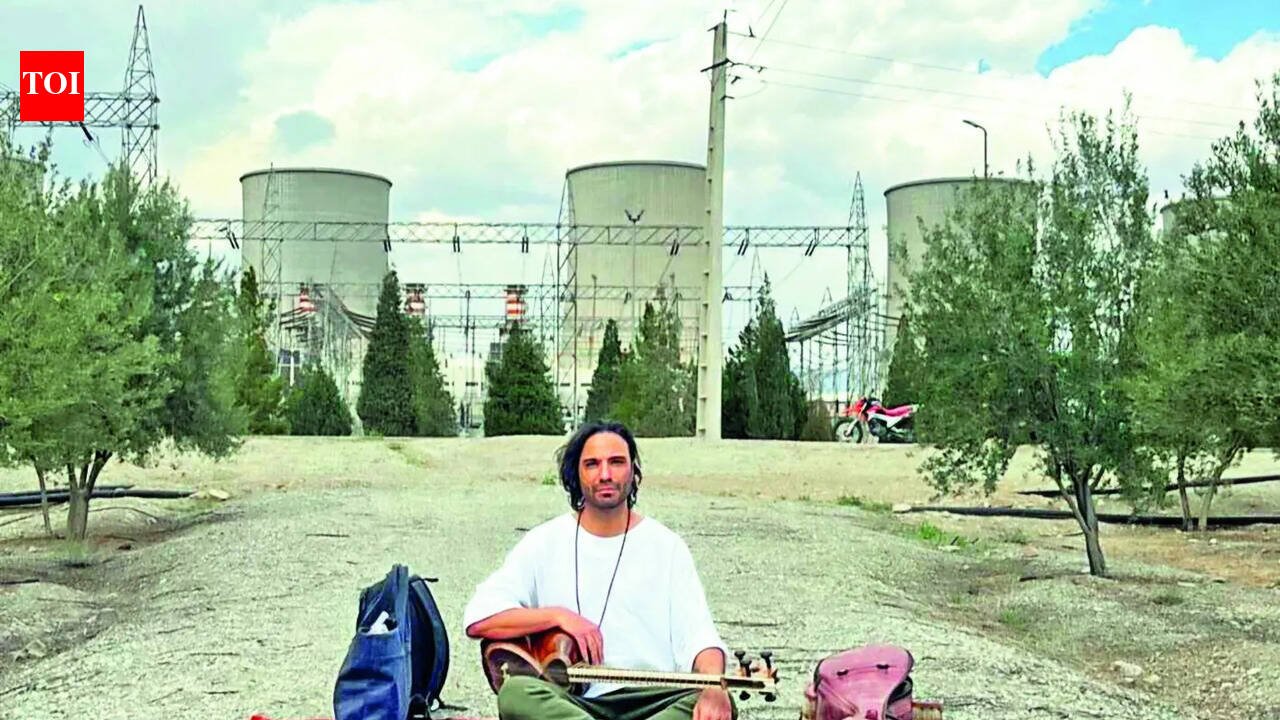
Over the years, musicians have found a way to call for peace through their melodies. In cities reduced to rubble, music has often arrived not as performance, but as interruption – cutting through dust, silence and the aftershock of violence. These moments, now captured and shared widely, draw the world’s gaze to these ruins that were once sprawling cities. Reminiscent of Adrien Brody’s Pscar winning performance as Wladyslaw Szpilman in The Pianist, each note holds its ground against erasure, insisting on presence even as everything around it falls away.Ali Ghamsari — Tehran, Iran (2026)In April 2026, Ali Ghamsari staged a sit-in performance outside the Damavand power plant near Tehran amid escalating US–Iran tensions and threats to strike infrastructure. Playing the tar at a facility supplying nearly half the capital’s electricity, he sought to foreground civilian risk in modern warfare. “War’s goal is never rescue,” he said in a statement shared April 7, 2026. In a statement published on his Telegram channel alongside a video Ghamsari says he will play in solitude and create music there in an effort to help prevent attacks on Iran’s critical infrastructure. He added: “War’s goal is never rescue, and I wish more people understood this…The people of Iran, relying on their thousands of years of history, will surely overcome this tough crisis with wisdom.” Ghamsari adds that he hopes the sound of his taar can help keep the lights in people’s homes from going out and will stand at the power plant as a symbol of resistance to attacks on the country’s energy and water systems.Hamidreza Afrideh – Tehran, Iran (2026)
Hamidreza Afrideh
Iranian composer and kamancheh player Hamidreza Afrideh was filmed performing atop rubble in Tehran, his instrument placed within the debris of the school he once taught at. Posted on Wednesday, the video already has over 1mn views. In the video, he says, “I wanted the last sound that remains here to be music, not bombs and missiles.” The clip captures a stark contrast. Surrounded by ruin, the performance places music within a space otherwise defined by silence or disorder, underscoring its presence in a fractured environment.Mahdi Sahely — Beirut, Lebanon (2026)
Mahdi Sahely
In March 2026, Mahdi Sahely was filmed performing atop the debris of bombed buildings in Beirut following fresh Israeli airstrikes that flattened residential neighbourhoods, caused casualties and displaced thousands. Sitting amid twisted metal and broken concrete, he played as the video circulated globally. In an Instagram caption shared alongside the clip, he said: “In the midst of war and destruction, music plays a melody of hope, turning the sighs of suffering into melodies that reflect the resilience of the human spirit.”Music Among the Rubble concert – Gaza City, Palestine (2021)
Music Among the Rubble
In June 2021, Palestinian musicians staged a concert titled Music Among the Rubble at the site of the destroyed Al-Shorouq Tower in Gaza City, following Israeli airstrikes during the May 2021 Gaza conflict. Performed directly amid debris, the concert brought together local artists and residents in a space recently reduced to ruins. Positioned at the site of destruction, the performance used music to reoccupy a landscape shaped by bombardment and signal collective resilience in the aftermath of war.Karim Wasfi — Mosul, Iraq (2018)
Karim Wasfi
In 2018, Karim Wasfi performed a concert for “peace and coexistence” amid the ruins of Mosul, nearly a year after Iraqi forces ousted ISIL from the city in July 2017. Held in the devastated Old City, the makeshift stage stood between the remains of the Great Mosque of al-Nuri and the nearby church of Our Lady of the Hour. Joined by local musicians, Wasfi framed the performance as both a message of “security, peace and coexistence” and a call for global support in rebuilding the war-torn city. The music was “a call for companies, investors and organizations to come and take part in the reconstruction of the city, especially its destroyed Old Town”, the artiste said to AFP.Vedran Smailović — Sarajevo, Bosnia and Herzegovina (1992)
Vedran Smailovic
During the Siege of Sarajevo in 1992, Vedran Smailović began playing at the site of a breadline massacre that killed 22 civilians. Returning daily in formal concert dress, he performed Albinoni’s Adagio in G minor for 22 days despite sniper fire, and continued across the besieged city. His act drew global attention, with artists including Joan Baez and Susan Sontag visiting Sarajevo, positioning his performances as a form of cultural resistance.


