



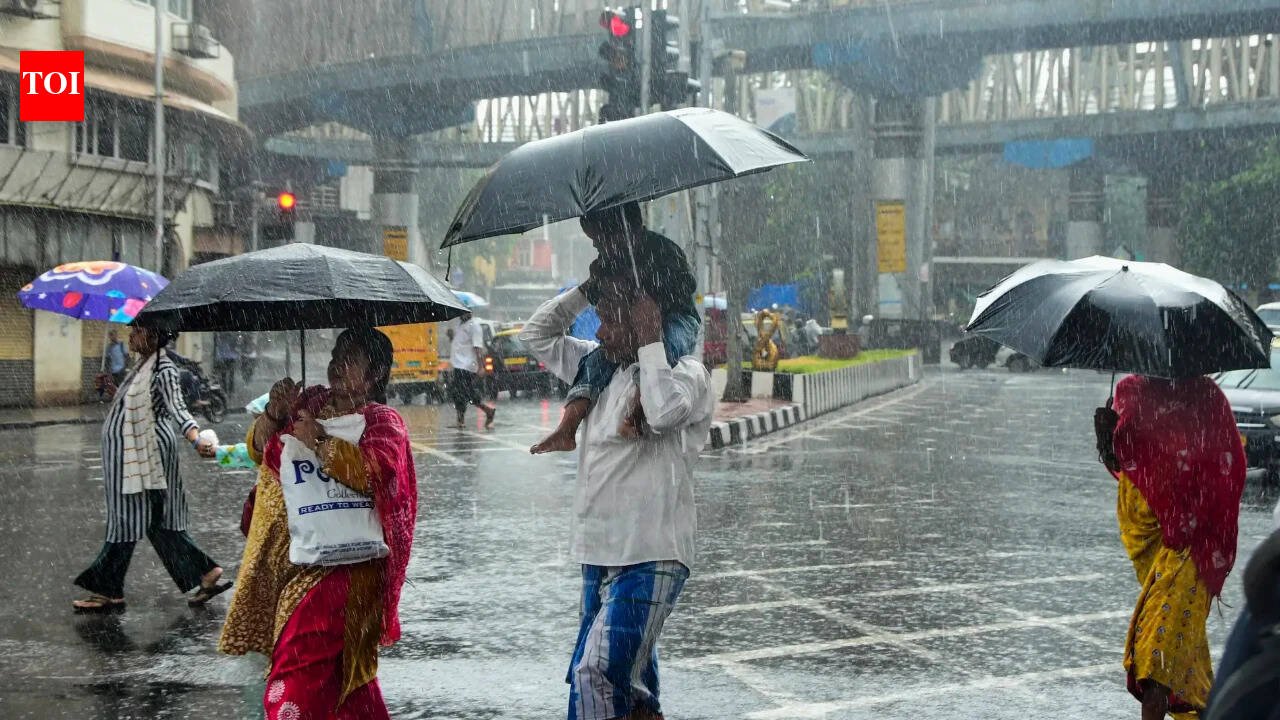
MUMBAI: Even as Mumbai was battered by intense overnight monsoon showers between June 23-24, the city’s seven lakes, which supply drinking water, have shown little improvement in storage levels, showing a stark mismatch between urban rainfall and catchment inflows.As of 6am on Wednesday, total water stock in the seven lakes stood at 1.14 lakh million litres, or just 7.94% of required capacity. This is significantly lower than the same date last year, when reserves stood at 4.76 lakh million litres (32.89%).While parts of Mumbai recorded intense rainfall, the impact has been largely confined to the city and coastal belt, with key catchment areas receiving only patchy showers.The two lakes within city limits, Tulsi and Vihar, which together account for a small fraction of Mumbai’s water supply, saw heavy rainfall, recording 263 mm and 142 mm respectively in 24 hours ending 6 am Wednesday.However, major reservoirs showed limited inflows: Modak Sagar (32 mm), Tansa (68 mm), Bhatsa (70 mm), and Middle Vaitarna (13 mm), showing the uneven spatial spread of monsoon rainfall.Experts said Mumbai’s water security depends not on city rainfall, but on sustained monsoon activity over interior catchment regions between Shahapur and Igatpuri, which contribute massively to the city’s water supply.Weather analyst Abhijit Modak said the monsoon is still in its early phase and lacks the sustained push needed for catchment replenishment.“The monsoon remains in its onset phase, and while Mumbai has seen intense rainfall bursts, the depth of westerlies has not yet stabilised over the interior catchments. As a result, sustained rainfall over the lake belt remains limited,” he said.He added that shifting atmospheric patterns could briefly reduce rainfall over North Konkan before the next system strengthens monsoon activity again.“Another significant monsoon surge, possibly around June 28 onwards, may help push the shear zone northwards and improve rainfall over the catchment region,” Modak said.Officials continue to monitor lake levels closely as the city enters the crucial early monsoon window, when sustained catchment rainfall determines long-term water availability.


