



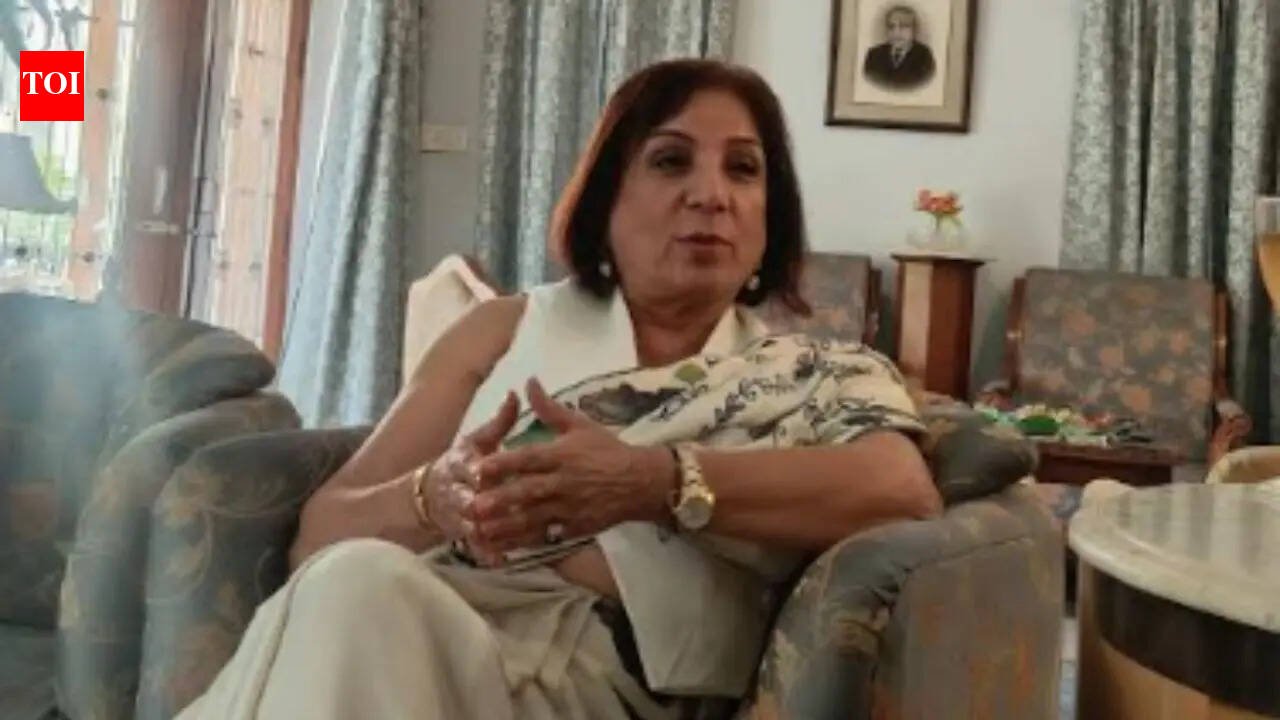
For over four decades, Mani Kohli, 67, a businesswoman from India, settled in Woodford Green in London, has been designing clothes that have been worn by everyone, from local people to British actors, politicians and dignitaries. She has designed costumes for films like ‘Bend it Like Beckham’, and ‘What’s Love Got To Do With It’ and dressed former British Prime Minister Theresa May. Blending heritage and modernity, Kohli innovates her designs, for which she was recently conferred the Member of the Order of the British Empire (MBE), a prestigious British honour, for her contribution to fashion. Kohli was in Lucknow to celebrate her success where she spoke to Isha Jain about her journey. Excerpts:Q. What brought you into the world of fashion?I saw a gap in the market, in the late 70s, for smart Indo-western Asian wear. And that women, especially Asian women, had to be seen and dressed smartly, and their identity had to be proven. For me, clothes were the platform of language that I used to sell out. Q. What were your biggest challenges as a woman setting up and running your own business in the UK?Any business needs capital. I didn’t have the money. I had to turn to banks to convince them that I had already built a client force and there was a demand and I could supply. So, the demand and supply had to be established as well which was building the groups from here in India bringing it to England and then selling it. Nobody wanted to believe a woman, and an Asian woman. I had to bring forward my turnover and the clients to convince the banks for the loan, and that was a huge game change. Q. How did you promote Indian craft, especially ‘chikankari’ on foreign shores? The beauty of ‘chikankari’ is that it’s handmade, filled with labour, particularly of women. I knew it would be valued because handicraft garments were almost missing in the UK. It was either France or it was India. And India had a bigger and wider platform to offer. I chose that opportunity to bring forward this whole story of women campaigning to fight for the women who do ‘chikankari’ after doing household chores just to earn. What better way than to make it float in an organised way there and have respect for it as well.Q. How do you feel about the pressure of women in business, perhaps, to do everything? Women are seen as homemakers. More than a realization, it’s an expectation that women have to feed an army at home, physically create the whole food palette that comes on the dining table; be a mother and go out and earn livelihood. And that money is used by everybody but the question of where it came from is never asked. Over the years, I have learned the art of this huge balance. That’s the reason why women are successful as entrepreneurs. For us, it’s an art. We enjoy what we do. If you make a negative approach, it’s not going to bring anything for you. So, when you must do it, do it with pleasure.Q. Do you think women run businesses in a different way than men? Only women can multitask. So, when they talk about business, they do take on board the fact that there are some emotions involved as well. And those emotions actually, believe it or not, work because we look to see what the other person may also look for in any business model. And as women, we want not just to connect to the business end of things but also understand how it’s going to be appreciated. And a lot of men don’t do that. Men will bring their model and want to bring profitability, how it is earned, and make it structurally sound. Women also make the appreciation sound to it. I think that works in today’s world. Even AI picks up emotions. So, why not?Q. Do you have any advice for women who are thinking about starting their own business or thinking about getting into the fashion industry? Women must look at the space for what they can do. Something that can bring appreciation along with financial rewards. Patience and persistence are a virtue very few people have and business demands both. You cannot leave someone else to run it and earn your bread and butter. It is like going to a job. The only difference in business is that you are going to manage other people as well. And it is customer based, and they need to be happy.Q. What has it been like to hear that you have been recognized with MBE? It was unbelievable. I first got a call from the PM’s office on Dec 29 and received it on Feb 26. I am still absorbing and reflecting on why I got it. I am totally gratified because it’s been 40-plus years of hard labour, dedication, patience, and self-belief. But when I got it, it was like, ‘Oh my god, it’s a pat on the back’. This recognition is not just for me, but for every woman who has to rebuild, reimagine and fight for her place.


