



Squad-building in a T20 league is never only about skill. It is also about age profile – who is rising, who is in the middle of his best years, and who now relies more on experience than recovery speed. The IPL 2026 age map offers exactly that hidden layer.
The spread is not massive on paper. The oldest squad in this exercise, Delhi Capitals, sits at an average age of 29.3. The youngest, Rajasthan Royals, is at 27.0, with Sunrisers Hyderabad virtually level. But in a tournament built on travel, quick turnarounds, fielding intensity and repeated pressure games, even a two-year squad-wide gap can matter. It can affect recovery, flexibility, availability, and the burden placed on senior stars.
What the averages reveal
Delhi Capitals are the oldest side at 29.3, followed by Mumbai Indians at 29.1. Gujarat Titans and Kolkata Knight Riders are both at 28.9; Royal Challengers Bengaluru at 28.6; Chennai Super Kings at 28.1; Punjab Kings at 28.0; Lucknow Super Giants at 27.5; and Rajasthan Royals and Sunrisers Hyderabad at 27.0.
That creates three broad squad-building patterns.
The first is the veteran-heavy contender. DC and MI fit here best. These are teams built around known, proven cricketers. The upside is calmness under pressure and less dependence on untested names. The danger is obvious too: if two or three senior pillars lose rhythm or fitness together, the squad can suddenly feel older than the average suggests.
The second is the prime-age challenger. GT, KKR, RCB, CSK and PBKS largely sit in this zone. This is usually where franchises want to be – old enough to understand tournament cricket, young enough to sustain intensity. These teams often have the healthiest balance between control and athleticism.
The third is the youth-leaning build with present ambition. RR, SRH, and to some extent LSG fit this group. These are not rebuilding squads in the traditional sense, but they have more runway and more upside variance. They may be more dynamic over a long season, though they can also be more volatile.
DC and MI are older, but not in the same way
Delhi Capitals, being the oldest team does not automatically make them vulnerable. It simply means they are carrying a mature profile. Their youngest player is Sahil Parakh at 18 years and 294 days, and their oldest is David Miller at 36 years and 291 days. That points to a side with a broad spread but a core that leans toward established professionals.
Mumbai Indians, just behind them at 29.1, feel slightly different. Their youngest player is Allah Ghazanfar at 20 years and 8 days, while their oldest is Rohit Sharma at 38 years and 332 days. With MI, the age question is tied to influence as much as numbers. When a squad is built around heavyweight names, average age alone does not tell the full story. If the senior core performs, it looks like a pedigree. If it slows, it starts looking like a dependency.
RR and SRH arrive at youth differently
Rajasthan Royals and Sunrisers Hyderabad are the youngest squads, both at 27.0, but their profiles are not identical.
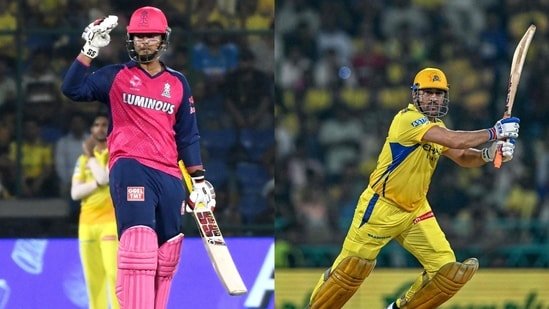
RR’s number is shaped heavily by one extraordinary outlier: Vaibhav Sooryavanshi at just 15 years and 1 day, the youngest player in the league. Their oldest player is Ravindra Jadeja at 37 years and 112 days. That gives the squad a dramatic age spread. One end of the roster is at the very start of a journey; the other has seen nearly every IPL scenario imaginable. RR’s age structure suggests a franchise willing to blend long-term bets with experienced anchors.
SRH, meanwhile, look younger in a more stable cricketing way. Their youngest player is Sakib Hussain at 21 years and 104 days, while their oldest is Harshal Patel at 35 years and 125 days. That is a much narrower band. It suggests a youthful squad without feeling extreme. In tournament terms, that can be a real advantage: freshness without rawness.
CSK still carry the league’s biggest age headline
Chennai Super Kings at 28.1 are not among the oldest teams overall, which may surprise people who still instinctively link them with ageing-core narratives. But averages can hide symbolism.
Their youngest player is Ayush Mhatre, at 18 years and 255 days old. Their oldest is MS Dhoni at 44 years and 264 days, the oldest player in the league by a distance. That single number changes how the squad is seen. On pure roster structure, CSK are not excessively old. But Dhoni’s presence makes them feel older in the public imagination than the average actually says.
Also Read: CSK pull off rare IPL power move as KKR, GT, and SRH connections become part of legacy celebration
GT and KKR look like the most balanced age teams
At 28.9 each, the Gujarat Titans and the Kolkata Knight Riders look structurally well-shaped. GT’s youngest player is Kumar Kushagra at 21 years and 156 days, and their oldest is Ishant Sharma at 37 years and 207 days. KKR’s youngest is Angkrish Raghuvanshi at 21 years and 296 days, and their oldest is Sunil Narine at 37 years and 306 days.
This is often the sweet spot. These teams are neither heavily dependent on raw youth nor overly reliant on ageing stars. They appear to have enough prime-age depth to survive a long campaign without feeling one-dimensional. On age profile alone, both look like serious contention squads.
RCB, PBKS and LSG sit in a useful middle ground
RCB at 28.6 have an experience-forward look with targeted youth added around the edges. Their youngest player is Satvik Deswal at 19 years and 5 days, and their oldest is Virat Kohli at 37 years and 143 days. This is not the shape of a rebuild. It is the shape of a side still trying to maximise the present.
PBKS at 28.0 have one of the cleaner profiles in the league. Their youngest player is Vishal Nishad at 20 years and 361 days, and their oldest is Marcus Stoinis at 36 years and 224 days. There is no obvious age distortion here. On paper, they sit in a healthy middle.
LSG at 27.5 are younger than most without looking undercooked. Their youngest player is Naman Tiwari at 20 years and 140 days, and their oldest is Mohammed Shami at 35 years and 206 days. That often signals a squad trying to stay competitive now while preserving a bit more long-term flexibility.
The two age markers that define the league
The oldest player in IPL 2026 is MS Dhoni at 44 years and 264 days. The youngest is Vaibhav Sooryavanshi at 15 years and 1 day.
That contrast says a lot about the league. Very few competitions can hold both ends of that spectrum at once – one player deep into the final act of an iconic career, another barely beginning his sporting life.
That is the real value of the age map. It does not tell you who will finish top. But it does show which teams are built around seasoned certainty, which sit in the ideal prime-age band, and which are betting on youthful upside. And over a long IPL season, that can shape far more than one auction table ever reveals.
*All ages are calculated as per the starting date of IPL 2026 (28th March, 2026).


