



Sir Olly Robbins, the FCDO’s top civil servant, was sacked by Sir Keir Starmer earlier this year over Lord Mandelson’s security clearance.
After his removal, Sir Olly there had been an “atmosphere of pressure” and “constant chasing” from Number10 while checks were taking place.
In its recommendations, the report said that “no public appointments should be announced or made without the appropriate security clearance first being granted”.
The report said documents published about the process suggested officials had taken a “dismissive view” about the need for Lord Mandelson to pass security clearance before taking up his post.
In its report, the committee said it had tasked itself with establishing “what constituted ‘due process’ when it came to political appointments”.
After exploring what happened in Lord Mandelson’s case, the report said, “the Committee has been left with every impression that this process was being made up as it went along”.
“Lessons must be learned. There must be a proper process set out for political appointment[s], and this must include a scrutiny evidence session before the Foreign Affairs Committee,” it reads.
The committee should have a veto “if the appointee is not felt to meet the standard required”, the report said, adding compulsory pre-appointment hearings would “only apply to political appointees and not the Heads of Mission recruited from within the civil service”.
It also said these candidates should face a compulsory evidence session prior to their appointment.
The report criticised “appalling” record-keeping by Number 10 and the FCDO and argued this might have been mitigated by a pre-appointment hearing with the committee.
“While Peter Mandelson may not have answered all our questions honestly, there would have been at the very least a public record of his statements, which we now do not have,” the report added.
Other recommendations include:
-
A formal process should be established for political appointments to ambassadorial roles
-
The prime minister should always consult the foreign secretary and the head of diplomatic services before making a political appointment to an ambassadorial role
-
Senior civil servants should be briefed on the findings of Sir Adrian Fulford, who is currently undertaking a review of National Security Vetting
-
The FCDO must improve its record keeping process in relation to these appointments
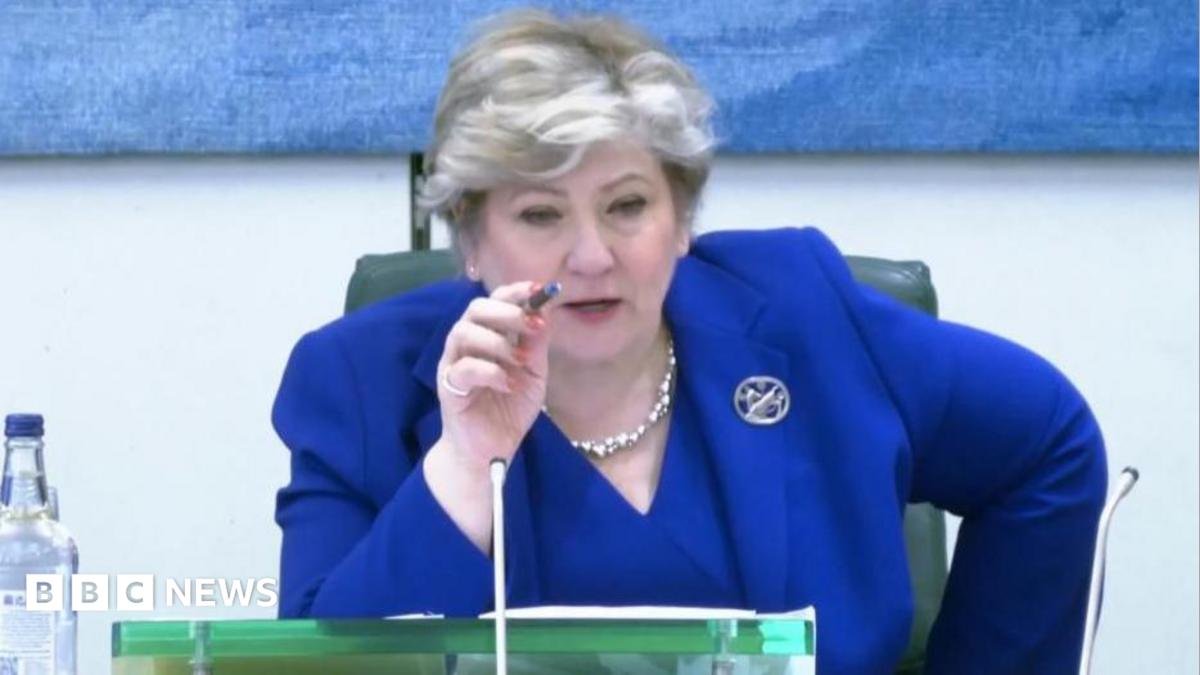
The chair of the Foreign Affairs Committee, the MP Dame Emily Thornberry, said there were “still unanswered questions as to how someone so clearly unfit was appointed British Ambassador to the United States”.
She described Lord Mandelson’s appointment as an “unmitigated disaster for the country” and called for measures to ensure an “open and transparent process” in the future.
“Processes were rushed or simply not followed. The usual checks and balances were not made. Vital security checks, integral to our national security, seemed to be viewed as a nuisance,” she said.
Responding to a request for comment from the BBC, a government spokesperson said changes had already been made to the way the vetting process would apply for political appointees.
“The Prime Minister has commissioned an independent review of the National Security Vetting system, led by Sir Adrian Fulford, to ensure lessons are learned.”
It is understood that Lord Mandelson considers the inquiry to have been led in a highly partisan and prejudicial way. It is understood he believes his appointment was not a disaster – with some notable successes.


