



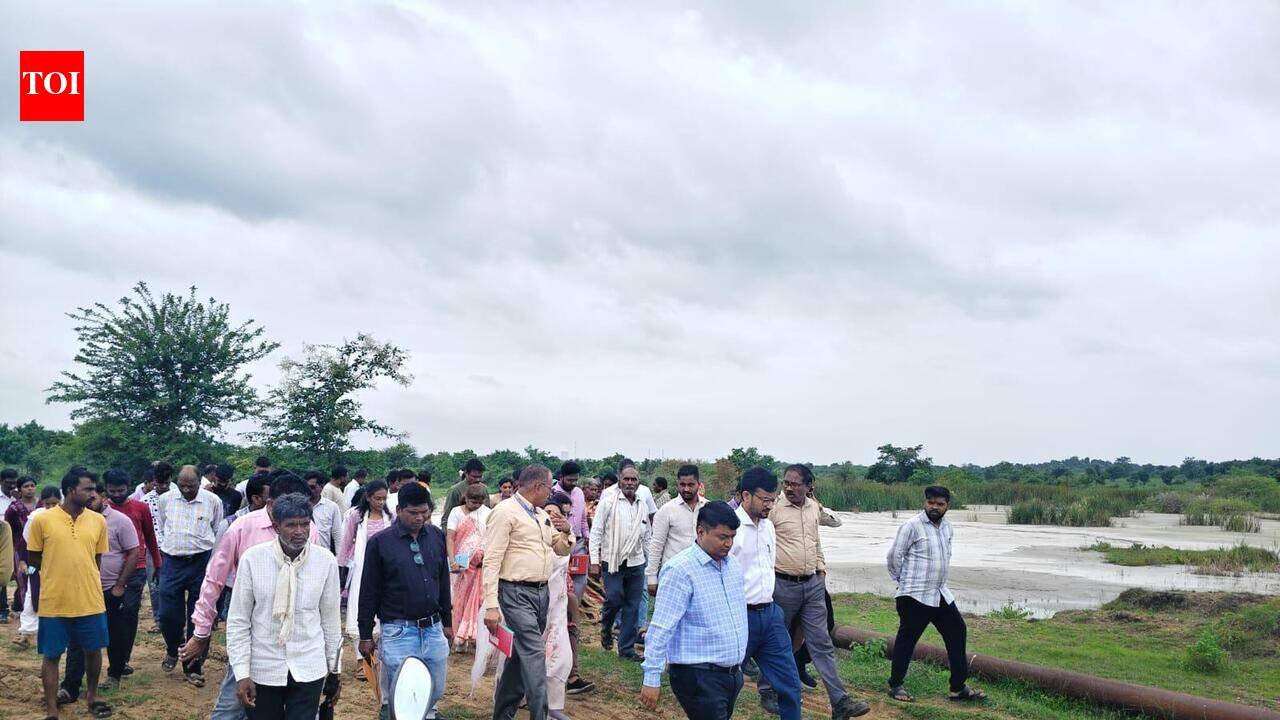
Nagpur: Maharashtra Pollution Control Board (MPCB) has directed Khaperkheda Thermal Power Station (KTPS) to undertake corrective measures and upgrade the fly ash-bund system to prevent toxic waste from spilling into agricultural fields and nearby water resources.The directives came after MPCB found the plant lagging in compliance with environmental norms for discharge management of its toxic fly ash, with officials pointing to deficiencies in essential infrastructure, including proper lagoons and lining.An MPCB team led by Hema Deshpande, along with officials from the revenue, agriculture and water-supply departments, on Tuesday visited Nandgaon village to examine complaints of unscientific ash disposal and alleged pollution of agricultural fields and Kanhan River.The team did not observe any discharge into the river though water samples have been collected. MPCB officials, however, said the conditions prescribed for operation and maintenance of ash bund were not being followed in toto. Deshpande said instructions have been issued to KTPS authorities directing them to undertake necessary corrective measures as per 2024 environmental clearance (EC) norms.As per MPCB officials, the plant authorities told the team that dry ash is largely utilised for construction and infrastructure works. However, utilisation declines during the rainy season, resulting in accumulation of ash and periodic discharge, the officials said.Centre for Sustainable Development’s Leena Budhe alleged that the visit had been conducted after the power plant authorities were informed in advance. “MPCB should conduct surprise visits,” Budhe said.KTPS chief engineer Vivek Rokade said the plant was already taking steps to address issues pointed out during the inspection. Rokade said he met district collector and discussions were being held on an action plan. “We have taken some short, mid and long term measures,” he said. These include protection of the drainage area, fencing to prevent cattle and outsiders from entering, and plantation to strengthen the green belt.Rokade said water samples would be tested to ascertain whether there was any contamination. He maintained that contamination of the river was unlikely, as only one of the two lines was currently operational and the slurry line was directed towards the village-side system.The chief engineer said short-term measures were expected to be implemented within three months, while medium-term measures would take around six months. Long-term measures would require further approvals.On allegations that slurry had overflowed into agricultural fields, Rokade said the plant doesn’t discharge slurry into the fields. He claimed the land was part of the 500 MW plant’s designated area but remained unused because commissioning of the facility was delayed, following which local people began cultivating it.


