



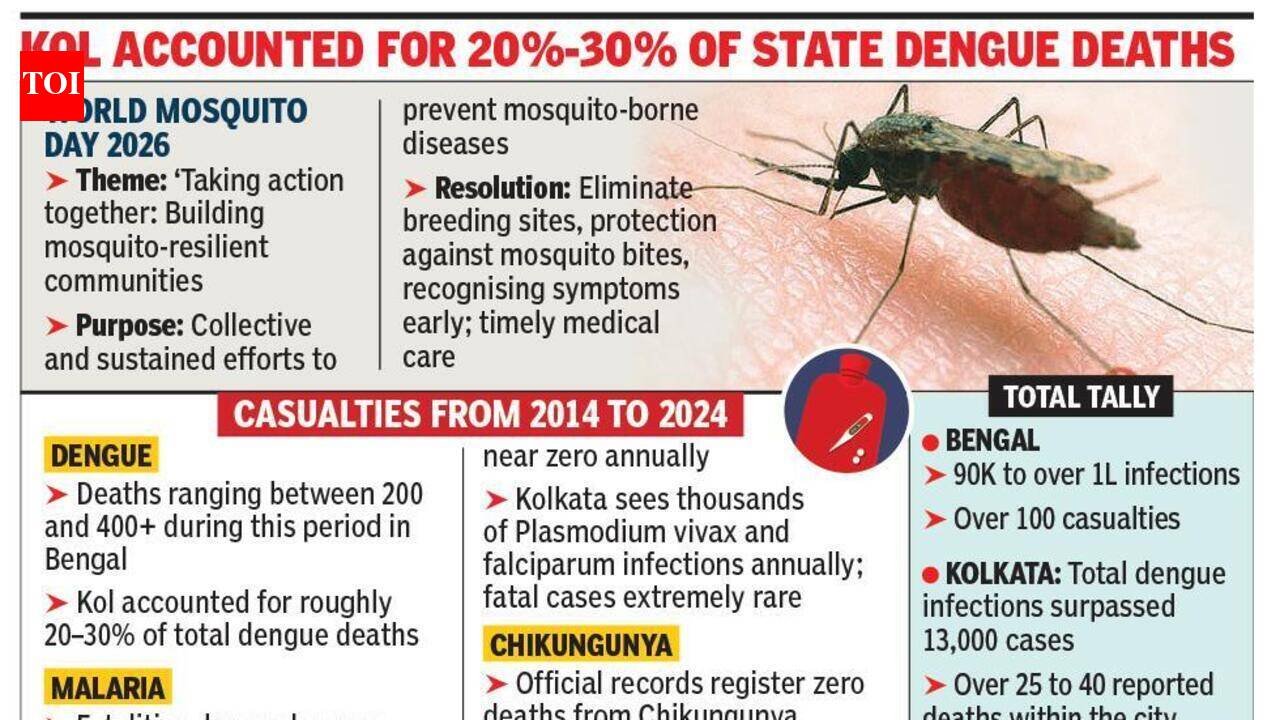
Kolkata: On World Mosquito Day, observed on Thursday, virologists and infectious diseases experts warned against mosquito-borne diseases. According to them, these diseases have claimed over 400 lives in the state in the last decade. Kolkata accounted for 20%-30% of the casualties. Over a lakh were infected by dengue, malaria and chikungunya during the period in the city, making them the most fatal infectious diseases in the city.Consistent and heavier showers have probably helped curb the spread of these diseases this year, along with greater awareness and effective civic measures, said physicians. But the city’s weather and civic conditions still make it prone to an outbreak, they warned. “The number of dengue and malaria patients has been low this year,” said Nishant Agarwal, head of emergency at Charnock Hospital. Internal Medicine Consultant at Fortis Hospital Anandapur Joydeep Ghosh said dengue remains an important public health concern, and prevention is the most effective defence.An Aedes mosquito bite, which can transmit dengue, chikungunya or Zika, may appear as a small red bump accompanied by itching or mild swelling. “The real concern is the possibility of fever or flu-like symptoms,” said Ghosh. Dengue typically presents with sudden high fever, headache, muscle and joint pain, weakness and sometimes a rash, said Manipal Hospital infectious diseases physician Sayan Chakrabarty. Treatment is primarily supportive, with hydration and medical monitoring being important, said Ghosh.GRAPH“World Mosquito Day 2026, with the theme ‘Taking Action Together: Building Mosquito-Resilient Communities,’ highlights the need for collective and sustained efforts to prevent mosquito-borne diseases. Building resilient communities begins with individual awareness but requires families, neighbourhoods, healthcare professionals and local authorities to work together to reduce mosquito breeding and transmission.”Mosquito Day Resolutions:Every household, community and institution has a role to play.Eliminate breeding sites, protect ourselves from mosquito bites, recognise symptoms early and seek timely medical careWe can collectively create healthier and more mosquito-resilient communities.Prevention, vigilance and timely action can save lives.Casualties Over the Past Decade (2014–2024)Dengue: West Bengal recorded severe annual spikes, with total official state deaths ranging between 200 and 400+ overall across the decade. During peak years, official annual state death tolls ranged from 30 to 46+ (e.g., 46 deaths in 2017, 30 in 2022), though unofficial estimate reports regularly cited higher numbers due to co-infections and classification delays. Of the state totals, Kolkata accounted for roughly 20–30% of total casualties.Malaria: Malaria-related fatalities dropped significantly across the state, with official deaths remaining in the single digits or near zero annually. Kolkata reports thousands of Plasmodium vivax and falciparum infections annually, but fatal cases remain extremely rare.Chikungunya: While sporadic outbreaks and joint-pain morbidities occur throughout Kolkata and Bengal, official records register 0 deaths from chikungunya, as the virus is non-fatal.Last Major Dengue Outbreak in KolkataYear: The most severe outbreak in Kolkata occurred in 2023 (surpassing the previous major outbreak in 2022).Casualties & Tally:Across West Bengal, official and health department estimates recorded 90,000 to 100,000+ total infections and over 100 casualties statewide.In Kolkata alone, total dengue infections surpassed 13,000 cases, with over 25 to 40 reported deaths within the city limits and immediate metropolitan suburbs.


